
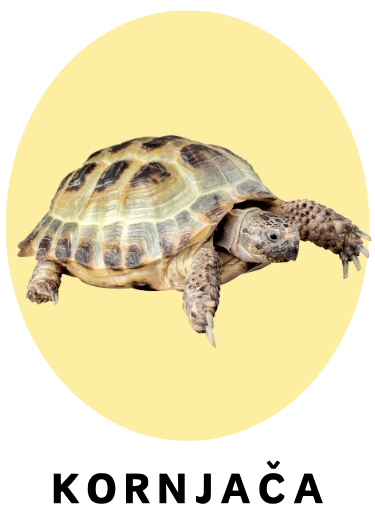
About tortoises and turtles
Tortoises and turtles in Croatia: Hermann’s tortoise, European pond turtle and sea turtles
We come across tortoises and turtles in Croatia more often than we think: in the maquis by the sea, in the garden of a family house, on a country lane or basking in the sun at the edge of a pond. Two native species live in the wild here, the land-dwelling Hermann’s tortoise (Testudo hermanni) and the aquatic European pond turtle (Emys orbicularis), and sea turtles also live in the Adriatic. These are animals that live for decades and breed slowly, which is why every loss hits them hard. Every tortoise and turtle in the wild is precious and deserves to be left in peace.
How to tell Hermann’s tortoise, the European pond turtle and the red-eared slider apart
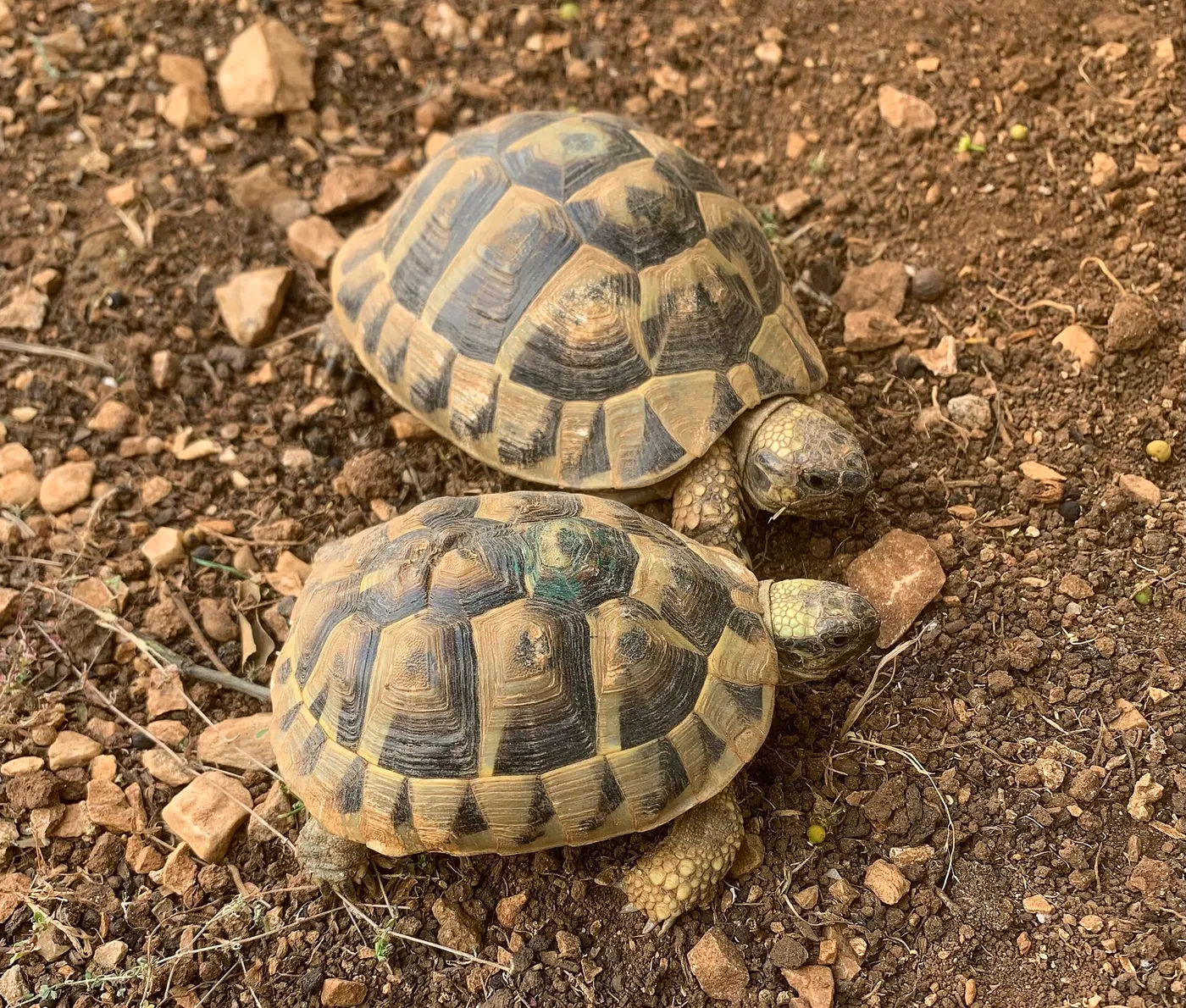
- Hermann’s tortoise is a land tortoise with a high, domed shell, yellowish or olive in colour with dark scutes. At the tip of its tail it has a horny spur, and its legs are thick and covered in scales, with no webbing. An adult is usually around fifteen to twenty centimetres long.
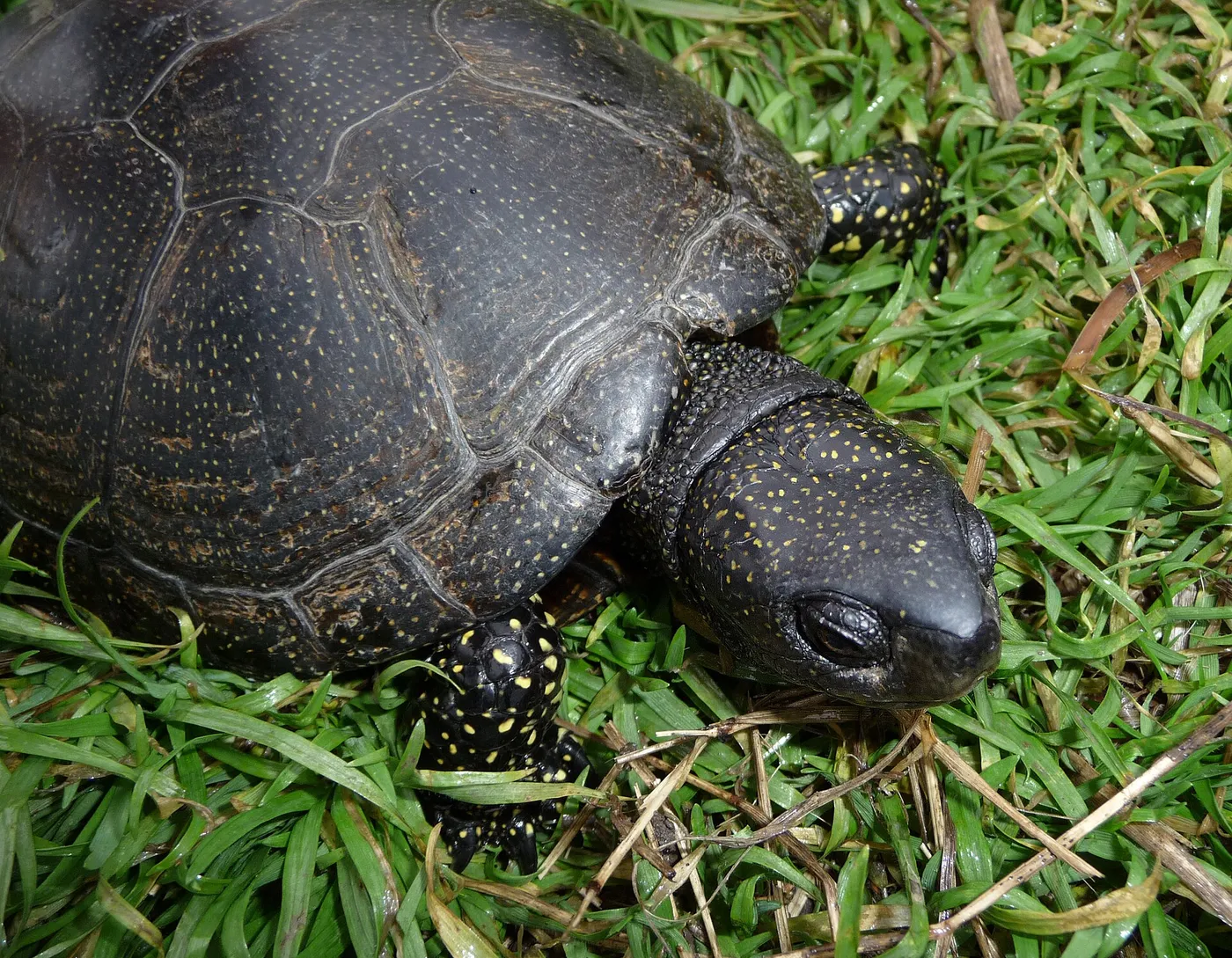
- The European pond turtle has a flatter, smooth, dark shell, and its head, legs and tail are sprinkled with tiny yellow dots. Its toes have claws and webbing. Hatchlings have a round, almost black shell the size of a coin.
- The red-eared slider (Trachemys scripta) has greenish skin with yellow stripes and a red, orange or yellow patch behind the eye. It is not a native species: it is a North American turtle that people bought as a pet for years and then released into ponds and lakes.
If a land tortoise is calm, not afraid of being handled and was found near houses, it may be someone’s escaped pet, so ask your neighbours first.
Where do tortoises and turtles live in Croatia?
Hermann’s tortoise is a species of the Mediterranean part of Croatia. It lives along the coast from Istria to Dubrovnik and on some islands, mostly at low altitudes, usually below about a hundred metres above sea level. It likes dry, semi-open habitats: the edges of woods and maquis, abandoned olive groves and vineyards, dry-stone walls, meadows and pastures. It needs a mix of sunny spots for warming up and dense shrubs for cover.
The European pond turtle is much more widespread: throughout continental Croatia, in Istria, Ravni kotari, Dalmatia and on several larger islands. It lives in ponds, marshes, oxbow lakes, canals and slow-flowing rivers with rich vegetation and a muddy bottom, where it basks on branches and stumps above the water and dives in at the slightest noise.
What do tortoises and turtles eat in the wild?
- Hermann’s tortoise is almost exclusively herbivorous. It grazes on herbaceous plants: dandelion, clover, plantain, mallow, vetches and flowers, and sometimes eats fallen fruit. Its food must be rich in fibre and low in protein.
- The European pond turtle feeds in the water. The young are mainly carnivorous, while adults eat aquatic insects and larvae, snails, worms, tadpoles, small fish and carrion, along with some aquatic plants.
Never give a tortoise or turtle bread, pasta, milk, cheese, meat meant for people, or dog and cat food. Such food does not suit their digestion and causes diseases of the shell and bones.
How tortoises and turtles live: hibernation, eggs and a long life
Tortoises and turtles are cold-blooded, so their body temperature depends on their surroundings. In the morning they first warm up in the sun, and in the greatest summer heat they hide in the shade or in the water. When it gets cold, from autumn to spring, they hibernate: Hermann’s tortoise buried in soil and leaves, and the European pond turtle in the mud at the bottom of the water or in a damp shelter on the bank.
They mate in spring. The female digs a hole in a sunny spot, lays several eggs, covers them and takes no further care of them. The European pond turtle may travel several hundred metres from the water to do this. The temperature in the nest determines whether males or females will hatch. The young hatch at the end of summer, and some of them overwinter in the nest. They are completely independent from the very first day.
Tortoises and turtles only reach sexual maturity after many years and can live for decades. That is why the loss of every adult female hits the whole population hard.
Sea turtles in the Adriatic: what to do if you find one
The most common species in the Adriatic is the loggerhead sea turtle (Caretta caretta), while other species appear more rarely. The northern and central Adriatic is one of the most important feeding and wintering areas for loggerheads in the Mediterranean. The biggest threats to them are fishing gear, hooks, plastic in the sea and collisions with boats.
If you come across a sea turtle that is floating weakly, is entangled in a net or has been washed ashore, call 112 immediately or an authorised sea turtle rescue centre and follow their instructions. Until help arrives, keep it in the shade and cover it with a wet towel, but do not put it in fresh water. Do not pull on a hook or line sticking out of its mouth, and do not put it back into the sea yourself. Do not lift it by its flippers or by the edge of its shell.
What threatens tortoises and turtles?
- Traffic: tortoises and turtles cross roads slowly, and in spring and summer they move around more than usual.
- Loss of habitat: building along the coast, draining of ponds and water pollution, but also once-cultivated land becoming overgrown with dense scrub.
- Machinery and fires: lawnmowers, strimmers and burning of dry grass and weeds.
- Collecting: people take tortoises home or move them elsewhere, so they disappear from the wild.
- Predators: dogs, wild boar and mongooses, while nests are raided by foxes, martens, badgers and crows.
- The red-eared slider takes food and basking spots away from the European pond turtle and can transmit diseases.
How can you help tortoises and turtles?
Carry a tortoise that is crossing the road to the side it was heading towards, never back. Leave a healthy tortoise where you found it and do not move it to a “better place”, because it is tied to its home area. Check the grass before mowing, do not burn weeds, and leave a corner of your garden with shrubs and a pile of leaves.
A tortoise or turtle needs help if it has a cracked shell, a wound, swollen or closed eyes, if it has been bitten by a dog, or if it is found out in the cold in the middle of winter. Put it in a box in a quiet place and contact a vet or a wildlife rescue centre straight away. You will find a list of association and rescue centre contacts on our website. Tortoises and turtles can carry salmonella, so wash your hands thoroughly with soap after every contact.
If you have found a hatchling, read everything about raising it in our article on raising a baby tortoise.
Are tortoises and turtles protected in Croatia?
Yes. Hermann’s tortoise and the European pond turtle are strictly protected species, as are sea turtles. It is forbidden to catch, disturb, keep or sell them or to destroy their nests and habitats. You may only look after an injured tortoise or turtle temporarily until it is taken over by a vet or a rescue centre.
The red-eared slider is an invasive alien species and must never be released into the wild. If you keep one and can no longer look after it, or if you find one in the wild, contact the competent nature protection authority or a sanctuary for such turtles.
Conclusion
Tortoises and turtles are old, quiet inhabitants of our meadows, maquis and ponds, and their slow life makes them very vulnerable. My advice is simple: watch them from a distance, help them across the road, keep your garden free of poisons and fires, and hand an injured tortoise or sea turtle over to the experts straight away. Never release a red-eared slider into the wild. That way you too will help tortoises and turtles in Croatia stay where they belong.