
About hedgehogs
Hedgehogs in Croatia: what they look like, what they eat and how to help them
The hedgehog is one of the best-loved residents of our gardens, and yet we know less about it than we think. Two very similar species live in Croatia: the northern white-breasted hedgehog (Erinaceus roumanicus) and the European hedgehog (Erinaceus europaeus). Both are nocturnal insectivores that spend the winter in hibernation. In this article I describe what a hedgehog looks like, where it lives, what hedgehogs eat and how each of us can make life a little easier for them.
What does a hedgehog look like, and how can you tell our two species apart?
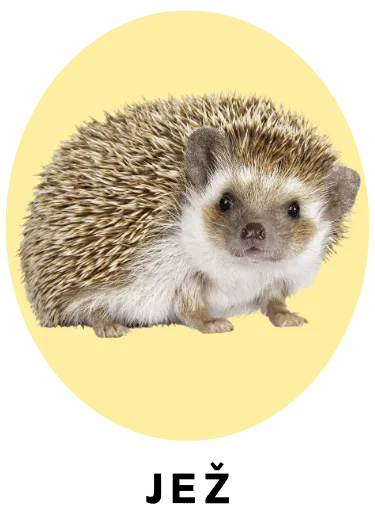
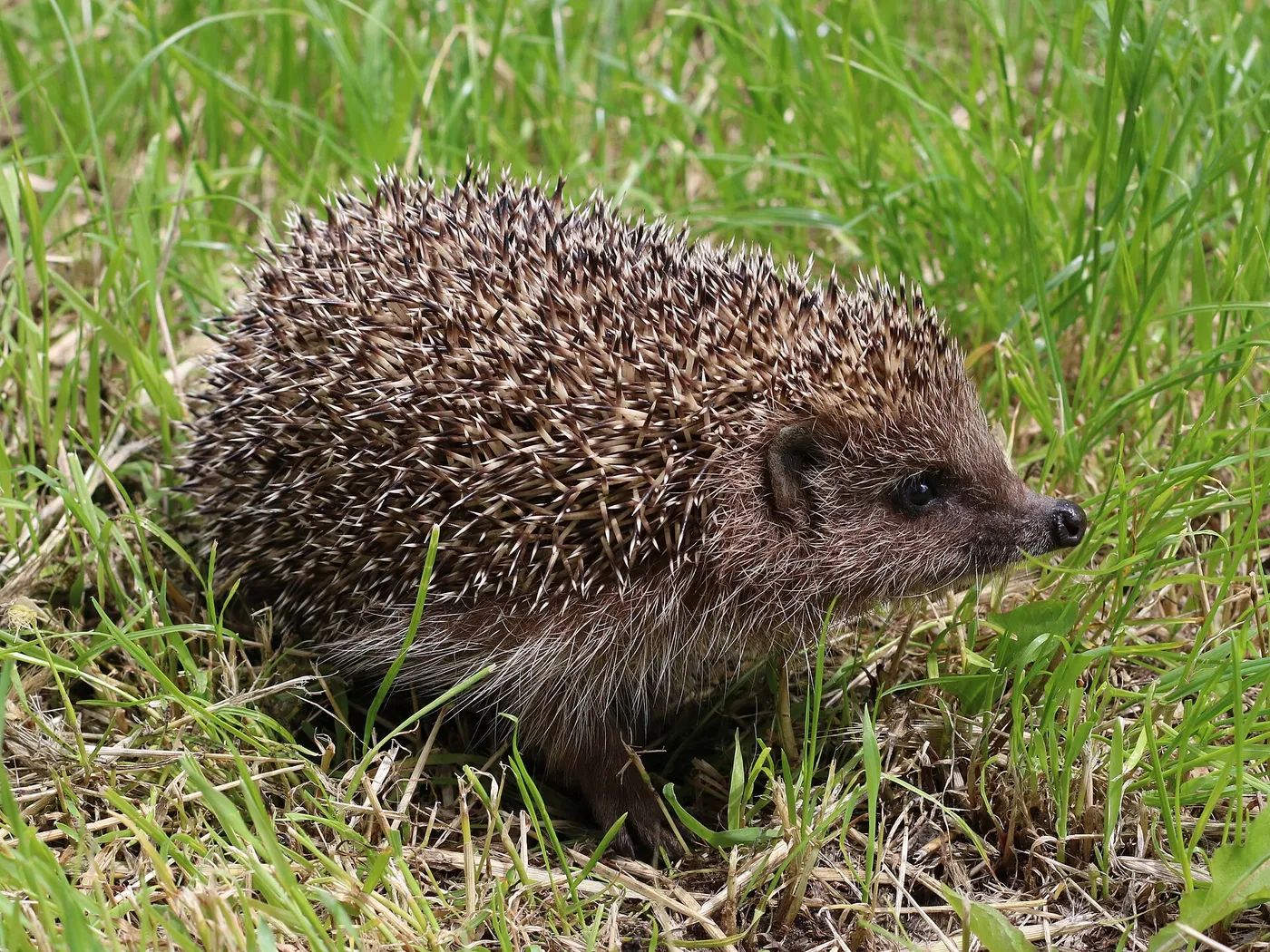
The hedgehog is a small, stocky mammal with short legs, a pointed snout and tiny eyes. Its back and sides are covered with several thousand spines, while its face and belly are covered with coarse hair. When it senses danger, it tightens the muscles on its back and rolls up into a prickly ball. An adult hedgehog is usually about twenty to thirty centimetres long, and its weight varies greatly over the year: in autumn, before hibernation, it can weigh more than a kilogram.
Our two species are hard to tell apart with the naked eye. The most reliable sign is the chest:
- the northern white-breasted hedgehog has a distinct pale, almost white patch on its chest that stands out clearly against its darker flanks,
- the European hedgehog has a more uniformly brown chest and belly, without a sharply defined pale patch, and its face is often darker.
When it comes to helping a hedgehog in trouble, the species does not matter: their needs are almost identical.
Where do hedgehogs live?
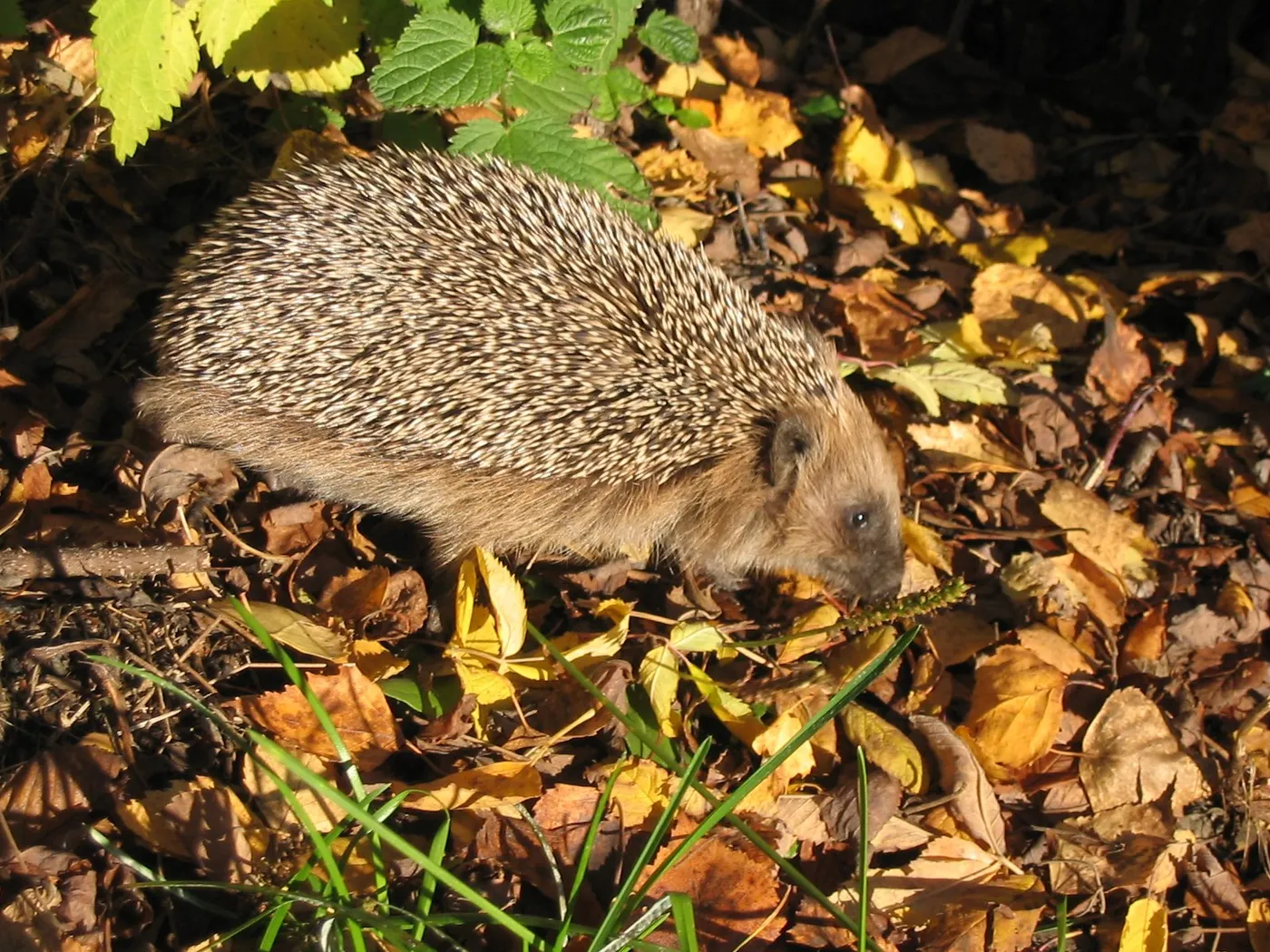
The northern white-breasted hedgehog lives in most of Croatia, while the European hedgehog is also found in the western parts of the country, so in some areas their populations meet. Hedgehogs like a mosaic landscape: woodland edges, hedgerows, meadows, orchards, parks and gardens. Today they are often found in suburban areas, where they find food and shelter among the gardens.
During the day it sleeps in a nest of leaves and grass, hidden under bushes, in a pile of branches, under a woodshed or in a dense hedge. Every night it travels a considerable distance, so it is important that gardens are connected to one another rather than closed off by impassable walls.
What do hedgehogs eat in the wild?
The hedgehog is mainly an insectivore. It searches through grass and leaf litter with its snout and eats almost anything it finds:
- beetles, caterpillars, larvae and other insects,
- earthworms, millipedes and slugs,
- occasionally the eggs of ground-nesting birds, small vertebrates and carrion,
- some fallen fruit, although this is not its main food.
Never give a hedgehog cow’s milk or bread. Hedgehogs are lactose intolerant, and milk causes them serious digestive illness. Bread, sweets and seasoned food scraps have no nutritional value for them at all. If you want to give a hedgehog extra food, especially in dry summers or late in autumn, offer it meaty wet cat food or kitten food and a shallow dish of fresh water.
How hedgehogs live: nightlife, hibernation and hoglets
The hedgehog is a nocturnal, solitary animal. It leaves its hiding place at dusk and spends the whole night looking for food. A hedgehog that wanders about, staggers or lies out in the open during the day is almost always ill, injured or exhausted and needs help.
When the cold takes away the insects, usually in October or November, the hedgehog goes into hibernation, which lasts until spring. Its body cools down and its heartbeat and breathing slow. To survive the winter it has to build up enough fat reserves, which is why in autumn we often see hedgehogs eating in a hurry.
After a gestation of about five weeks, the female gives birth in the nest, usually to four or five young. The hoglets are born blind, with soft white spines hidden beneath the skin, and become independent at around six to eight weeks. The northern white-breasted hedgehog can have two litters a year, so young can be seen until late autumn. In the wild, a hedgehog rarely lives longer than two to five years. If you have found a baby hedgehog, read everything about raising it in our article on raising a baby hedgehog.
What threatens hedgehogs?
The hedgehog’s greatest enemy is humans, and most often unintentionally:
- traffic: thousands of hedgehogs are killed on the roads, especially in the mating season and when the young disperse,
- garden machinery: strimmers, lawnmowers and robotic mowers seriously injure hedgehogs sleeping in the grass and under shrubs,
- poisons: slug pellets, insecticides and rodenticides poison hedgehogs directly or through their prey,
- garden traps: garden netting they get tangled in, pools and pits they cannot climb out of, open drains,
- burning piles of branches and leaves in which a hedgehog is sleeping,
- loss of habitat: disappearing hedgerows, tidy gardens with no cover, and concrete fences,
- dogs and, in the wild, badgers and larger birds of prey.
How can you help hedgehogs in your garden?
Every garden can become a little home for a hedgehog. I recommend these simple steps:
- make a gap of about 13 x 13 centimetres in your fence so that hedgehogs can move between gardens,
- leave a wild corner with a pile of leaves, branches or logs, or put up a hedgehog house,
- do not use slug pellets or insecticides,
- check long grass and shrubs before mowing or strimming, and do not run a robotic mower at night,
- put a ramp or a plank in your pool or pond so that a hedgehog can climb out,
- move a pile of branches just before lighting it, or better still, compost it,
- in summer, leave out a shallow dish of water.
If you find a hedgehog that is out during the day, injured, cold, covered in flies, or tiny and alone, put on gloves, place it in a box with a towel, keep it somewhere warm and quiet, and contact a vet or a wildlife rescue centre straight away. Do not feed a cold hedgehog. You will find a list of association and rescue centre contacts on our website. Hedgehogs can carry ringworm and salmonella and almost always have fleas and ticks, so always handle them with gloves and wash your hands afterwards.
Are hedgehogs protected in Croatia?
The hedgehog is a native wild animal and is protected in Croatia under the Zakon o zaštiti prirode (Nature Protection Act). It must not be caught, disturbed or kept as a pet. You may look after a sick or injured hedgehog temporarily until you hand it over to experts, but long-term care and hand-rearing are only permitted for rescue centres or with a permit. The goal is always the same: the hedgehog must go back to the wild.
Conclusion
The hedgehog is every gardener’s quiet ally, because at night it clears the garden of slugs and insects. In return it needs very little: a gap in the fence, a corner full of leaves, a poison-free garden and a little care when mowing. If you do find one in trouble, do not give it milk; warm it up and call the experts. That way, next summer at dusk you will again hear its familiar snuffling in the bushes.