
About the dormouse
Dormice: all about the edible dormouse and other dormice in Croatia
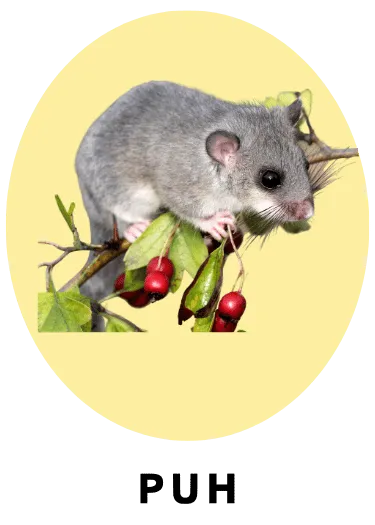
The dormouse is a nocturnal woodland rodent with big black eyes and a bushy tail, famous for hibernating for more than half the year. When we say “dormouse”, we usually mean the edible dormouse (Glis glis), our largest and best-known member of the dormouse family. Smaller dormice also live in Croatia, including the hazel dormouse and the forest dormouse. Below I describe how to recognise a dormouse, where it lives, what it eats and how to live with it in peace, even when it moves in under your roof.
What does the edible dormouse look like?
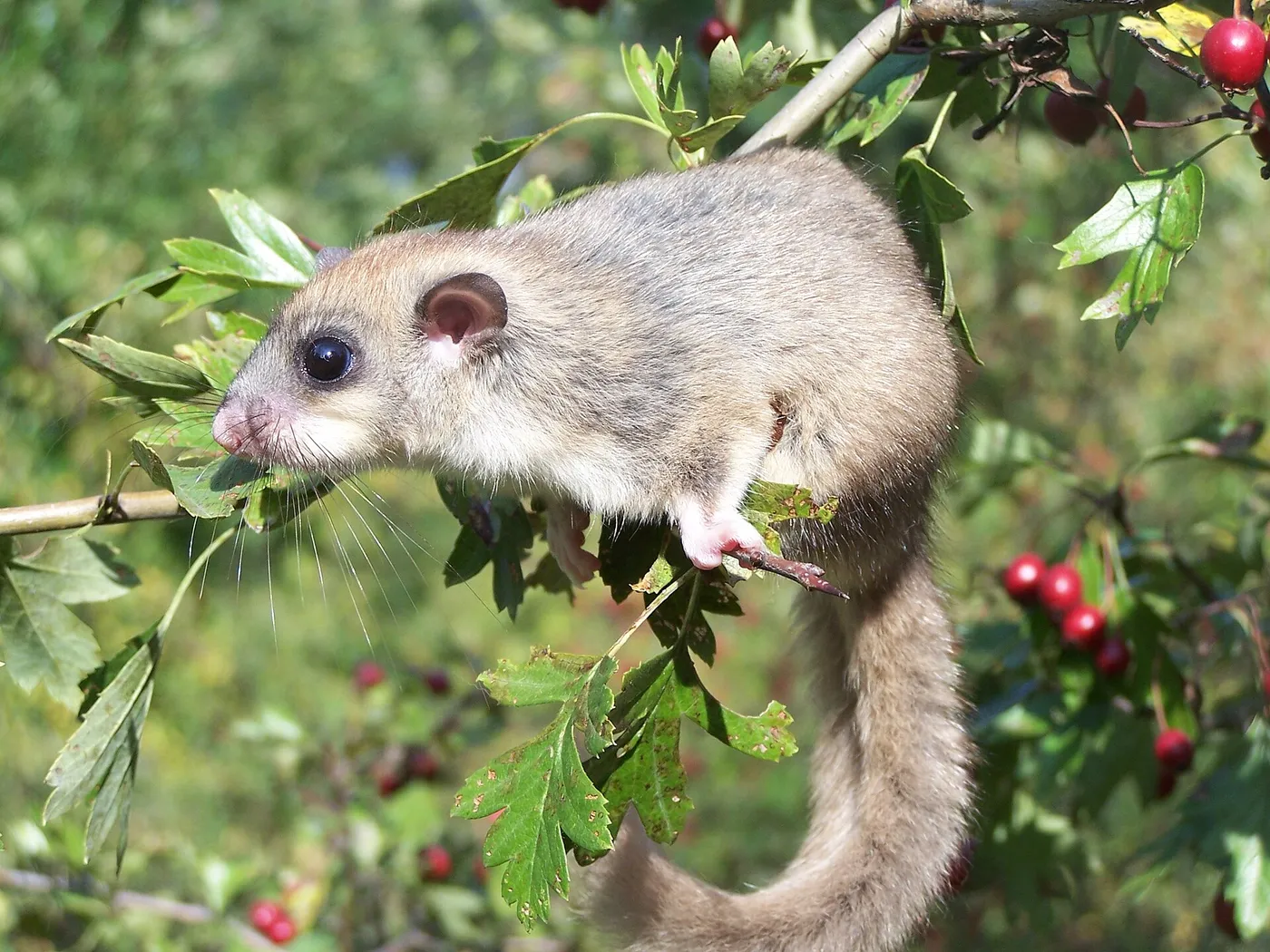
At first glance the edible dormouse looks like a small grey squirrel. Its body is about fifteen centimetres long, and its thick, bushy tail is almost as long again. The fur on its back is silvery grey, its belly is pale, and it has a thin dark ring around its large dark eyes. Its ears are small and round, and it has pads on its feet that let it climb nimbly even up vertical surfaces. In summer it weighs around a hundred grams, and in autumn, before hibernation, considerably more.
Unlike a squirrel, you will almost never see a dormouse during the day. You are more likely to hear it: at night it scratches, scampers about the loft and chirps or snorts loudly.
It is important to know that the skin of a dormouse’s tail comes off easily if someone grabs it by the tail. In the wild this is how a dormouse escapes from a predator, but the injury is permanent. Never pick up a dormouse by its tail.
Where do dormice live?
The edible dormouse lives in deciduous and mixed woodland, especially beech and oak forests with old, hollow trees. It is found across most of Croatia, from lowland forests to the mountains, and is particularly numerous in Gorski kotar and Lika. It readily settles in orchards next to woodland, and often in buildings too: in lofts, holiday cottages, mountain huts and bird boxes.
During the day it sleeps in tree hollows or in a nest of moss and leaves. It usually hibernates underground, in holes among roots or in rock crevices, where the temperature is constant and does not fall below zero.
What do dormice eat?
The dormouse is mainly herbivorous, and its menu follows the seasons:
- in spring it eats buds, young leaves, flowers and bark,
- in summer fruit, berries and some insects, and occasionally birds’ eggs,
- in autumn it fattens up on beechnuts, acorns, hazelnuts, walnuts and chestnuts.
The edible dormouse’s whole year depends on the beechnut and acorn crop: in years of plenty it breeds prolifically, while in poor years the females often do not give birth at all. Do not give a dormouse bread, milk or salty and sweet leftovers. If you are caring for a young or sick dormouse, agree on its diet with a vet or a wildlife rescue centre.
How long do dormice hibernate and how do they breed?
It is no coincidence that Croatians say someone “sleeps like a dormouse”. The edible dormouse goes into hibernation as early as September or October and only wakes up in May or June, so it spends seven and sometimes even eight months asleep. Its body cools almost to the temperature of its surroundings, and it lives off the fat reserves it built up in autumn.
The dormouse is active at night and very sociable: it often lives in small groups in nests and shelters. It mates in summer, and after about a month the female usually gives birth to four to six naked, blind young, most often at the end of July or in August. The young become independent at about two months old and must build up enough fat for the winter by autumn. For a rodent, the dormouse lives unusually long – more than five years in the wild. If you have found a baby dormouse, read everything about hand-rearing in our article on raising a baby dormouse.
Hazel dormouse and forest dormouse
Besides the edible dormouse, smaller relatives also live in Croatia:
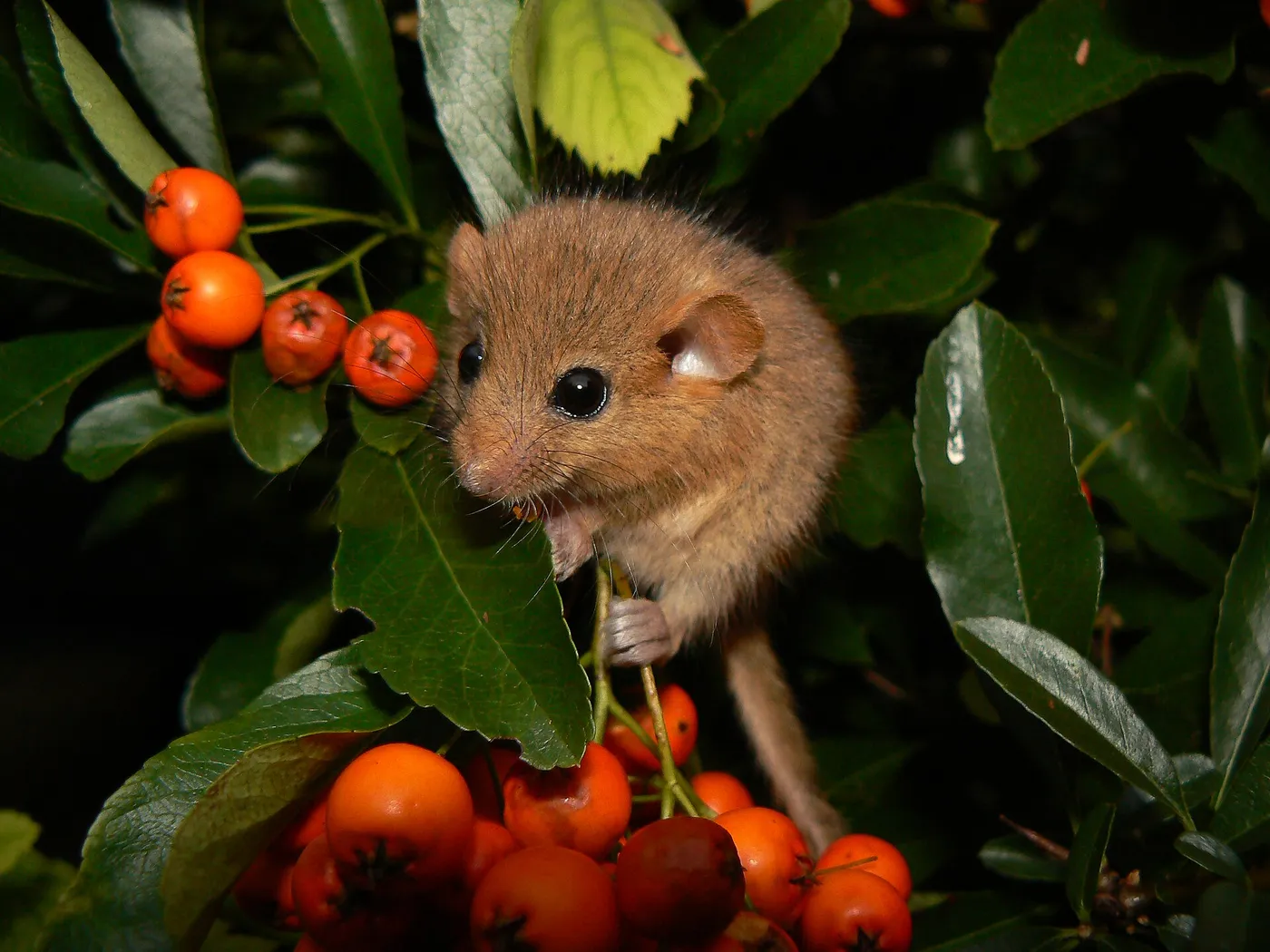
- The hazel dormouse (Muscardinus avellanarius) is tiny, weighing around twenty grams, with golden-orange fur and a bushy tail. It lives in dense hedgerows, thickets and woodland edges with hazel. A hazelnut opened by a hazel dormouse can be recognised by its smooth, round hole.
- The forest dormouse (Dryomys nitedula) is somewhat larger and greyish-brown, with a dark stripe running across its eye like a mask. It lives in woodland and thickets, mainly in hilly and mountainous areas.
Both species are strictly protected in Croatia. If you find one of these dormice in trouble, hand it over to a wildlife rescue centre straight away.
What threatens dormice?
- Habitat loss: felling of old trees with hollows and the disappearance of hedgerows and thickets.
- Forest fragmentation: dormice are reluctant to cross open ground, so roads and bare land split populations apart.
- Rodent poisons put down in lofts and holiday cottages.
- Containers of water and barrels in which dormice drown.
- Cats, which catch dormice around houses, and owls and martens in the wild.
- Disturbance during hibernation, which uses up the dormouse’s precious reserves.
A dormouse in the loft: how to help the dormouse and yourself
A dormouse in the loft can be noisy and damage the insulation, but poison is not the answer. This is what I recommend:
- in autumn, when the dormice have gone underground to hibernate, find and seal the gaps through which they get under the roof,
- do not seal the gaps in summer, when there may be young in the nest,
- cover water containers and barrels in the loft and in the garden,
- leave old trees with hollows standing near woodland and put up dormouse boxes.
If you find a dormouse that is cold, injured, lying on the ground during the day, or a baby without its mother, put on gloves, place it in a box in a warm, quiet spot and contact a vet or a wildlife rescue centre. Dormice can bite hard and may carry fleas and mites, so do not touch them with bare hands. A list of association and rescue centre contacts is available on our website.
Are dormice protected in Croatia?
The hazel dormouse and the forest dormouse are strictly protected species and must not be caught, disturbed or kept. In parts of Croatia the edible dormouse has the status of game and is traditionally hunted in Gorski kotar and Lika, but only in accordance with hunting regulations. Apart from that, it may not be caught or kept as a pet. The same applies to all dormice: long-term care and hand-rearing are only permitted for wildlife rescue centres or with a permit, and the goal is always release back into the wild.
Conclusion
The dormouse is a little woodland sleepyhead that spends most of the year asleep and the rest of it out at night in the treetops. It needs old woodland, hedgerows and a little understanding when it moves in under your roof. Don’t poison it, don’t grab it by the tail, and if you find one in trouble, call the experts.