
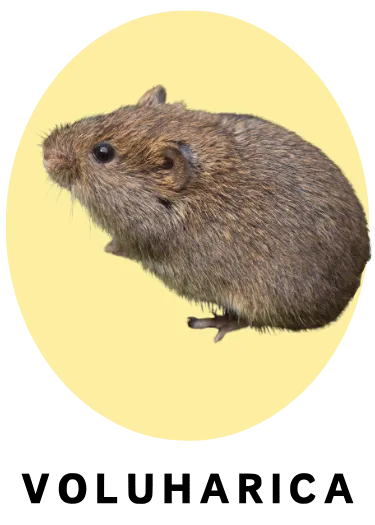
About voles
Voles in Croatia: species, appearance, diet and protection
Voles are small rodents of our meadows, fields and forests, and most people simply call them “mice”. However, they are a distinct group of rodents with a different appearance and way of life. Several vole species live in Croatia, from the very common common vole to the rare Balkan snow vole (Dinaromys bogdanovi), which is endemic to the Dinaric karst. In this article I explain how to recognise a vole, what it eats, how it lives and why it matters to nature.
How do you recognise a vole, and how is it different from a mouse?
The easiest way to tell a vole from a mouse is by its body shape:
- the snout is blunt and rounded, not pointed,
- the ears are small and almost hidden in the fur,
- the eyes are tiny,
- the tail is short, usually much shorter than the body,
- the body is stocky, and the fur is thick and soft, usually greyish-brown.
A mouse, on the other hand, has a pointed snout, large ears, bulging eyes and a long tail. Voles are also often confused with shrews, but shrews are insectivores with a long, mobile snout and are not rodents.
Which voles live in Croatia?
The most common species you are likely to come across are:
- common vole (Microtus arvalis): lives in meadows, pastures and fields, and in some years it multiplies in huge numbers,
- field vole (Microtus agrestis): prefers damp meadows with dense, tall grass,
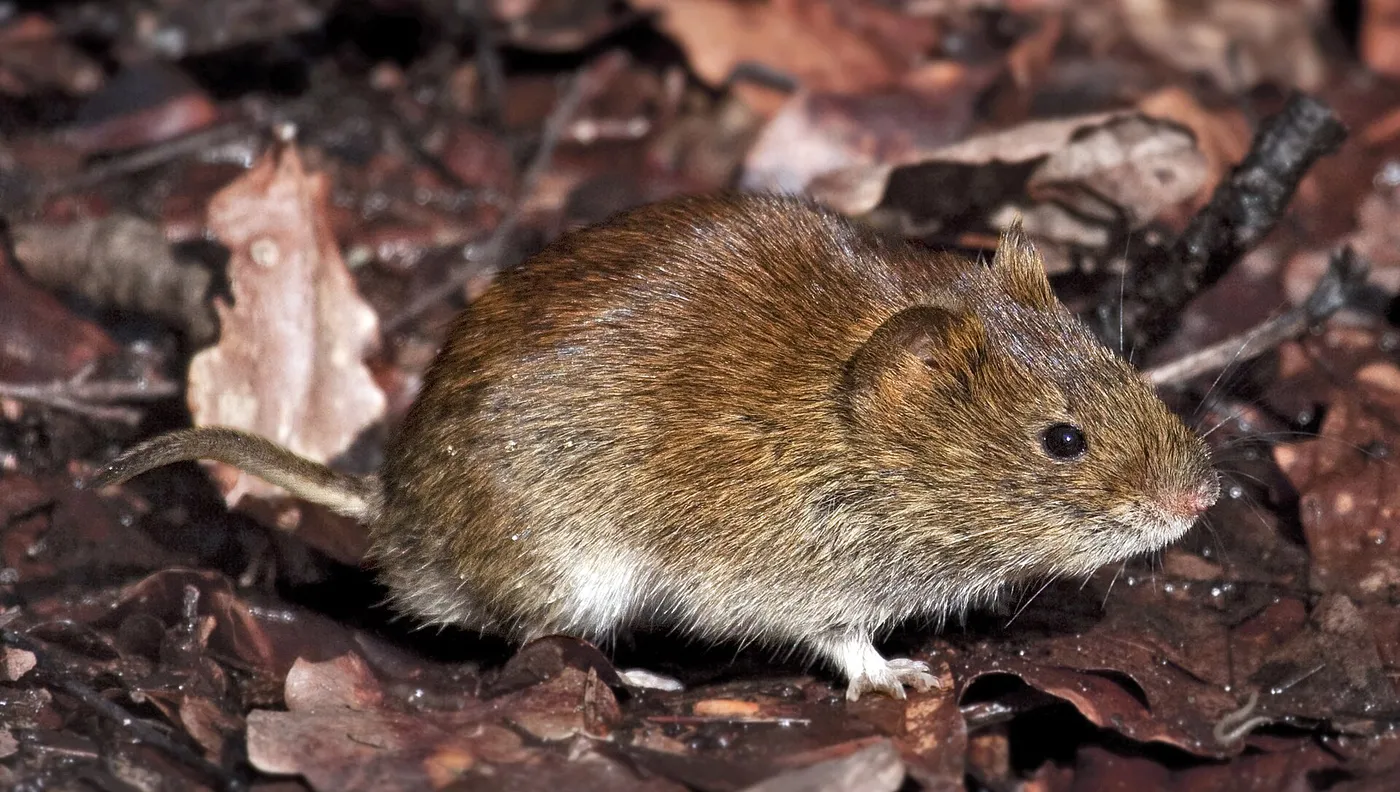
- bank vole (Myodes glareolus): lives in forests and along woodland edges, recognisable by its reddish-brown back and slightly longer tail; it is also a good climber in shrubs,
- water vole: the largest of them, it lives by water and in damp gardens and meadows, where it digs tunnels.
The European snow vole lives high in the mountains, and the Balkan snow vole lives on the bare karst rocks of the Dinaric Alps – I write about it separately below.
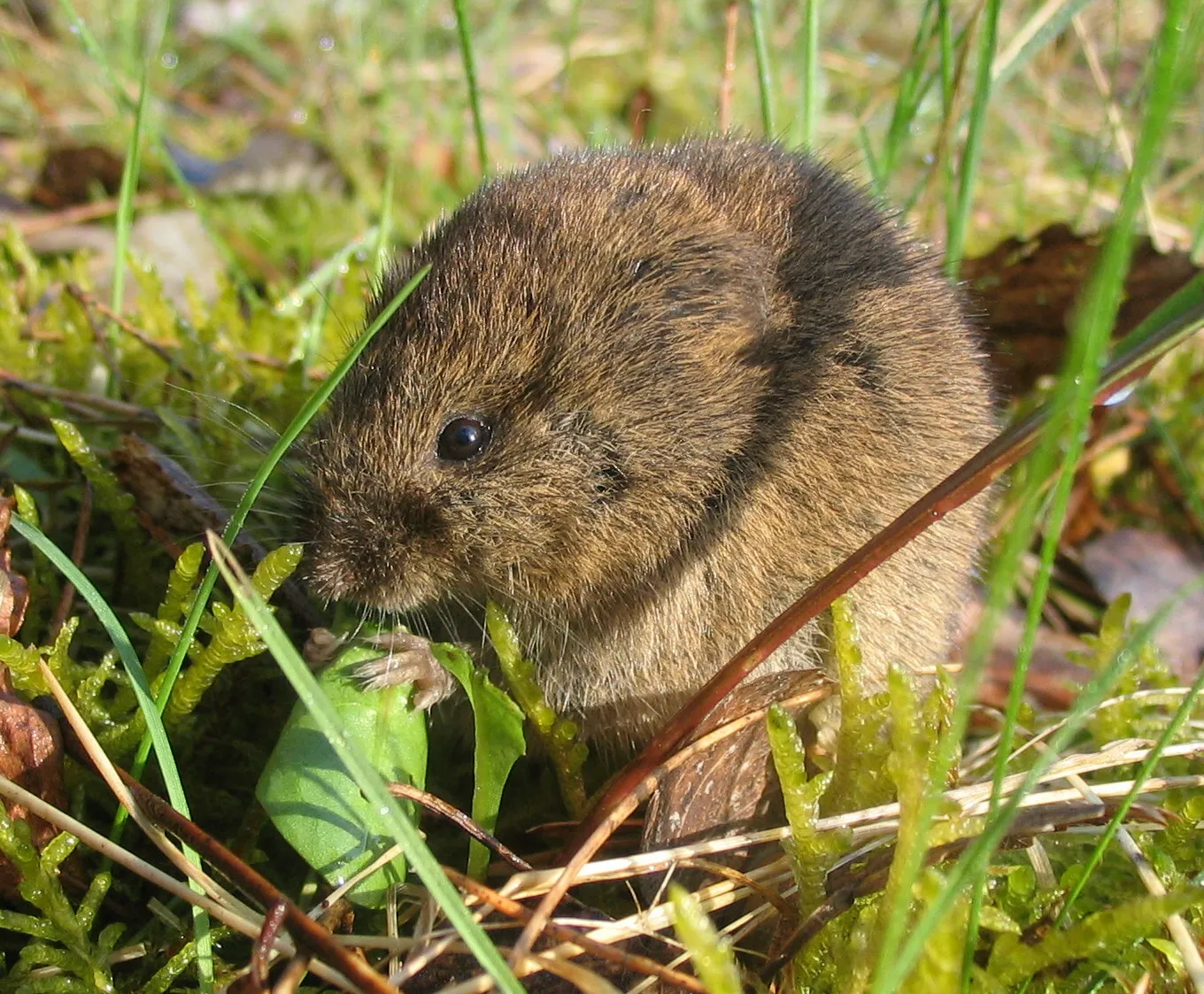
The Balkan snow vole: a living fossil of our karst
The Balkan snow vole is a special treasure of Croatian nature. It is endemic to the Dinaric mountains and is the only living representative of a very old group of voles whose other relatives are known only as fossils. That is why it is often called a living fossil. It is the only European vole whose molars have roots.
It lives at higher altitudes, among karst rocks, in crevices and scree, for example on Velebit, Biokovo and other mountains of the Dinaric Alps. It is larger than ordinary voles, with thick, soft greyish-brown fur, a pale belly and unusually long whiskers. It feeds on grasses, herbaceous plants and the leaves of shrubs.
It breeds very slowly: it only becomes sexually mature in its second year, and the female has one or two litters a year with two or three young. This is exactly what makes it vulnerable, so in Croatia it is a strictly protected species, and on the global Red List of threatened species it is listed as Vulnerable.
What do voles eat?
Voles are mainly herbivores. Depending on the species and the season, they eat:
- grass, clover, dandelion and other greens,
- seeds, cereals and fruit,
- roots, tubers and bulbs, which is why gardeners dislike them,
- the bank vole also eats berries, fungi, buds, bark and some insects.
Never give a vole cow’s milk, and do not offer bread or sweets to either an adult or a young vole. If you are caring for a baby vole, agree on its diet with a vet or a wildlife rescue centre.
How do voles live?
Most voles are active both by day and by night, in short bursts with rest periods in between. They live in systems of underground tunnels and in runways they tread through the grass, and they hide their nests of dry grass underground or in dense tussocks. They do not hibernate; instead they spend the winter active under the snow.
Voles breed extremely quickly. Pregnancy lasts about three weeks, a litter usually has three to eight young, and in a good season the female has several litters in a row. The young become independent at about three weeks old, which is why we often see them on their own at that age. Because they have so many predators, most voles in the wild live for less than a year. If you have found a baby vole, you can read everything about raising it in our article on hand-rearing a baby vole.
Why are voles important, and what threatens them?
Voles are the foundation of the food chain. They are eaten by owls, kestrels, buzzards, foxes, weasels, martens and snakes, so the numbers of many predators depend on years when voles are plentiful. By digging tunnels they aerate the soil and spread seeds.
Their biggest threats are:
- rodent poisons, which kill not only voles but also owls, birds of prey and other animals that eat them,
- pet cats, which catch huge numbers of small mammals,
- mowing and tilling at the time when the young are in their nests,
- the loss of meadows, hedgerows and wetland habitats.
How can you help voles, and when should you call an expert?
- Do not use rodent poisons in your garden; instead, put up nest boxes and perching posts for owls and kestrels, the natural hunters of voles.
- Leave an unmown strip at the edge of a meadow or a corner of the garden with tall grass.
- Check the grass before mowing, and keep your cat indoors at night and during the season when the young are born.
Leave an independent vole with fur and open eyes that runs away quickly in peace. The ones that need help are a baby with closed eyes outside the nest, a cold or injured vole, and any vole that has been in a cat’s mouth, because even a tiny scratch from a cat’s teeth can cause a serious infection. Put it in a small box somewhere warm, do not feed it while it is cold, and contact a vet or a wildlife rescue centre. A list of association and rescue centre contacts can be found on our website. Rodents can transmit diseases such as haemorrhagic fever with renal syndrome (“mouse fever”) and leptospirosis, so only handle a vole wearing gloves and wash your hands thoroughly afterwards.
Are voles protected?
In Croatia the Balkan snow vole is strictly protected and must not be caught, disturbed or kept. The common vole species are not strictly protected, but they are part of the wild fauna and the general rule applies: a wild animal is not to be kept as a pet, and long-term care and hand-rearing are permitted only for a wildlife rescue centre or with a permit.
Conclusion
Voles are small and inconspicuous, yet without them there would be no owls or kestrels over our meadows. Most species are common and resilient, while the Balkan snow vole is a real treasure of our karst. Be kind to them: no poisons, a little wildness in the garden, and a call to the experts when one of them needs help.