
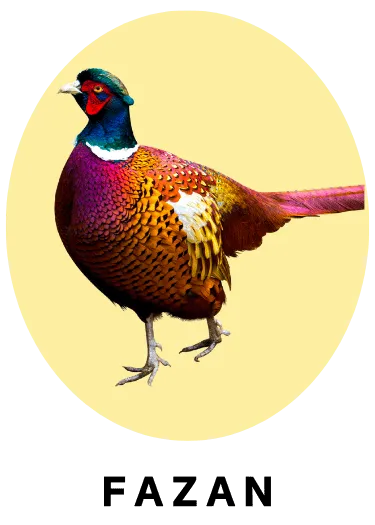
Raising a baby pheasant
Hand-rearing pheasant chicks – a complete guide
Finding a young pheasant that has lost its parents can be a challenge, but with proper rearing and preparation it can be successfully returned to the wild. Pheasants are precocial, which means they are mobile from hatching and instinctively look for food, but in their early development they need extra help.
The first days of rearing a chick
In the first days of life, young pheasants need warmth, safety and proper nutrition. It is best to keep them in a warm box lined with paper or fine straw, at a temperature of 35°C, which is gradually lowered by 3–4°C per week.
The diet during this period should be rich in protein. You can use special starter feeds for pheasants and game birds with at least 28–30% protein. Alternatively, you can prepare homemade food that includes:
Hard-boiled egg, finely chopped or crumbled,
Fine cornmeal soaked in water,
Ground insects and small worms, such as mealworms,
Greens such as finely chopped clover or dandelion.
How often to feed?
In the first days, pheasant chicks must eat every 2–3 hours, including at night. The number of meals is then gradually reduced:
First week: 6–8 meals a day,
Second week: 5–6 meals a day,
Third week: 4 meals a day,
Fourth week onwards: 3 meals a day until they switch to feeding themselves.
Water must always be available in a shallow dish so they cannot drown.
Moving on to solid food
From the third week, pheasants can start eating coarser food such as small seeds, millet, cracked grain and fruit. Adding sand or fine gravel (grit) helps digestion. At around four weeks, they can be switched to the standard diet of wild pheasants, with occasional insects and fresh greens.
The Standard Diet of Wild Pheasants
Seeds and grains: pheasants eat many kinds of seeds, including millet, oats, maize and sunflower.
Herbs and green plants: pheasants eat various grasses, clover, dandelion, alder buckthorn and other edible plants.
Insects and small arthropods: pheasants also eat various insects, earthworms, grubs and other small protein-rich creatures, which are essential for their development, especially when young.
Fruit and berries: in the wild, pheasants may eat berries, tree fruits such as apples or blackberries, and other kinds of fruit.
Pebbles and sand: like many other birds, pheasants swallow small pebbles or gravel that help them digest their food.
Pheasants prefer food that is easy to find in their habitats, such as meadows, woodland edges and fields. Their diet must be balanced so that they stay healthy and in good physical condition.
Preparing for release into the wild
To adapt successfully to the wild, pheasants need a large aviary with natural surroundings.
Ideally, you should:
Gradually get them used to outdoor temperatures,
Encourage natural behaviour, such as foraging,
Limit contact with people so they keep their natural wariness.
Release into the wild
The best time for release is when the chicks are 8–12 weeks old, fully feathered and able to survive on their own.
Release is best carried out:
In the morning or evening,
Near fields, woods or reed beds, where they have cover and food,
In small groups, if several were raised together.
Conclusion
Raising a young pheasant takes attention, the right diet and gradual adaptation to natural conditions. Properly raised pheasants have a high chance of survival and of successfully fitting into the wild. By following these steps, you give them the best possible chance of a natural life.