
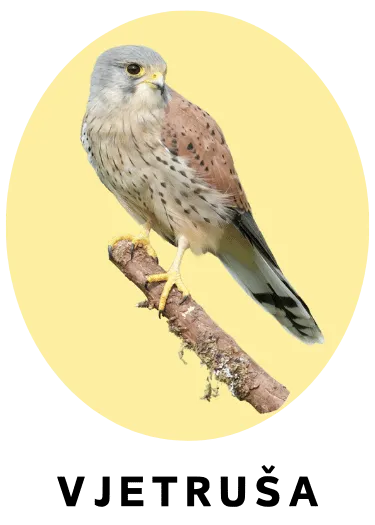
Raising a baby kestrel
Hand-rearing a kestrel chick
If you have found a young common kestrel chick (Falco tinnunculus), it is important to know how to assess its condition correctly and how to help it. This article will take you through the steps of recognising a chick that needs help, how to respond, how to feed it and how to prepare it for release back into the wild.
How to tell if it needs help
When you come across a young chick, the first thing is to work out whether it is a downy nestling (one that has fallen out of the nest and cannot fly on its own) or a fledgling (a chick that is just learning to fly but is still being fed by its parents).
Downy nestlings are young birds that have fallen out of the nest and still have down or short feathers and cannot fly. They are often found on the ground, helpless, and need help.
Fledglings are chicks that are already practising flying but still depend on their parents for food. They are more active and try to fly, but can be clumsy.
If a fledgling is not injured and shows no visible signs of illness (e.g. bleeding, broken wings), it is best to leave it alone. Its parents are probably nearby and looking after it.
When and how to respond
There are situations in which you need to step in:
The chick is injured – If you notice bleeding, a broken wing or other injuries, the chick needs professional veterinary care.
The chick is in danger* – If the fledgling is in a busy place or near predators, move it to a safe spot nearby.
The fledgling has been left on its own – If there is no sign of the parents for more than a few hours, it may have been abandoned.
In such cases, carefully pick up the chick using gloves or a soft cloth to avoid causing it extra stress. Place it in a box with ventilation holes and contact a *wildlife rescue centre* or a bird-protection association.
Returning the chick to its parents
If you have found a downy nestling, first try to return it to its parents. Put the chick somewhere safe and raised nearby (e.g. a branch or a bush) and watch from a distance. Parents often come to feed their young even when they are on the ground. If the parents do not appear within a few hours, then your intervention is needed.
Feeding and keeping a kestrel chick warm
Kestrels are carnivores (meat-eaters), so they need food rich in protein. Feeding a young chick requires care and knowledge of its nutritional needs.
Young kestrel chicks, especially those at an early stage of development, are sensitive to low temperatures and need suitable heating to maintain their body heat.
Heating for young chicks:
Use a heating pad or a bird heater set to a low temperature.
Make sure the chick can move away from the heat source if it gets too hot.
The ideal temperature for young chicks is 30–35°C, but as the chick grows, gradually reduce the heat so that it gets used to natural conditions.
Heating for older chicks:
Once the chick is feathered and able to fly, heating is no longer needed except in extremely cold conditions.
If the chick is kept in an outdoor aviary, provide protection from wind and rain and a warm shelter for the night.
How many meals a day?
Young chicks (downy nestlings):
Kestrel chicks need 6 meals a day, depending on their age and size.
Up to 2 weeks old: 6 meals a day.
2–4 weeks old: 5 meals a day.
Before they start flying (fledglings): 4 meals a day.
Older chicks (ready for release):
Once the chick becomes independent, the number of meals is reduced to -3 a day.
How much food per meal?
Kestrel chicks eat 15–20% of their body weight a day. For example, if a chick weighs 100 grams, it should eat 15–20 grams of food a day.
Per meal:
Young chicks: 5 grams per meal.
Older chicks: 10 grams per meal.
What food
The best food for kestrels is small mice or day-old chicks, because they contain all the necessary nutrients, including calcium from the bones and fibre from the fur. This is key to the chick’s healthy development.
Why is it important for them to eat prey with fur and bones?
Fur and bones aid digestion and provide essential nutrients, especially calcium, which is vital for developing strong bones and feathers.
Supplementary food
If mice or chicks are not available, you can use hearts (e.g. chicken or beef) cut into strips. Before feeding, dip them in water to keep the chick hydrated. Chicken or *beef* can also serve as a temporary alternative, but they are not enough for a long-term diet because they lack key nutrients.
Calcium supplementation
Calcium is essential for the development of bones and feathers. If the chick is not getting enough calcium from its food (e.g. because there are no bones in its diet), calcium needs to be added. This can be done by dusting the food with calcium powder or by giving the chick ground eggshells (carefully prepared by boiling and drying them first to avoid salmonellosis).
How to prepare the chick for release into the wild
Provide suitable housing – The chick needs space to practise flying. The aviary must be large enough.
Feed it properly – Use food rich in protein and calcium.
As the chick becomes independent, keep contact with it to a minimum. This includes reducing the time you spend near it.
Do not hand-feed it or touch it unless absolutely necessary.
Gradually reduce the number of meals so that the chick starts looking for food on its own.
Use natural food sources (e.g. put live food in the aviary so that the chick can practise hunting).
If possible, move the chick to an outdoor aviary where it will be exposed to the weather and natural sounds.
This helps the chick get used to changes in temperature, wind and other natural elements, and to practise flying and hunting
Flight Practice
Provide a large enough space (e.g. a large room, a garage or an outdoor aviary) where the chick can practise flying without risk of injury.
Remove any objects that could be dangerous (e.g. mirrors, windows, sharp edges).
Gently encourage the chick to fly by placing it on one hand and lowering the hand slightly so that it takes off. Use food as an incentive – hold it at a distance so that the chick has to fly to it.
Regular flying practice strengthens the muscles and improves coordination. The chick should be able to fly effortlessly and change direction in flight.
The rewilding process
The chick should be released into the wild when it is able to fly and hunt for food on its own.
As the chick becomes independent, keep contact with it to a minimum.
This includes reducing the time you spend near it.
Do not hand-feed it or touch it unless absolutely necessary.
Choosing a release site:
Choose a safe and suitable place for release, such as open fields or woodland edges where kestrels usually live.
Make sure the location is rich in natural food sources (e.g. mice, insects)
Release the chick in the morning or before noon so that it has enough time to adjust and find food before nightfall.
Avoid releasing it in bad weather (e.g. rain, strong wind).
After release, you can watch the chick from a distance to make sure it is coping well. However, do not approach it or feed it.
Conclusion
Every animal deserves a chance at a free life, and your help can make all the difference!
Releasing a kestrel chick into the wild requires careful preparation, including flying practice, the rewilding process and minimal contact with people. The aim is to make sure the chick becomes fully independent and able to live in the wild. If you are unsure about any step, always contact an expert or a wildlife rescue centre.
Remember:
Your help can be crucial to the chick’s recovery, but the greatest gift you can give it is freedom in the wild.