
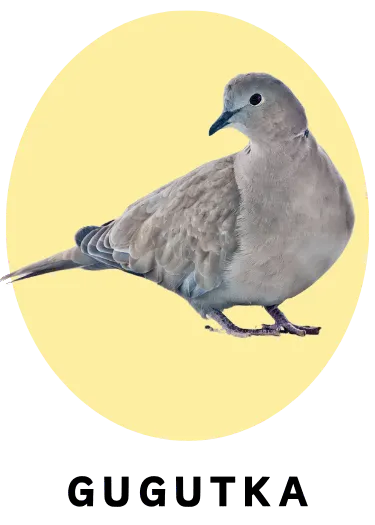
Raising a baby collared dove
How to raise a collared dove chick
Raising a collared dove chick requires the right diet, proper housing and gradual preparation for its return to the wild. Collared doves belong to the pigeon family and are fed from their parents' beaks, so it is essential to simulate this way of feeding so the chick takes in food properly and develops well.
Ideal housing conditions
The chick needs a warm, safe and quiet space to develop properly.
Temperature: In the first days the temperature should be around 30°C, and then it is gradually lowered.
Heating: Use a heat lamp or a heat mat, making sure the chick also has a cooler area it can move to if it gets too hot.
Box: The space should be well ventilated but protected from draughts. It is best to use soft bedding (such as paper towels) to prevent injuries to the legs.
Hygiene: The food dish and the housing should be cleaned regularly to prevent infections.
Preparing food for hand-rearing
Preparing food for a chick up to 5 days old
For a chick of this age you need to prepare a special mixture that is gentle enough and easy to digest. In this case, the mixture should consist only of hand-rearing formula and water.
Hand-rearing formula – use a special hand-feeding formula for chicks (these are often mixtures that contain all the nutrients very young chicks need). You can find it in pet shops or at the vet
Water – The water should be lukewarm, never hot or cold. The ideal water temperature is about 37°C, roughly the temperature of the human body.
Put the required amount of formula in a small bowl (instructions on the packaging may vary, usually about 1–2 teaspoons).
Slowly add lukewarm water, a little at a time, stirring until you get a porridge-like consistency that is thin enough for the chick to swallow, but not too runny.
The mixture should be as thick as yoghurt, but not too stiff. If it is too thin, the chick may choke; if it is too thick, it will struggle to swallow it.
Chicks up to 5 days old need frequent feeds.
It should be fed every 3 hours, including at night, because its digestive system and its capacity to take in food are still very small.
The initial amount of food per feed should be 5–7 ml, which is usually enough for a very young chick of this age. If the chick shows signs of hunger, you can give it a little more. The food must be lukewarm.
Preparing food for an older chick
Collared dove chicks are given a special porridge that imitates the composition of the food they would get from their parents. The ideal mix contains:
80% ground dove seed mix
20% ground puppy kibble for small breeds (a source of protein)
Mix it with hot water until you get a thick but liquid consistency, similar to thin yoghurt.
Collared dove chicks are best fed with a syringe, but to simulate the natural way of feeding from the parent's crop, you need to make a special attachment:
Fit a finger cut from a disposable rubber glove over the wide end of the syringe.
Pierce a hole in the middle and insert the chick's beak through it.
The chick will swallow the food by reflex, much as it does when fed by its parents. Feed slowly and carefully to avoid choking.
How often and how much to feed depends on the chick's age:
Very young chicks (up to 10 days) – fed every 3 hours, including at night. The amount per feed is 5–10 ml.
Chicks aged 10 to 20 days – fed 5 times a day, 10–15 ml per feed.
Older chicks (20+ days) – the number of feeds is gradually reduced to 3 a day, and the amount increased to 15–20 ml per feed.
After 4 weeks the chick should start eating seeds and grain on its own; these should always be available in the cage.
Preparing for release into the wild
Once the chick starts eating on its own, it should be gradually prepared for its return to the wild:
Exposure to natural light and sounds – once its feathers have grown, keep the chick in a larger outdoor cage so it gets used to outdoor conditions.
Strengthening the flight muscles – give the chick room to fly so it builds up wing strength.
Limiting contact with people – to avoid it becoming too tame, reduce interaction so the chick keeps its natural wariness.
When and where should you release the chick?
It is best to release the chick when it:
Eats seeds on its own
Has fully developed feathers and can fly
Shows a natural fear of people and does not seek interaction
Release the chick in a quiet area where there are other collared doves, away from roads and predators. Ideally there should be trees and food sources nearby to help it adapt
Conclusion
Raising a collared dove chick takes patience, consistency and proper care. The keys are correct feeding, optimal housing and gradual preparation for its return to the wild. By following these guidelines, you will give the chick the best chance of survival and a successful return to the wild.