The Eurasian wryneck (Jynx torquilla) is an unusual species of woodpecker that stands out for its unique appearance and interesting defence strategies. Although it belongs to the woodpecker family, unlike its relatives it does not excavate holes in trees but uses existing cavities for nesting.
Appearance and distinctive features
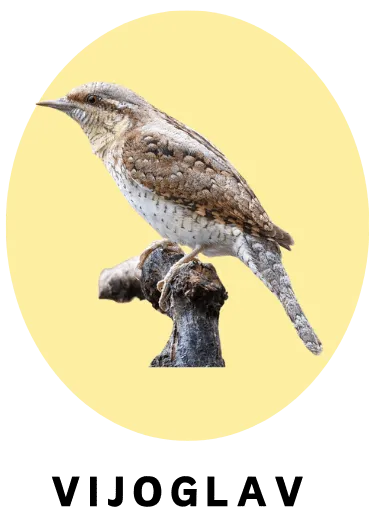
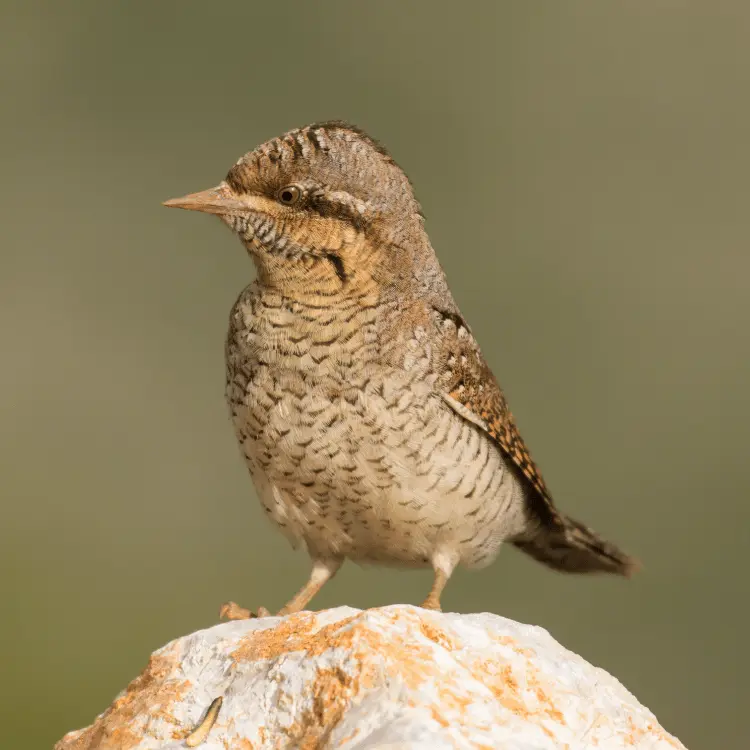
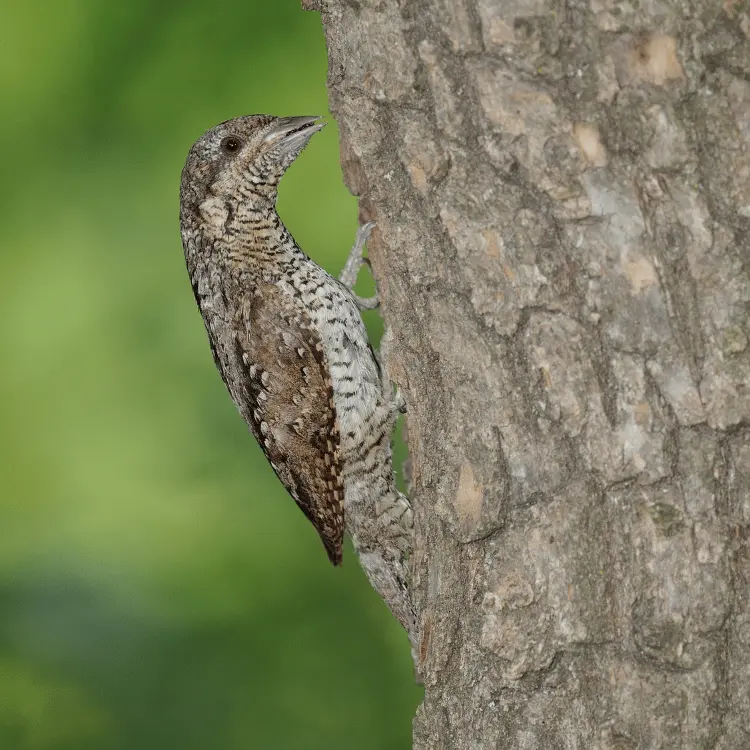
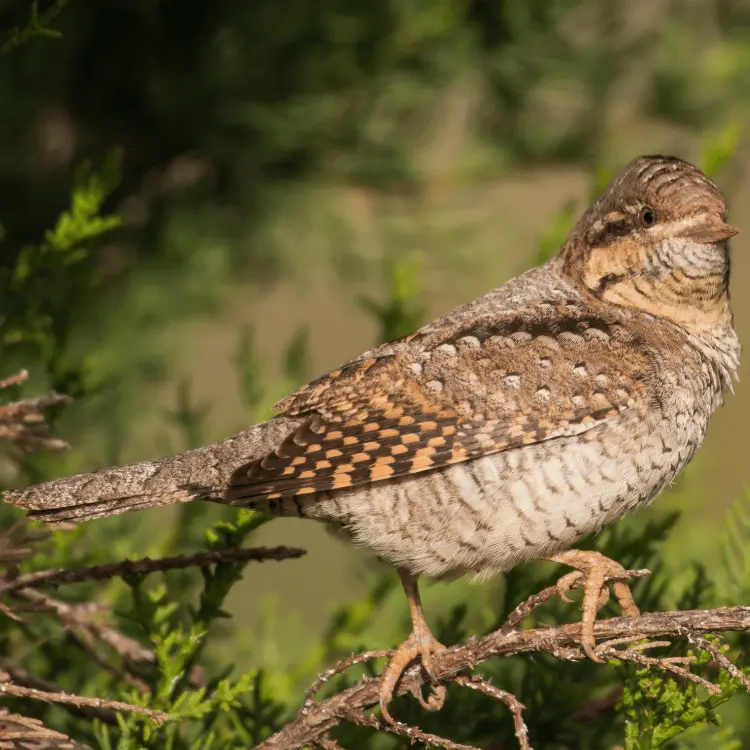
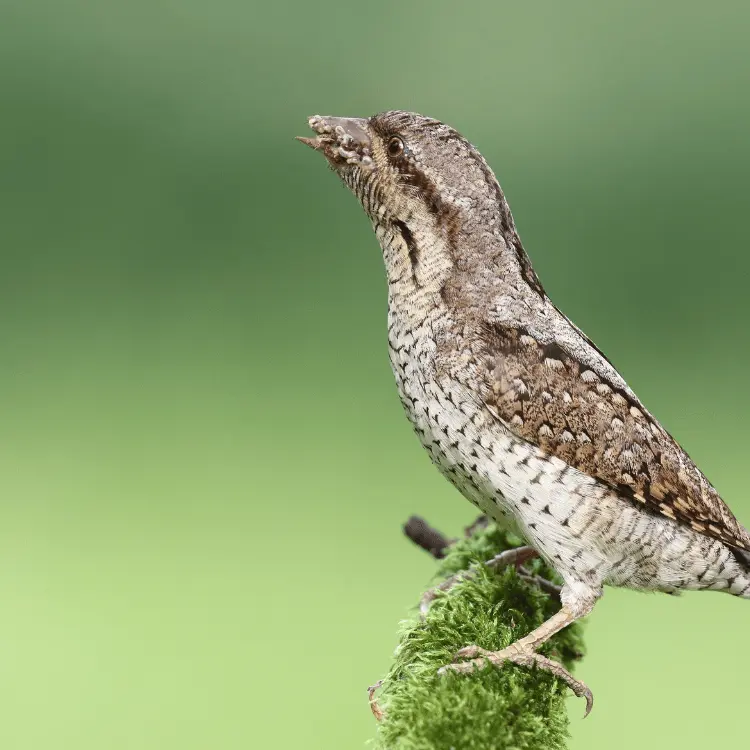
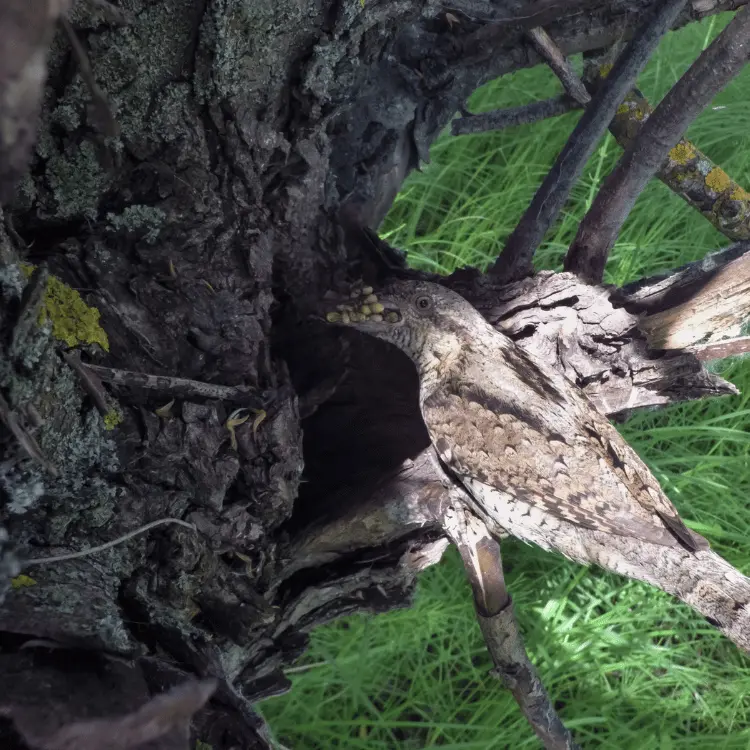
The wryneck is brownish-grey with a mottled pattern that gives it excellent camouflage in woodland. Its plumage resembles tree bark, which makes it almost invisible when it keeps still.
Besides its inconspicuous colouring, the wryneck also has a special ability to turn its head almost like a snake, which it uses as a defence mechanism when it feels threatened. This trait gave it its name – the wryneck twists and suddenly turns its head when threatened.
Habitat and distribution
This interesting bird lives in open woodland, orchards, parks and forest edges. The wryneck is a migratory bird, so in summer we can find it in Europe and Asia, while it spends the winter in Africa and southern Asia.
For nesting it uses cavities abandoned by other birds, such as woodpeckers, instead of making its own. This sets it apart from other members of its family.
Diet – an ant specialist
The wryneck feeds on ants and their larvae, which makes it a specialist hunter of these insects. Its long, sticky tongue allows it to pull ants out of their nests, much as anteaters do. Besides ants, it sometimes eats other small insects
Behaviour and breeding
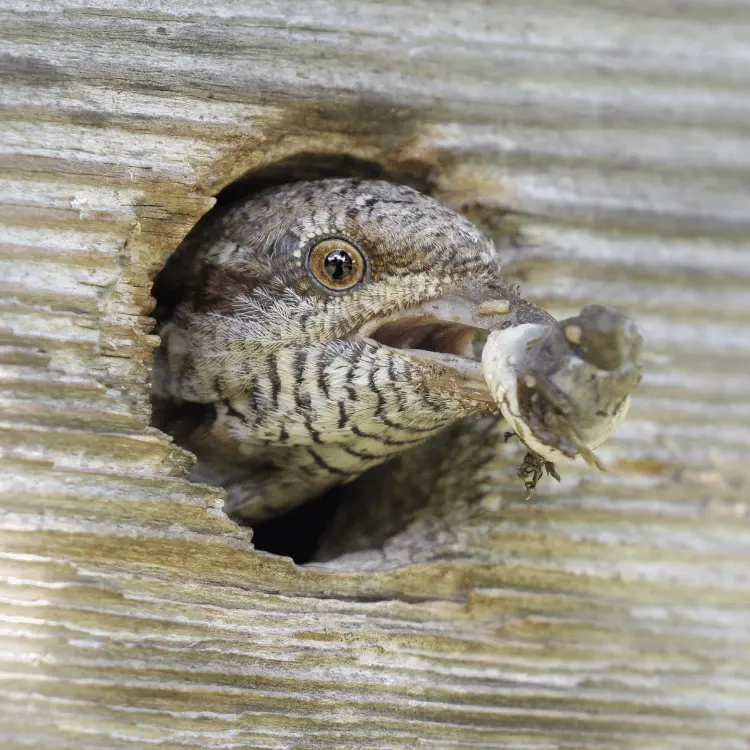
During the breeding season the male wryneck attracts the female with a loud call, and the pair then look for a suitable cavity to nest in. The female lays 6 to 10 eggs, and both parents share incubation and feeding the young.
If it feels threatened in the nest, the wryneck uses its famous defence technique – twisting its neck and imitating the movements of a snake, which often confuses predators.
Conservation and threats
The wryneck is not directly endangered, but its numbers are declining in some parts of Europe because of the loss of old trees with natural hollows, which it uses for nesting. A decline in the number of anthills caused by changes in the ecosystem can also affect its survival.
Protecting old forests and natural tree cavities, as well as preserving anthills, are key to conserving this unusual bird.
Interesting facts about the wryneck
The wryneck got its name from its unusual behaviour – when disturbed, it twists its neck in all directions in a way that resembles a snake’s movements. This strategy serves to confuse predators.
Although it belongs to the woodpecker family, the wryneck does not drum on wood with its beak. Instead, it uses softer surfaces and natural tree hollows for nesting.
Its brown-grey mottled plumage blends perfectly with tree bark, which makes it almost invisible when it keeps still.
Unlike other woodpeckers, the wryneck is a migratory bird – it spends the summer in Europe and Asia and the winter in Africa and southern Asia.
Instead of searching for insects under tree bark like other woodpeckers, the wryneck feeds on ants and their larvae, using its long, sticky tongue to extract its prey from anthills.
The wryneck does not carve out its own nest holes but uses the abandoned nests of other woodpeckers, tree hollows or even cracks in walls.
When it feels threatened in the nest, the wryneck hisses, twists its neck and imitates a snake, which often scares off predators.
Conclusion
The Eurasian wryneck (Jynx torquilla) may not be the best-known member of the woodpecker family, but it is certainly one of the most unusual. Its mimicry, neck-twisting and snake-like hissing make it a true master of survival.
If you ever see a small bird oddly twisting its neck and hissing like a snake, you can be sure you have met the mysterious wryneck!