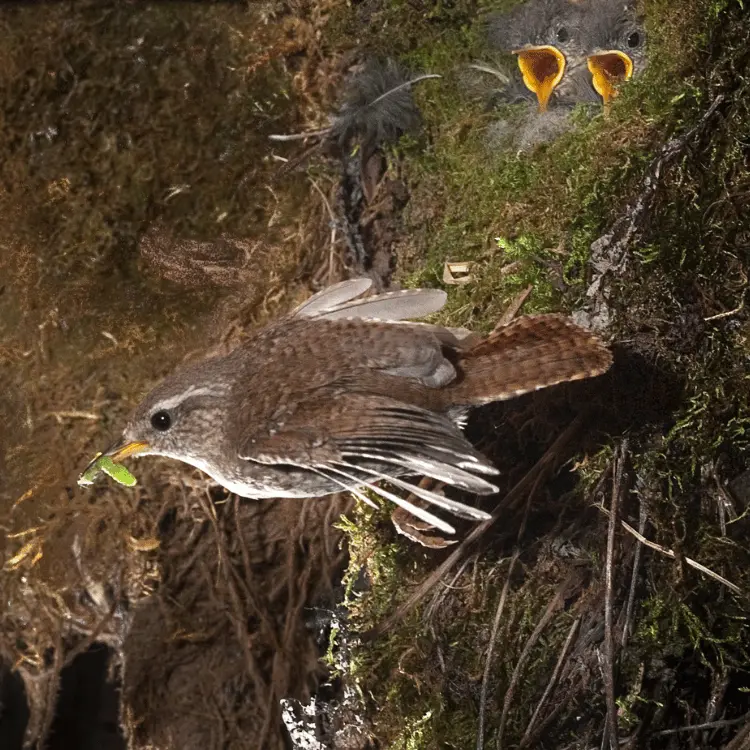
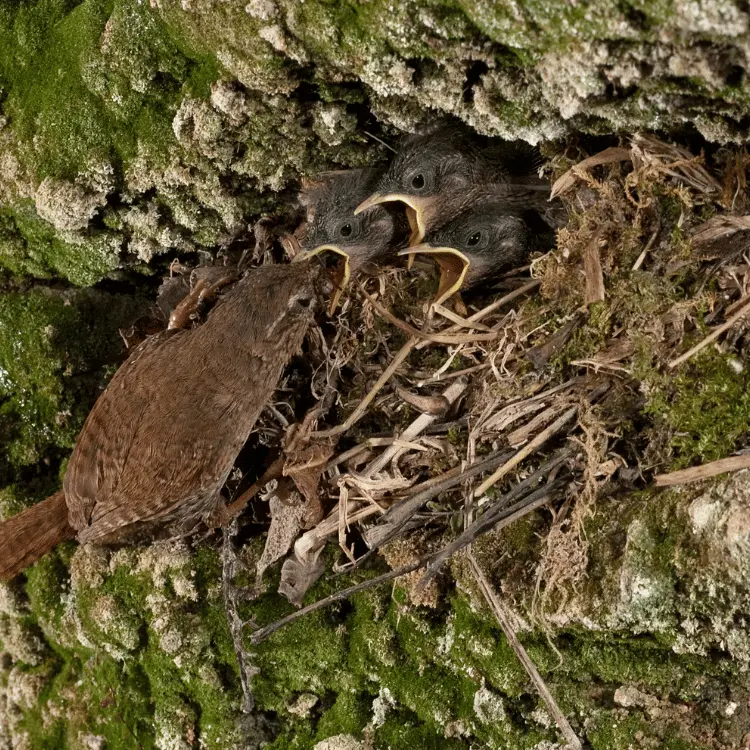
The Eurasian wren (Troglodytes troglodytes) is one of the smallest birds in Europe, known for its exceptionally lively behaviour and distinctive appearance. Although it is very small, its presence in nature is extremely important, because its behaviour and ecology contribute to the balance of ecosystems.
Appearance and physical characteristics of the wren
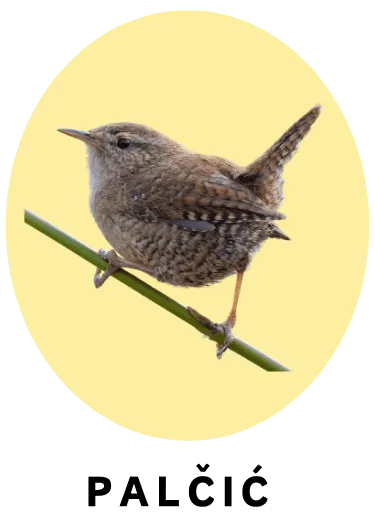
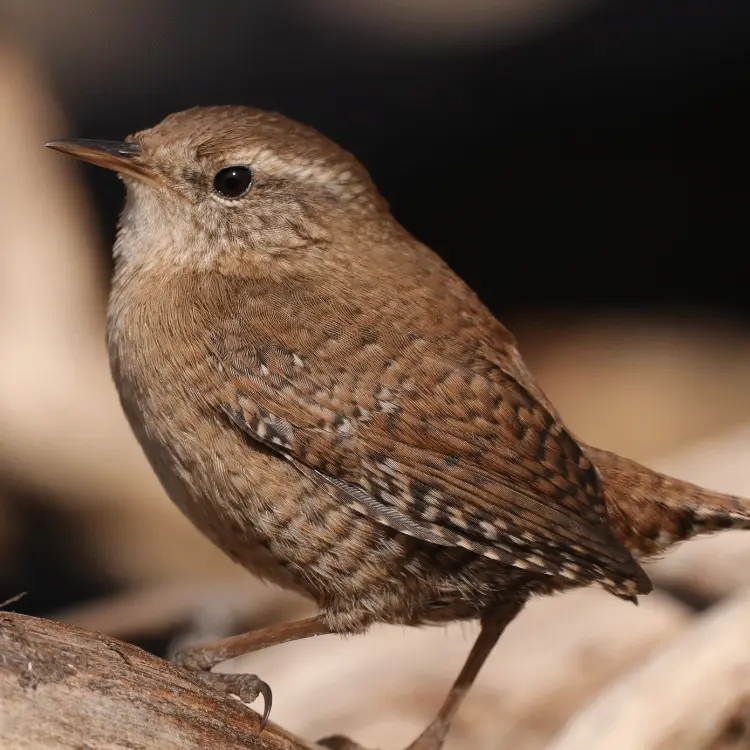
The wren is a bird no more than 10 cm long, but despite its small size it is very easy to recognise thanks to its characteristic appearance.
Physical characteristics
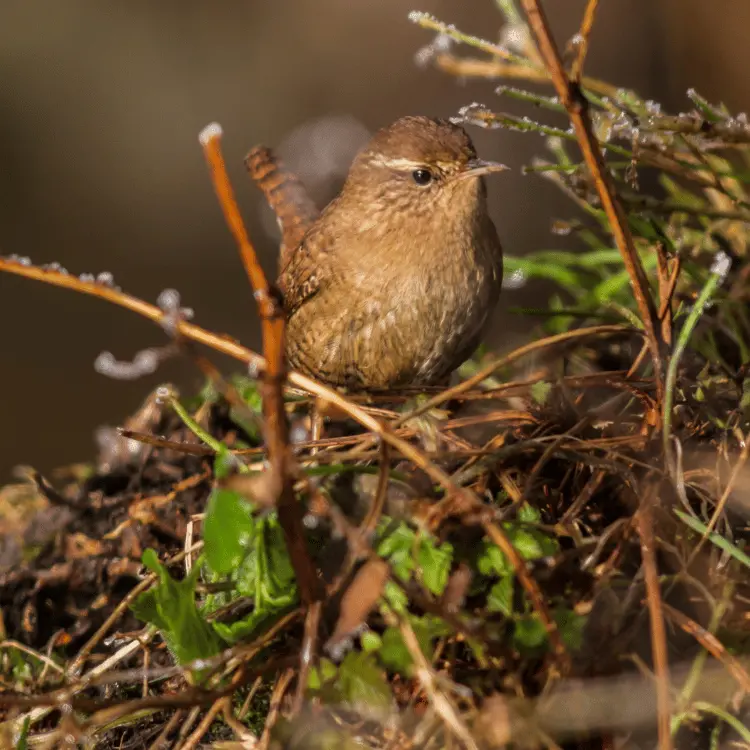
Body and plumage colour: The wren has brownish-grey plumage, which makes it almost invisible among trees and shrubs. Its belly is paler.
Size: This bird is extremely small, with a body length of 8 to 10 cm and a wingspan of 15 cm.
Bill: The bill is short and conical, perfect for catching small insects.
Tail: A characteristic feature of the wren is its cocked tail, which is often held at an angle and adds to its unique appearance.
Eurasian wren habitat and distribution
The wren is highly adaptable, and its habitat includes woodland, gardens, hedgerows and even urban areas.
The wren is widespread across Europe, where it lives in wooded areas and scrub. It can also be found in northern Europe and even in Asia.
It prefers woodland, but we often see it in parks and gardens too, where it can hide among the trees or in the bushes.
What does the wren eat?
The wren is an insectivorous bird that spends most of its time searching for small insects and other tiny creatures.
Insects: its diet consists mainly of small insects such as ants, beetles and larvae.
Spiders: it also hunts spiders and other arachnids, which it often finds in trees and bushes.
Small beetles: the wren also occasionally catches small beetles found near its habitat.
Hunting method
The wren is a skilful hunter that searches for food among leaves, shrubs and tree bark. It hops quickly from twig to twig, using its short beak to catch its prey.
Wren behaviour
The wren is known for its liveliness and quick movements. Small as it is, it is not afraid of other animals and birds, and you will often see it hopping and scurrying about at speed.
Quick movements: the wren is very agile and constantly on the move, looking for food and exploring its surroundings.
Cocked tail: its characteristic upright tail is often held at an angle and moves in rhythm with the bird’s movements, which makes it very easy to recognise.
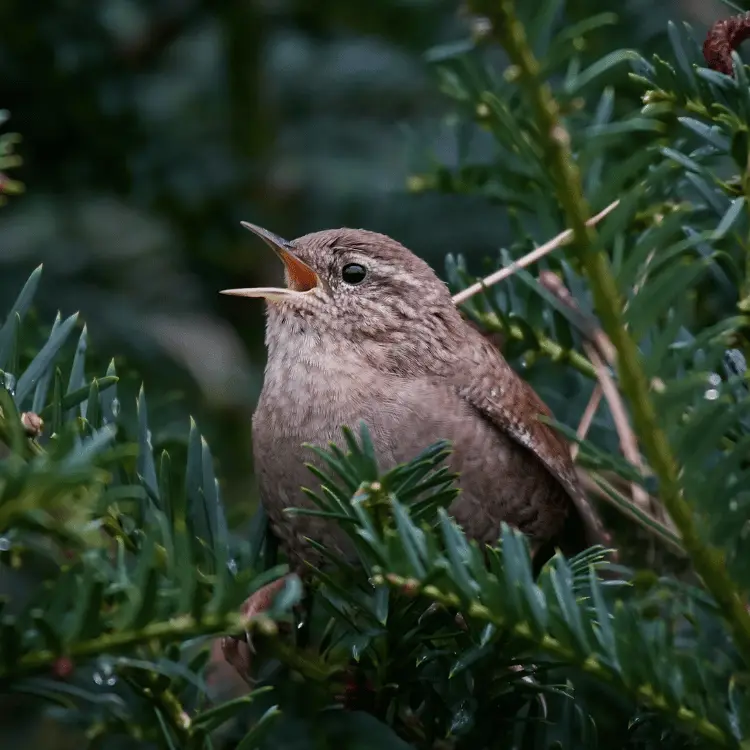
Calls: although it is a very small bird, the wren is known for its loud song, which can often be heard during the breeding season or when it wants to mark its territory.
Migration
The wren is a resident bird and generally stays in its habitat all year round, although it may occasionally move to more southerly areas during very cold winters.
Nesting and caring for the young
The wren nests in dense shrubs or tree hollows, where it builds its nest from grass and leaves.
The nest is usually placed on low branches or in hollows, where the young are protected.
The female lays 4 to 8 eggs, which she incubates for about 12 to 14 days.
Both parents look after the young, feeding them tiny insects until they are strong enough to leave the nest.
Interesting facts about the wren
Upright tail: one of the wren’s most recognisable features is its cocked tail, which is always held at an angle. This posture is not just for show – it also helps the bird keep its balance as it moves.
Very loud song: although it is tiny, the wren has a powerful song, which it often uses to mark its territory.
Adaptability: the wren is an extremely adaptable bird that can live in many different types of habitat, from woodland to gardens and urban areas.
Conclusion
The wren is a small but very important bird in woodland and garden ecosystems. Its liveliness, quick movements and characteristic upright tail set it apart from other birds. What is more, its diet and behaviour make a significant contribution to maintaining the balance of nature, making it a fascinating and irreplaceable inhabitant of our environment