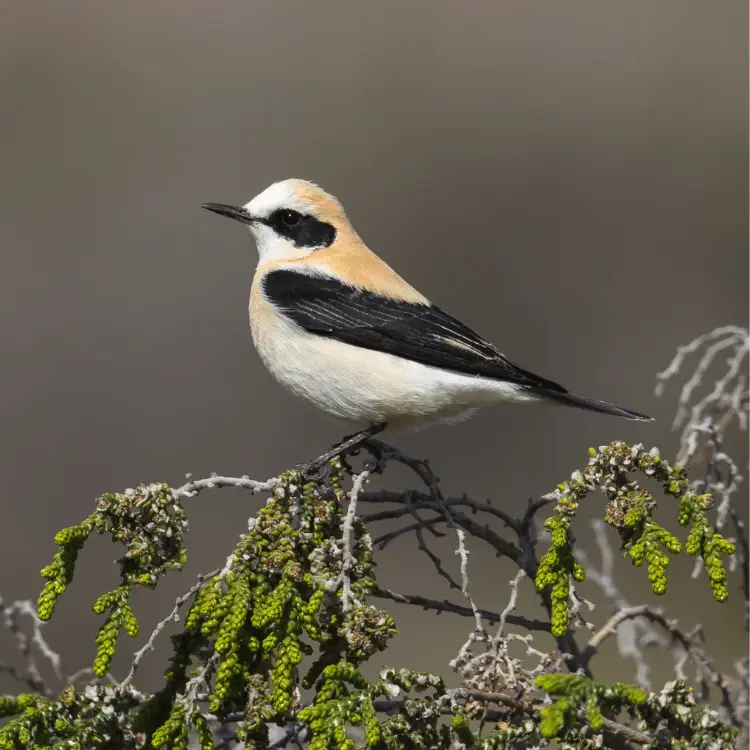
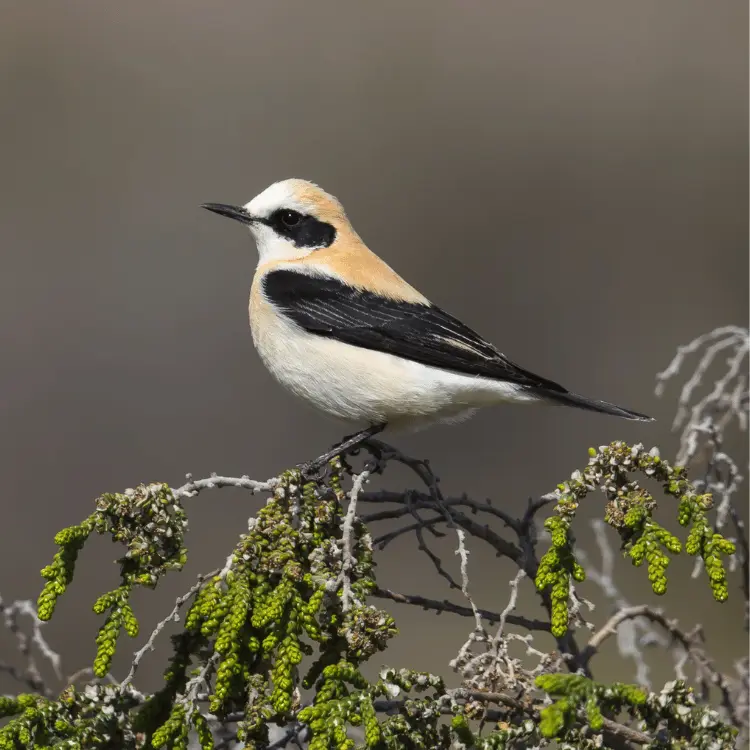
The western black-eared wheatear (Oenanthe hispanica) is a small migratory bird from the Old World flycatcher family (Muscicapidae), recognisable by its contrasting plumage and elegant posture. It mostly lives in dry, open terrain with sparse vegetation and can often be seen standing proudly on rocks or bushes as it watches its surroundings.
Appearance and distinctive features
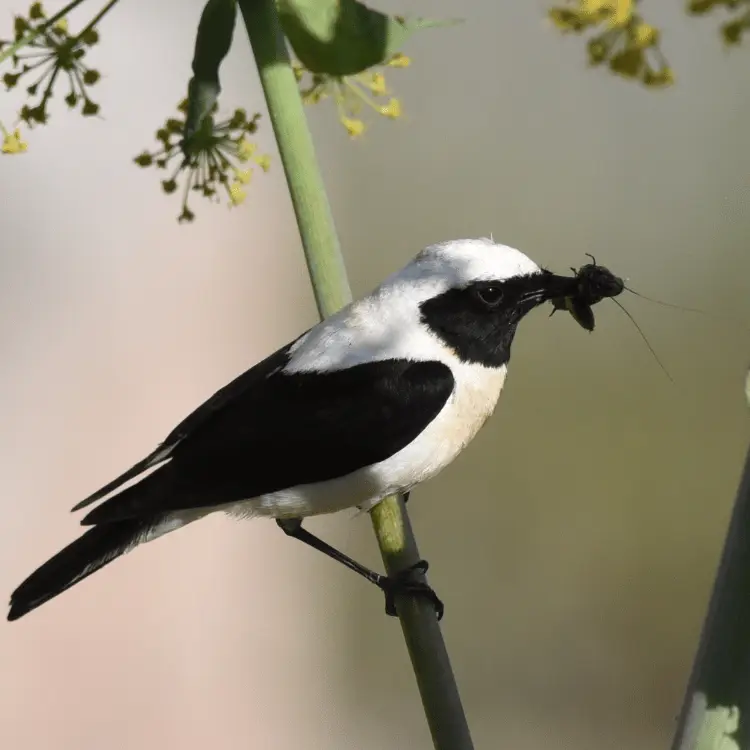
Plumage – The black-eared wheatear shows marked sexual dimorphism. Males have a pale body with black wings and a characteristic black mask around the eyes. Females are less contrasting, with brownish tones and more subtle markings.
Size – Body length is about 14–15 cm, and the wingspan reaches 25–27 cm. Tail – White with a black tip, the typical marking of wheatears. Eyes and beak – Dark and expressive, adapted to catching insects.
Habitat and distribution
The black-eared wheatear prefers arid and semi-arid habitats with rocky ground and sparse vegetation. It is most commonly found in southern Europe, North Africa and western Asia. It is a migrant, spending the summer in Europe and the winter in sub-Saharan Africa. Open terrain, scrub-covered plateaus, pastures and Mediterranean steppes are also ideal habitats for this species.
It also lives in Dalmatia, especially on dry, rocky terrain, karst, maquis and in coastal areas. It arrives here in spring to breed and stays until the end of summer or early autumn before migrating to Africa. Dalmatia’s warm climate and abundance of insects give it ideal living conditions.
Diet and lifestyle
The black-eared wheatear is primarily an insectivore, but sometimes also eats small fruits. Favourite food – Various insects, grasshoppers, spiders and larvae.
Hunting strategy – The black-eared wheatear uses a sit-and-wait technique, standing on a raised spot until it sees prey and then swooping down suddenly to catch it. Sometimes it also hunts on the wing, catching insects in mid-air.
Breeding and nesting
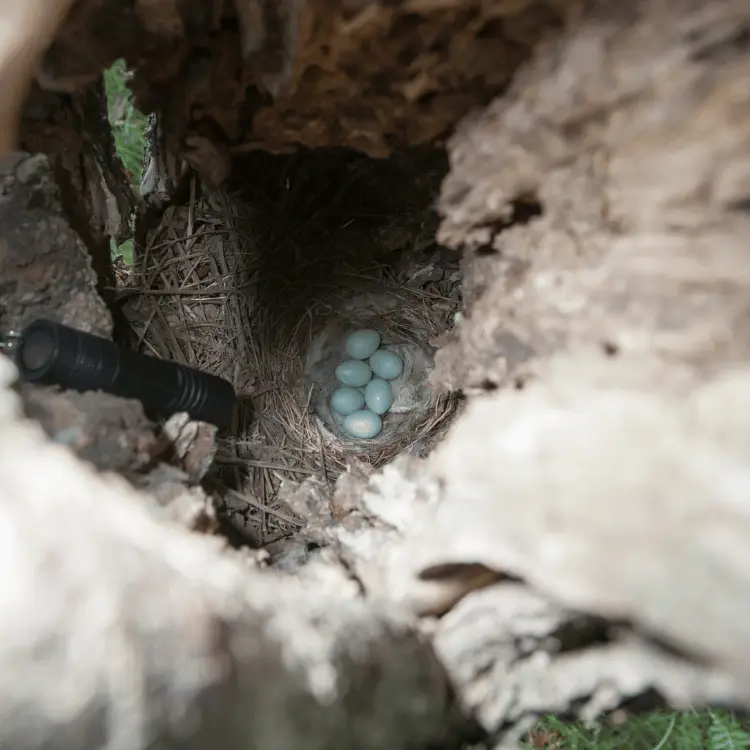
The breeding season begins in April and May. The nest is built in rock crevices, ruins and under stones, often hidden from predators.
The female lays 4–6 eggs and incubates them for about 12–14 days. The young leave the nest after just two weeks, but the parents keep feeding them until they are fully independent.
Behaviour and communication
An active and cautious bird, often seen hopping about on the ground or watching its surroundings from raised vantage points. Territorial during the breeding season, the males defend their area and perform striking aerial acrobatics to attract females. The song is melodious and varies from soft whistles to complex calls, depending on the situation.
Threats and conservation
Although it is not an endangered species, the black-eared wheatear faces certain challenges: Habitat loss due to urbanisation and changes in land use. Climate change, which affects food availability and migration patterns. Declining insect numbers, which harm the diet of young birds.
How can we help the black-eared wheatear?
Protecting natural habitats – Safeguarding open and rocky areas from being converted into farmland and urban areas. Reducing the use of pesticides, which wipe out its main food source – insects. Research and monitoring of migration patterns to ensure the continuity of the population.
Conclusion
The western black-eared wheatear (Oenanthe hispanica) is a remarkably adaptable and elegant bird whose characteristic contrasting plumage, quick movements and melodious calls make it a real attraction of dry, rocky landscapes. It is particularly common in Dalmatia, where it breeds in the warmer months, making the most of the abundance of insects and the favourable climate. Despite the challenges, by properly protecting natural habitats we can ensure the long-term survival of this fascinating species.