
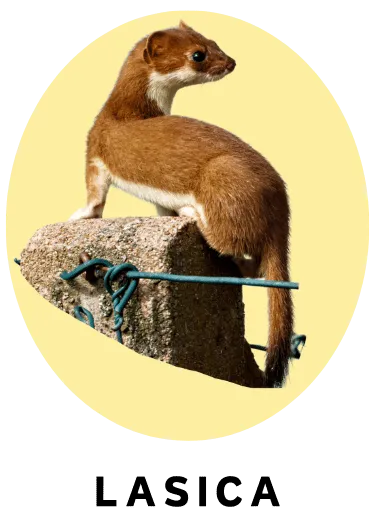
About weasels
Least weasel (Mustela nivalis)
The least weasel (Mustela nivalis) is the smallest member of the genus Mustela and one of the fastest and most agile animals in nature. Despite its tiny build, the weasel is an extremely skilful and efficient predator that hunts prey much larger than itself. Common in forests, fields and mountain areas, the weasel is best known for its white or light brown colouring, long body and distinctive long tail.
Appearance and characteristics
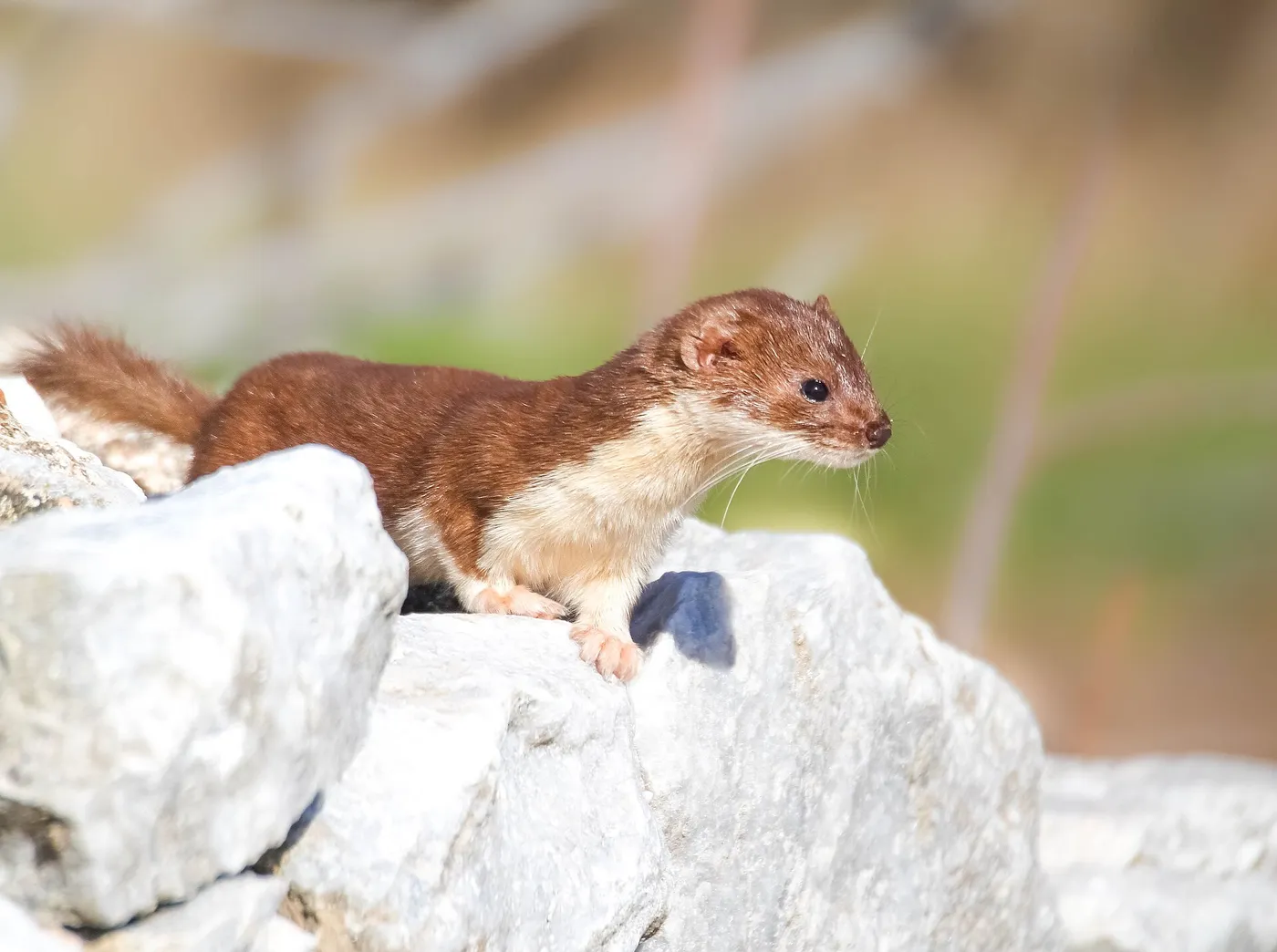
The weasel is an extremely small animal, with a body length of 20 to 30 cm, while its tail can reach up to 10 cm. Adults weigh only 70 to 200 grams, which makes them almost unnoticeable in the wild.
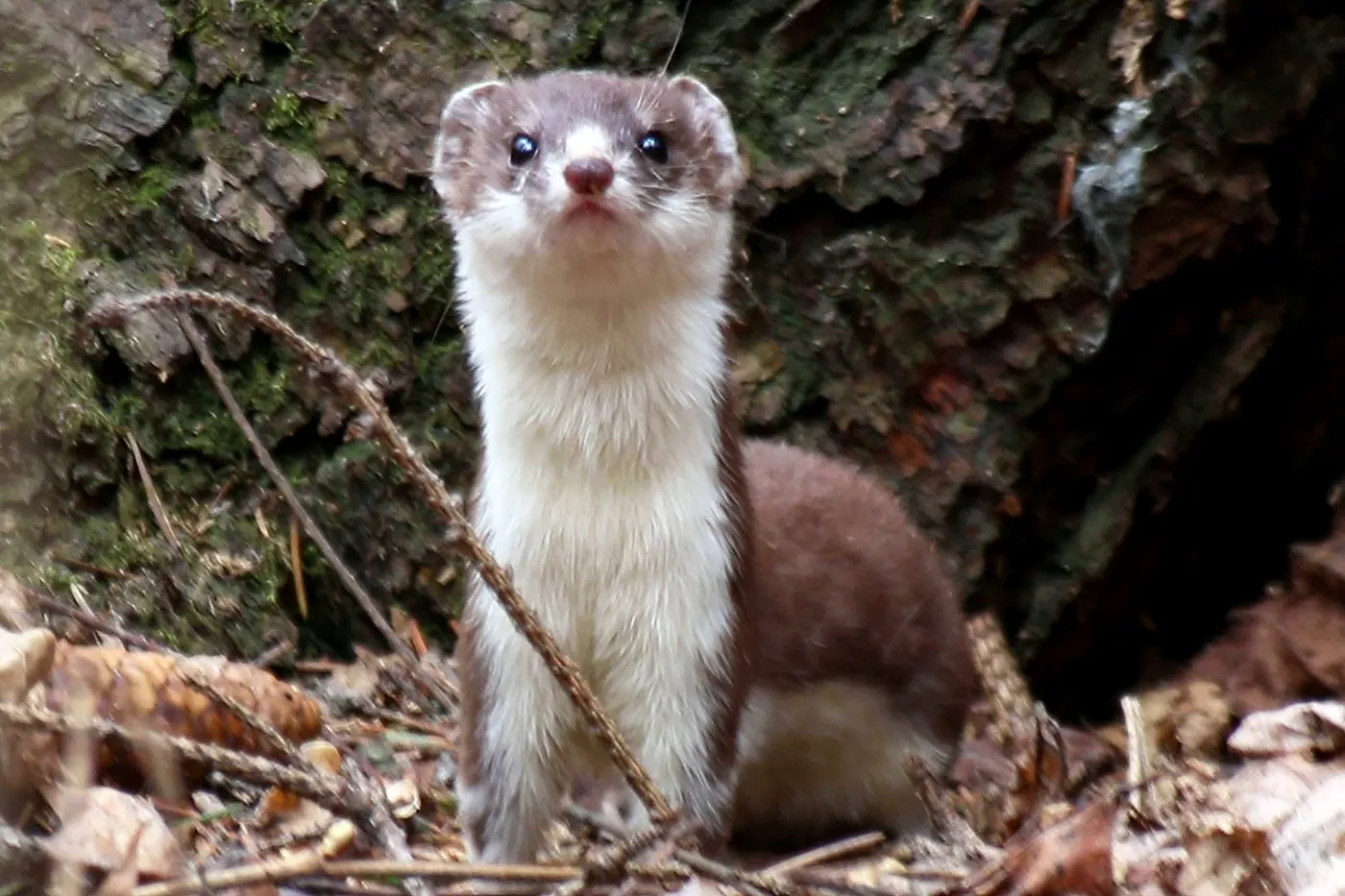
Its fur is usually brown or light brown, with a slightly paler belly, while in winter, in colder regions, its fur can turn almost white, especially in snowy conditions. This change of colour helps it hide from predators and hunt more easily.
The weasel has sharp claws and an exceptionally strong jaw, which it uses to catch and kill its prey, and its elongated body allows it to squeeze through narrow spaces.
Habitat and way of life
The weasel is a very adaptable animal that lives in a variety of habitats:
Forests – mixed, deciduous and coniferous
Fields and meadows – especially where there are plenty of shrubs and cover
Mountain regions – where it can survive the winter thanks to its ability to adapt to cold conditions
Although it is a nocturnal animal, the weasel is also very active during the day, yet it is hard to spot because of its size and its ability to hide. Its dens or shelters may be in holes in the ground, ruins or even abandoned buildings, where it retreats from time to time when it is not searching for food.
The weasel is a loner and usually lives alone. Unlike many other predators, the weasel is not territorial, but roams over a wider area, looking for prey and suitable shelter.
Diet
The weasel is a strict carnivore whose diet is very varied and depends on the availability of prey. It mainly hunts small rodents such as mice, voles and rats, but it may sometimes also attack birds, insects and even larger prey such as hares and squirrels.
Unlike larger predators, the weasel hunts with a rapid attack, using its exceptional dexterity and speed to catch its prey. As a rule it hunts alone, but in areas rich in food it can sometimes be seen hunting in groups.
Behaviour and activity
The weasel is a very active animal, known for its exceptional agility and its ability to cover long distances while searching for food. Although it is mainly nocturnal, it can also be active during the day, especially in the colder months.
It is very agile and climbs easily, which allows it to hunt at height and spend a lot of time in trees or tall shrubs. It can also run and jump fast, and its stamina allows it to hunt prey several times its own size.
Breeding and young
The weasel’s mating season is in spring, usually from April to May. The female is pregnant for about 30 days, after which she gives birth to a litter that usually numbers 4 to 6 kits. The young are completely helpless at first, blind and hairless, but gradually become more and more independent.
The weasel raises its young extremely quickly: within 3 to 4 months they become completely independent and begin to hunt on their own.
Conservation status and threats
According to the IUCN, the weasel is classified as “Least Concern”, which means that its status is not threatened. However, there are numerous threats that can affect its population:
Loss of habitat due to urbanisation and industrialisation
Environmental pollution and the use of pesticides, which reduce the numbers of prey
Road accidents and the loss of wild vegetation due to intensive agriculture
Illegal hunting in some areas, where the weasel is considered a pest
The weasel is extremely resilient and adaptable, but the long-term survival of the species depends on preserving its habitats and reducing human impact on the environment.
Interesting facts about the weasel
The weasel is extremely agile – thanks to its long body and flexibility it can get through the tiniest spaces.
It is fast and extremely energetic – it can travel up to 10 kilometres a day in search of food.
The weasel is known for its aggressive behaviour, especially when it feels threatened or when its litter is at stake.
In some cultures the weasel is a symbol of skill and resourcefulness.
Weasels have an extremely keen sense of smell, which allows them to find food even under snow or inside crevices.
Conclusion
The least weasel (Mustela nivalis) is a small but extremely efficient predator that plays a key role in the ecosystems where it lives. Despite its tiny build, its speed, agility and adaptability make it an incredible hunter.
Although it is not endangered, protecting the weasel’s habitat and reducing threats from human activities are important for the conservation of this species. The weasel is an example of adaptability and fighting spirit in the wild, and its presence in nature is an indicator of a healthy ecosystem.