Thrushes, songbirds of the family Turdidae, are known for their melodious song and their important role in the ecosystem. In Croatia, different thrush species live in forests, gardens, parks and farmland. Their adaptability to different habitats, varied diet and migratory habits make them a fascinating part of the bird world.
Thrush (Turdidae)
Thrush species in Croatia
Several thrush species occur in Croatia, including:
Common blackbird (Turdus merula): The most common and best-known species; the male has black plumage and an orange beak.
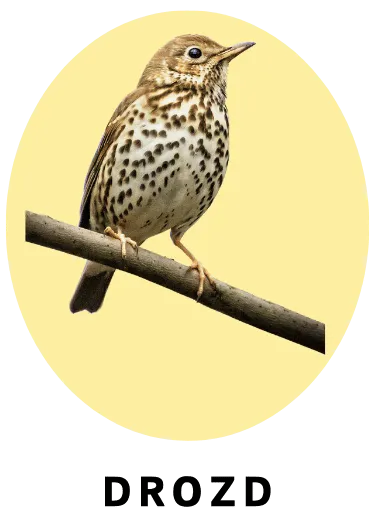
Song thrush (Turdus philomelos): A smaller thrush with a distinctive brown back and white breast.
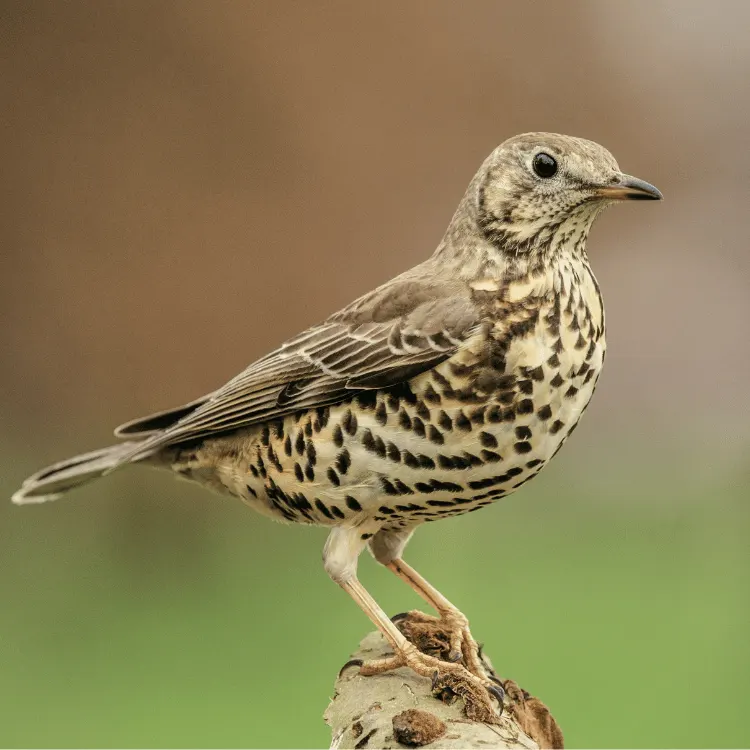
Mistle thrush (Turdus viscivorus): The largest of the thrushes, recognisable by its spotted breast and often seen in meadows.
Redwing (Turdus iliacus): A smaller species with reddish flanks and streaks on the breast, common during migration.
Fieldfare (Turdus pilaris): A species with an ash-grey back and a speckled belly, often seen in flocks in winter.
Thrush habitat and habits
Thrushes favour a variety of habitats, including dense forest, scrub, town gardens and parks. The blackbird is a common bird in urban environments, while the mistle thrush prefers woodland edges and open meadows. In winter, migratory species such as the redwing and fieldfare come down to lower areas, where food is easier to find. Thrushes are diurnal birds, active early in the morning and towards evening.
What do thrushes eat?
Thrushes have a varied diet, which includes:
Insects, worms, snails
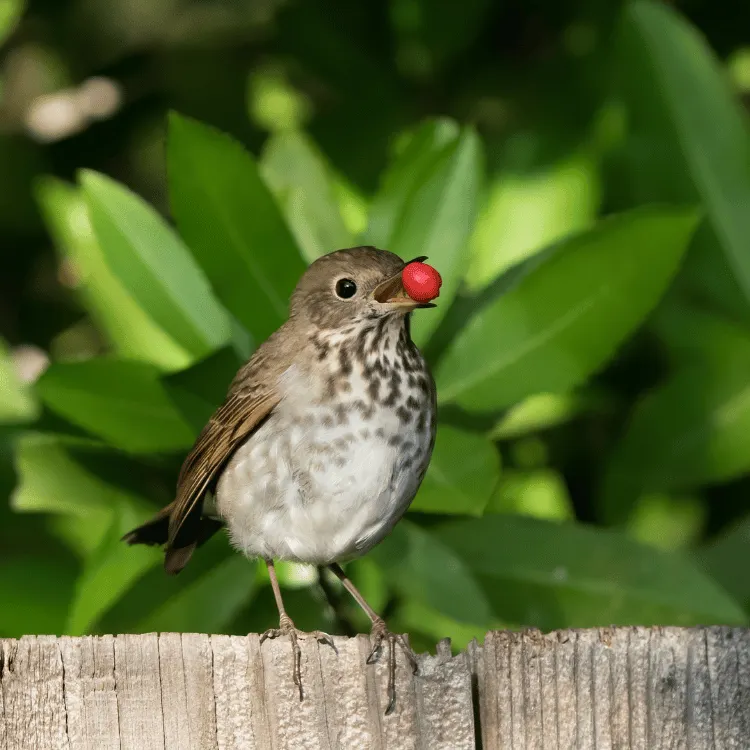
Fruit and berries (cornelian cherry, rosehip, mistletoe)
In summer they feed mainly on invertebrates, while in winter they switch to fruit and berries. The mistle thrush plays a key role in spreading mistletoe, as it eats the berries and disperses the seeds.
Thrush breeding and behaviour
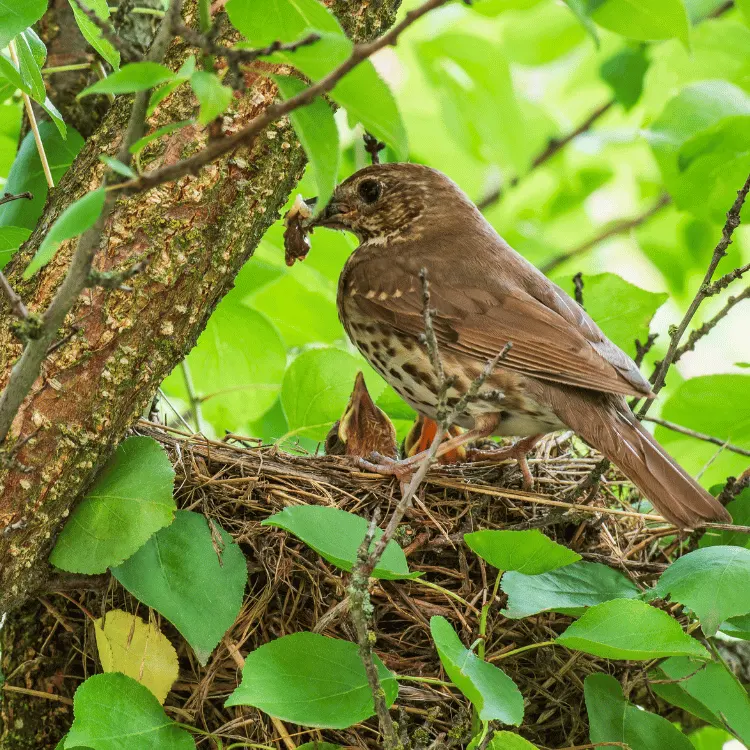
Thrushes nest in trees, bushes or in cracks in buildings. Their nests are made of twigs, grass and mud. The female lays 3–6 eggs, which she incubates for about two weeks. The young stay in the nest for another 10–15 days while their parents feed them. Thrush behaviour varies with the season: in spring and summer thrushes are territorial and defend their nests, while in winter they gather in flocks to improve their chances of survival.
The blackbird and other thrush species use song to mark their territory and attract a mate. Their song, made up of repeated phrases, is one of the most complex of all birdsong.
Thrush lifespan
Thrushes in the wild usually live 2–5 years, although some can reach 10 years. The high mortality in the early stages of life is usually the result of predation and unfavourable weather conditions.
Interesting facts about thrushes
The blackbird was once purely a forest bird, but it is now commonly found in towns and cities.
Thrushes use tools – some smash snails against stones to get at the flesh.
Thrush song is one of the most complex of any bird species, and the blackbird stands out for the richness of its songs, including imitations of other birds and of sounds from its surroundings.
Research on thrushes
Thrushes are the subject of numerous scientific studies, particularly in the context of migration and adaptation to urban habitats. Changes in thrush populations often serve as indicators of environmental health. Research shows that falling thrush numbers may be linked to pesticide use and habitat loss.
Thrushes are key players in Croatia’s ecosystems. Their adaptability and diversity make them fascinating subjects of study, and their song symbolises the natural beauty of Croatia.