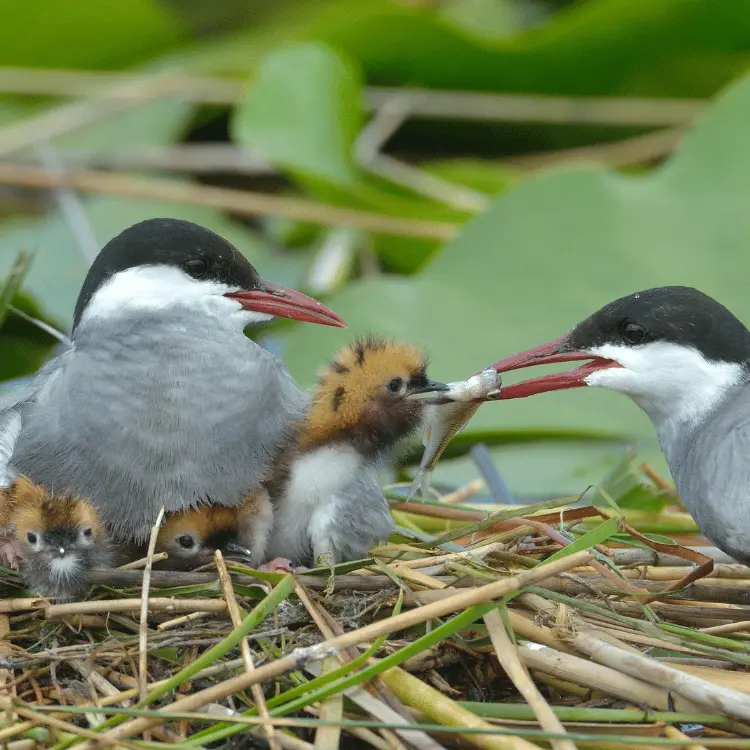
The common tern (Sterna hirundo) is an elegant migratory bird known for its graceful flight and its ability to catch fish on the wing. This bird belongs to the gull and tern family (Laridae) and can be found on coasts, rivers and lakes across Europe, Asia, North America and North Africa. The tern is a symbol of freedom and the beauty of nature, and its migrations between the northern and southern hemispheres are a testament to its endurance and adaptability.
Common tern (Sterna hirundo)
Appearance and physical features
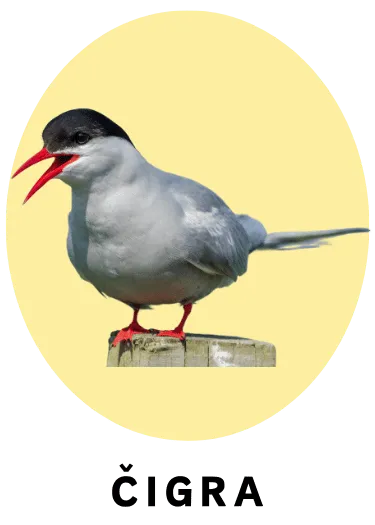
The tern is a medium-sized, slender bird with long, narrow wings and a characteristic forked tail that looks like a swallow’s. Its plumage is white with a black cap, and the wings are tinged with grey. The beak is thin and red with a black tip, while the legs are short and also red. A tern’s body length is about 33–39 centimetres, and its wingspan reaches up to 90 centimetres. It weighs between 100 and 150 grams.
Tern species in Croatia
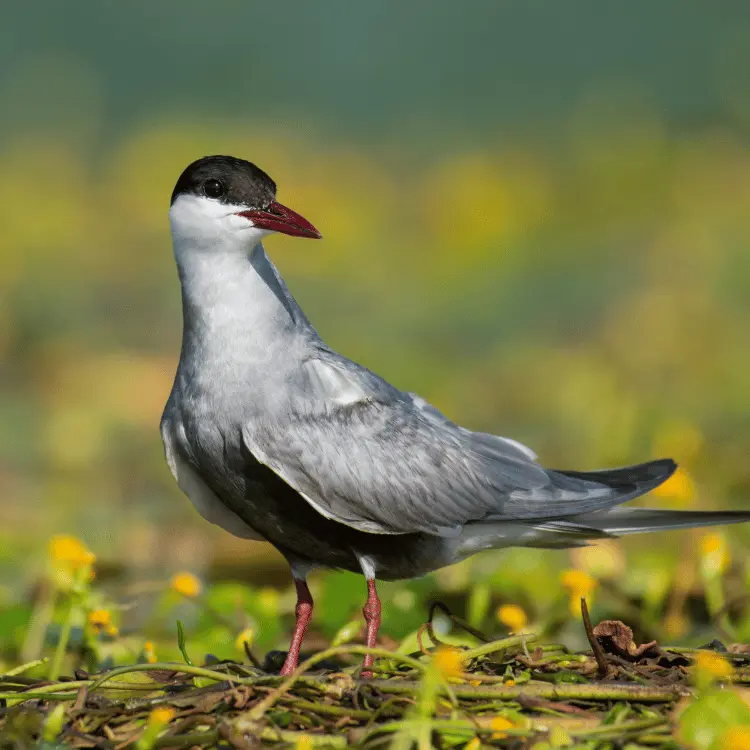
Several species of tern live in Croatia: Common tern (Sterna hirundo) – The most common species, found on rivers, lakes and wetlands. Little tern (Sternula albifrons) – Smaller and rarer, recognisable by its yellow beak and smaller size. Caspian tern (Sterna caspia) – A larger species with a heavier beak and paler plumage. Whiskered tern (Chlidonias hybrida) – Found in wetlands, often seen passing through on migration.
Habitat and migration
Terns are migratory birds that prefer aquatic habitats such as lakes, rivers, wetlands and sea coasts. Their nests are often on shingle or sandy shores, islets or artificial platforms. In winter, terns migrate to the southern hemisphere, most often to the tropical and subtropical regions of Africa and Asia. Common terns that breed in Europe travel thousands of kilometres to reach their wintering grounds.
Diet
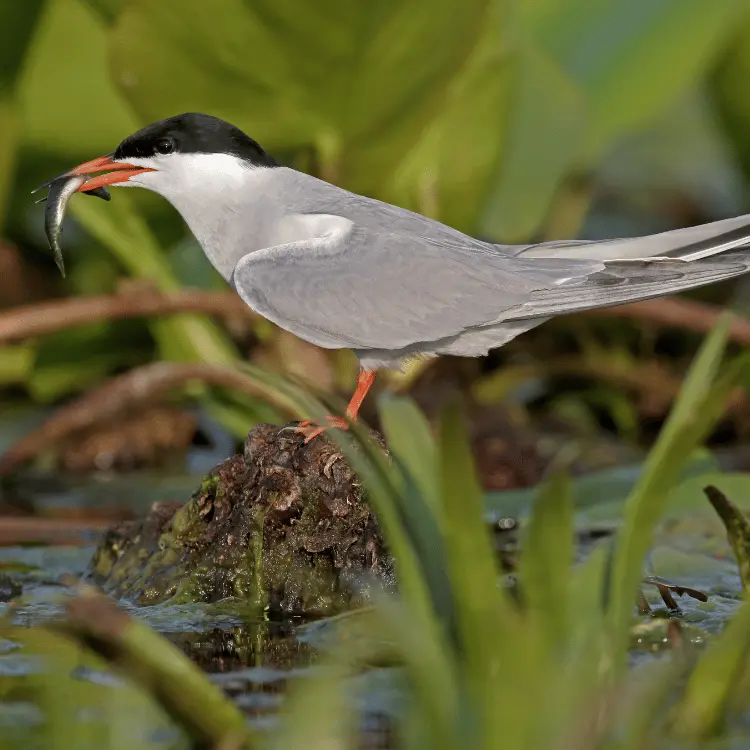
The tern feeds mainly on fish, which it catches with incredibly precise dives from the air. It flies over the surface of the water and snatches its prey with its beak in sharp dives. As well as fish, terns eat small crustaceans, insects and molluscs. Their diet adapts to the seasonal availability of prey, which makes them a key part of river and lake ecosystems.
Habits and behaviour
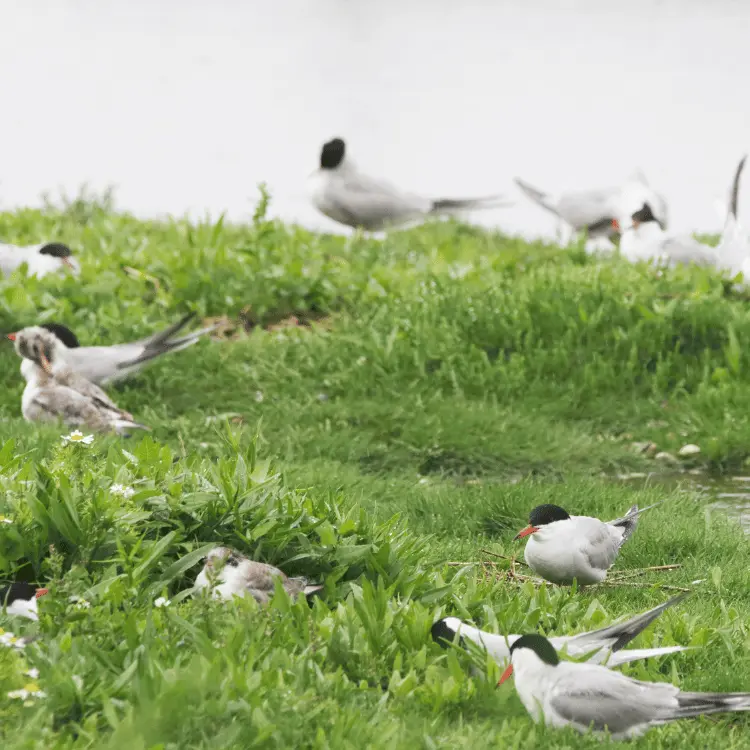
Terns are sociable birds that gather in colonies during the breeding season. Their nests are simple scrapes in sand or shingle, often in hard-to-reach places to protect them from predators. While nesting, terns are very protective and aggressively defend their nests from intruders. Terns are known for their remarkable faithfulness – the same individuals return to the same nesting site every year. These birds are excellent fliers and can spend hours hovering over the water, which makes them symbols of grace.
Breeding and family life
Terns breed once a year, usually in spring. The female lays 2–3 eggs in the nest, and incubation lasts about 20–25 days. Both parents look after the eggs and chicks, feeding them fish until they are able to fly and feed themselves. Young terns leave the nest after about a month but stay close to their parents for some time afterwards.
Lifespan
In the wild, terns usually live for 10–15 years, although some individuals can reach 20. Their lifespan depends on environmental conditions, food availability and how successfully they avoid predators.
Facts and research
Terns are known for one of the longest migrations in the animal world. Some species, such as the Arctic tern (Sterna paradisaea), travel more than 70,000 kilometres a year. Their precision when fishing fascinates scientists, and research has shown that terns can adjust the angle of their dive to improve their chances of catching prey. In Croatia, terns are protected species because of the degradation of their habitats. Numerous projects include putting out artificial islets for terns to nest on.
Conclusion
The tern is a symbol of natural elegance and adaptability. Its incredible flying ability, precise fishing and faithfulness to its habitat make it a fascinating species in the bird world. Although it faces many threats, such as habitat loss and pollution, the tern continues to enchant people with its graceful presence in the sky and on the water.