
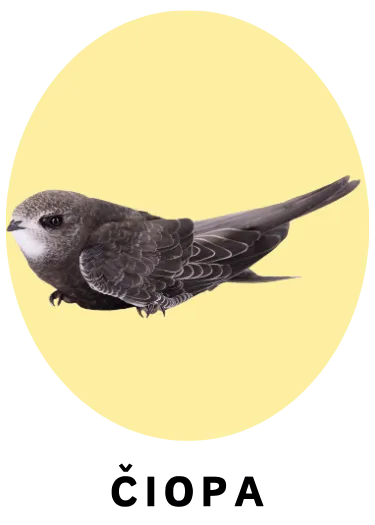
About swifts
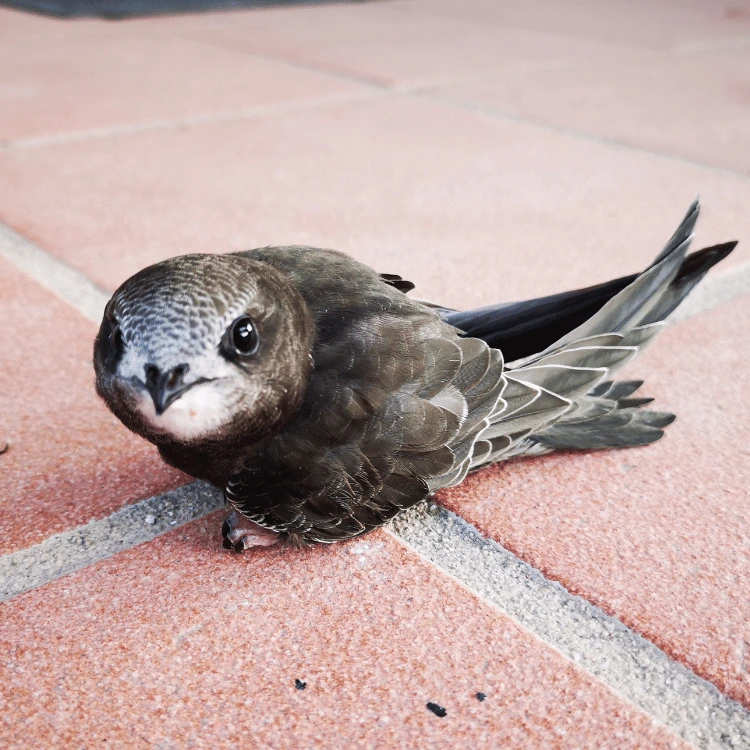
Common swifts (Apus apus) are small birds from the family Apodidae, known for their extraordinary flying abilities and sociability.
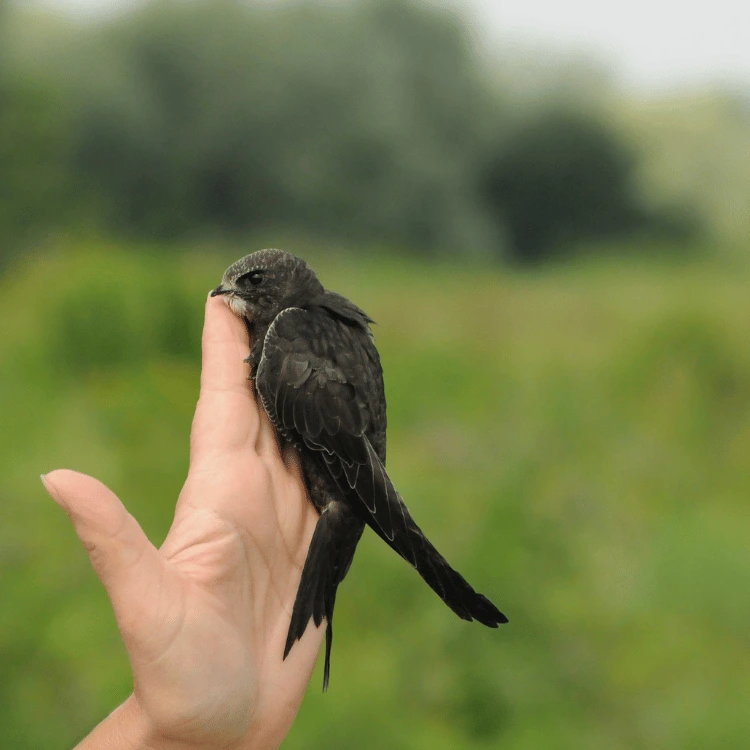
These birds are elongated, about 16–18 cm long, with a wingspan of 38–40 cm and a weight of between 30 and 50 grams.
Their plumage is dark brown or black with a slightly paler belly, which helps camouflage them in flight and while nesting.
Habits and behaviour
Swifts spend most of their lives in the air, where they eat, drink and even sleep on the wing – and they mate in the air too. They can spend up to two years in the air if they are not breeding. They are very sociable birds that often form large groups, especially during the breeding season.
They can often be seen flying in groups and performing complex aerial acrobatics. Their calls include a variety of sounds used for communication within the flock and during mating.
Way of life
Swifts are most often found in urban areas, where they nest in stone buildings, chimneys and similar structures.
Their habitat includes open farmland, meadows and coastal regions, where they easily find insects.
Swifts are migratory birds that move to southern parts of Africa in winter and return to Europe in spring to breed.
Feeding
Swifts are insectivorous birds that feed exclusively on insects, including flies, mosquitoes, crickets, butterflies and other small flying insects. They have special feeding adaptations, including a wide gape that lets them catch insects in flight.
When actively hunting, an adult swift can eat up to 20,000 insects a day, and they often hunt in groups, which helps them find food.
Feeding the young
The parents feed their young by first eating the insects themselves and then forming them into small balls that they regurgitate (bring back up). The chicks are fed every few hours, and the parents bring them large amounts of food to make sure they grow.
During the first few weeks, young swifts often eat more than 50 insects a day. As the chicks grow, the parents encourage them to start learning to hunt, often flying around them while they try to imitate their movements.
Swifts in Croatia
Two main species of swift live in Croatia: the common swift (Apus apus) and the Alpine swift (Apus melba). The common swift, which is the most widespread, can be found throughout the country, while the Alpine swift keeps more to coastal areas. There is also the little swift (Apus affinis), which is described as endemic to Dubrovnik.
The little swift is distinguished by its pale plumage and specific habitat, and it can be seen in the city during the spring and summer season, when it arrives to breed.
Conservation and lifespan
Although swifts are not currently endangered, habitat loss, changes in farming practices and climate change can have a negative impact on their population. Protecting their habitats and the old buildings where they nest is key to their future.
Swifts are fascinating birds that play an important role in the ecosystem as insect-eaters. Their unique adaptations for flying, feeding and social behaviour make them extraordinary creatures in the bird world. Maintaining their habitats and protecting these birds from threats are key to their conservation in the future. Their presence in towns and cities is often a sign of a healthy ecosystem, as it points to a good food supply and safe habitats.
Swifts usually live for 5 to 10 years, although cases of longer lives have been recorded. Many birds do not survive their first year because of predators, disease and other dangers.