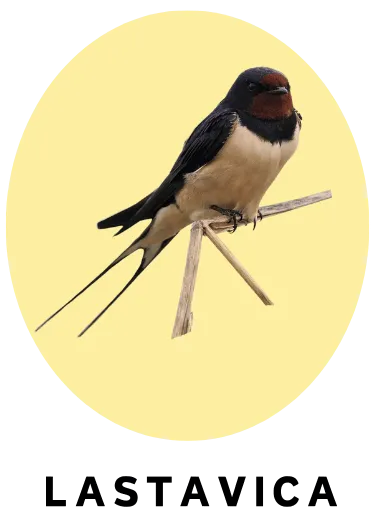
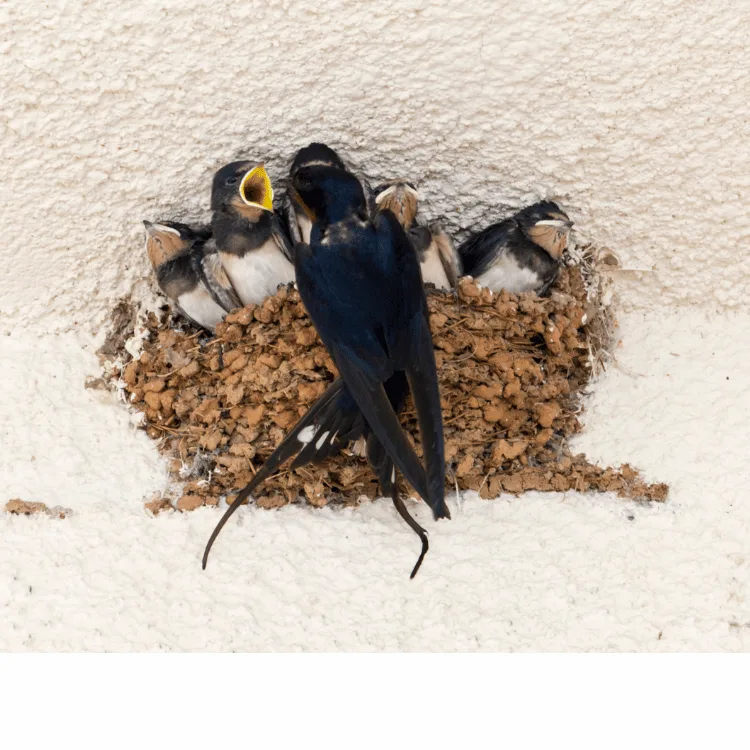
Hirundo rustica, known as the barn swallow or common swallow, is one of the best-known migratory birds in the world. This slender, fast and agile bird is recognisable by its long forked tail and graceful flight.
Barn swallow (Hirundo rustica)
Appearance and distinctive features
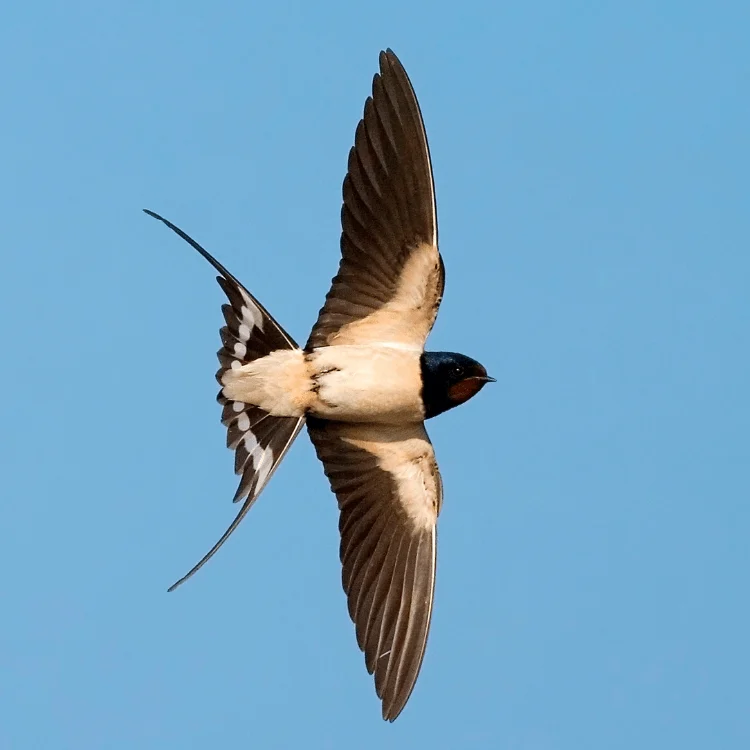
The swallow has an elegant body with long, narrow wings and a characteristic forked tail.
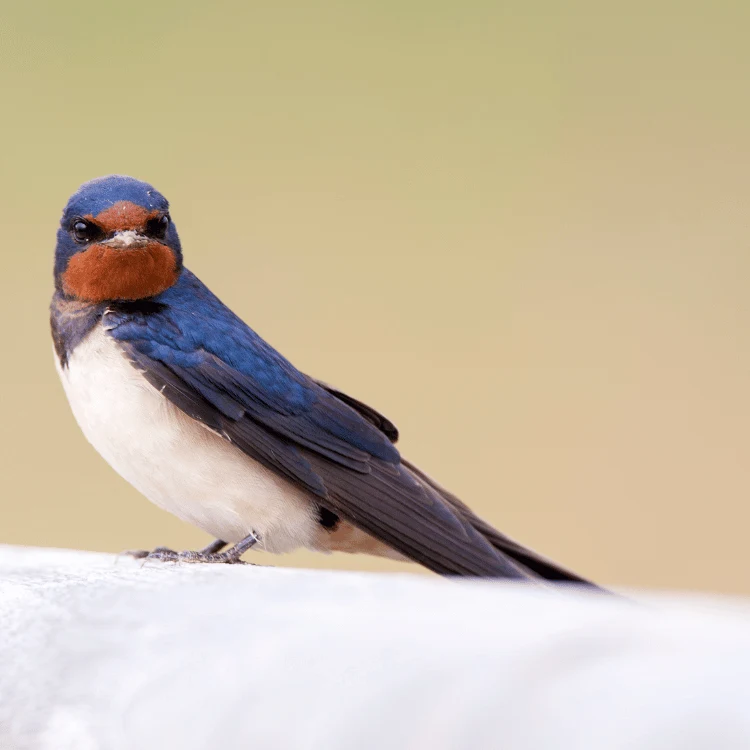
Plumage – The upperparts are dark blue with a metallic sheen, while the underparts are pale, almost white.
Head and throat – Reddish-brown, with a black band separating the dark part from the paler belly.
Size – The average body length is about 17–19 cm, while the wingspan reaches 32–35 cm.
Weight – Between 16 and 22 grams.
Habitat and distribution
The barn swallow has an exceptionally wide range and can be found on almost every continent except Antarctica. It breeds in Europe, Asia and North America, and spends the winter in warmer regions such as Africa, South America and southern Asia. It prefers rural areas, villages, meadows and fields, often near water.– It often buildsits nests on farms, under roofs and in stables.
Migration: an incredible journey
Swallows are true migratory birds and every year they travel thousands of kilometres between their summer and winter homes.
Autumn migration – In September and October they move south in search of warmer regions.
Return in spring – In March and April they return to their nests to mate and raise their young.
Daily distance – During migration they can cover 200 to 300 km a day.
Diet and hunting technique
Swallows are excellent fliers and catch their prey in the air. Their diet consists mainly of flying insects, which makes them useful to the ecosystem.
Main prey – Flies, mosquitoes, wasps, grasshoppers and other flying insects.
Hunting technique – They hunt in low flight over meadows, fields and water surfaces.
Amount of food – They eat hundreds of insects every day, which makes them natural regulators of insect populations.
Breeding and care of the young
Swallows are faithful to their partner and often return to the same nests every year.
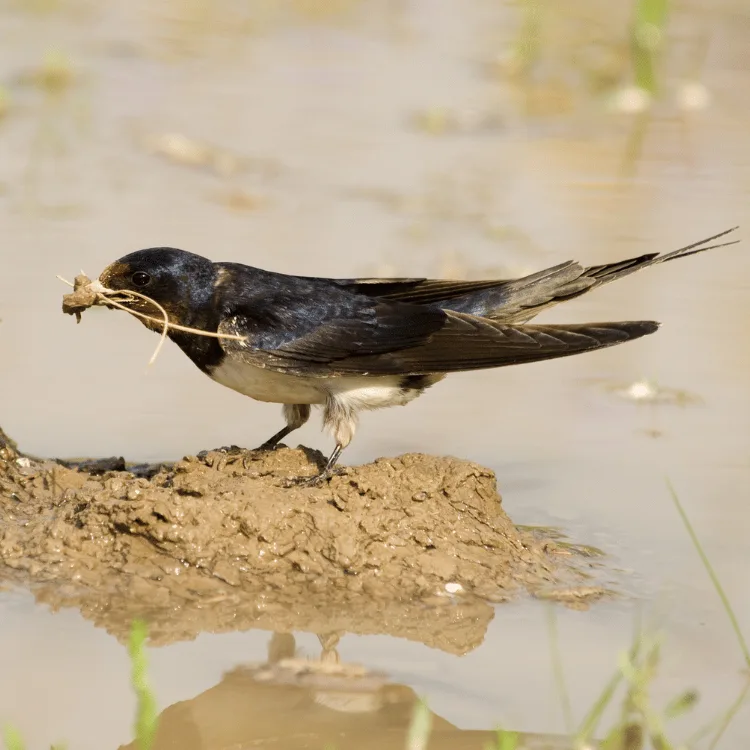
Nest building – They make the nest from mud, straw and feathers and attach it to walls, beams and other sheltered structures.
Breeding season – It lasts from May to August, and they can raise two or three broods in a season.
Number of eggs – Typically 3 to 6 eggs; incubation lasts 14 to 16 days.
Care of the young – Both parents feed the chicks, which leave the nest after 18 to 23 days.
Symbolism and meaning for people
Swallows have long been regarded as a symbol of good luck, hope and the arrival of spring.
In folk beliefs – They are said to bring good luck if they build a nest on a house.
In mythology – They are associated with travel, loyalty and freedom.
Ecological importance – They are important for controlling insect populations and maintaining the balance of nature.
Protection and conservation of the species
Although swallows are still relatively common, their population is declining due to loss of habitat and the decrease in insects.
Urbanisation and the disappearance of farms – The number of suitable nesting sites is shrinking.
Climate change – It affects the availability of food during migration.
Pesticide use – It reduces the number of insects they feed on.
How can we help?
Putting up artificial nests – This can help swallows find a safe place to breed.
Not destroying nests – Swallows often return to the same nest every year.
Using fewer pesticides – This will preserve the insect populations that swallows need for food.
Conclusion
Hirundo rustica, or the barn swallow, is one of the most recognisable birds in the world. Their graceful flight, seasonal migrations and useful role in the ecosystem make them an irreplaceable part of nature. Protectingtheir habitats and preserving their food sources is key to securing the future of this beautiful migratory bird.