The common starling (Sturnus vulgaris) is one of the most widespread birds in the world. It is native to Europe and parts of Asia and North Africa, but has been introduced to North America, Australia, New Zealand and South Africa.
It was introduced to North America at the end of the 19th century and is now one of the most numerous birds on the continent, although some consider it an invasive species. In Australia and New Zealand it also spread quickly, often competing with native species for food and habitat.
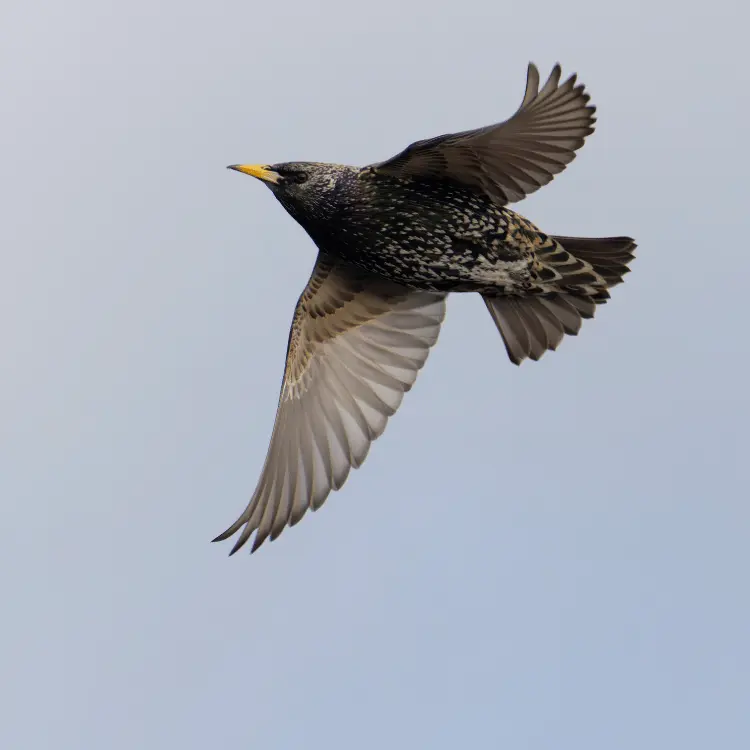
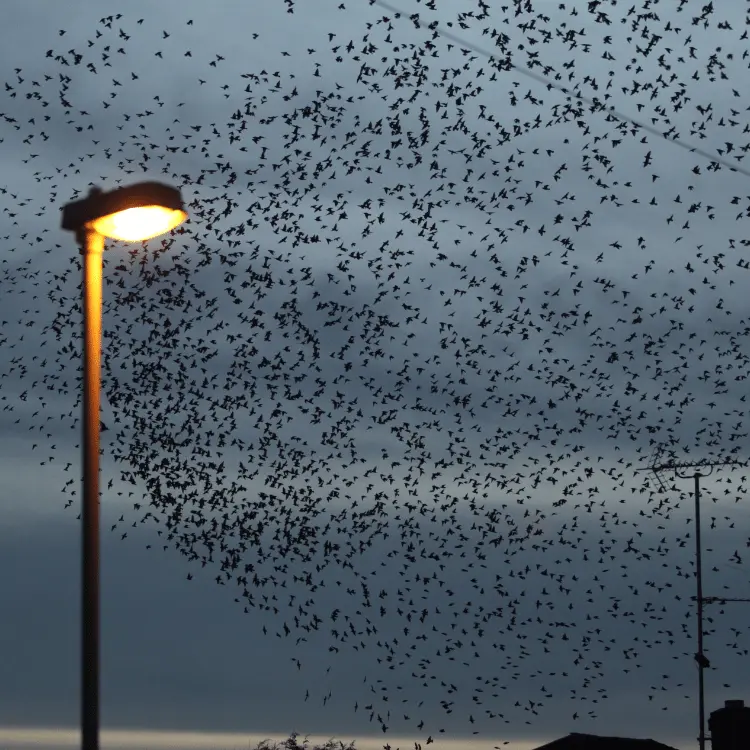
In Europe the starling is migratory – northern populations move south in winter, while southern populations are mostly resident. Large flocks can be seen performing spectacular aerial dances, known as murmurations, especially at dusk.
What does a starling look like?
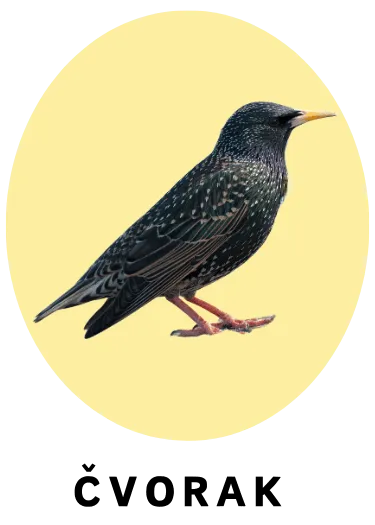
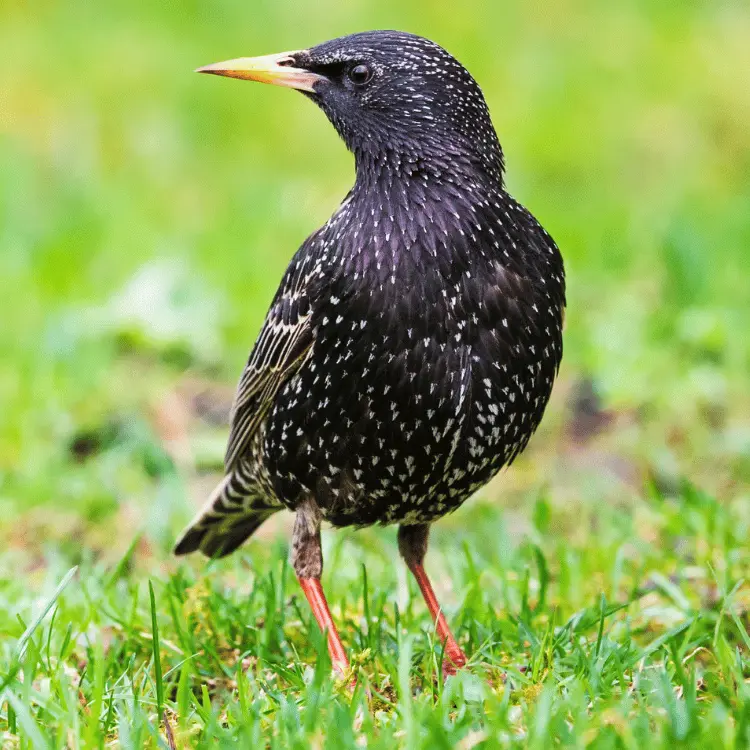
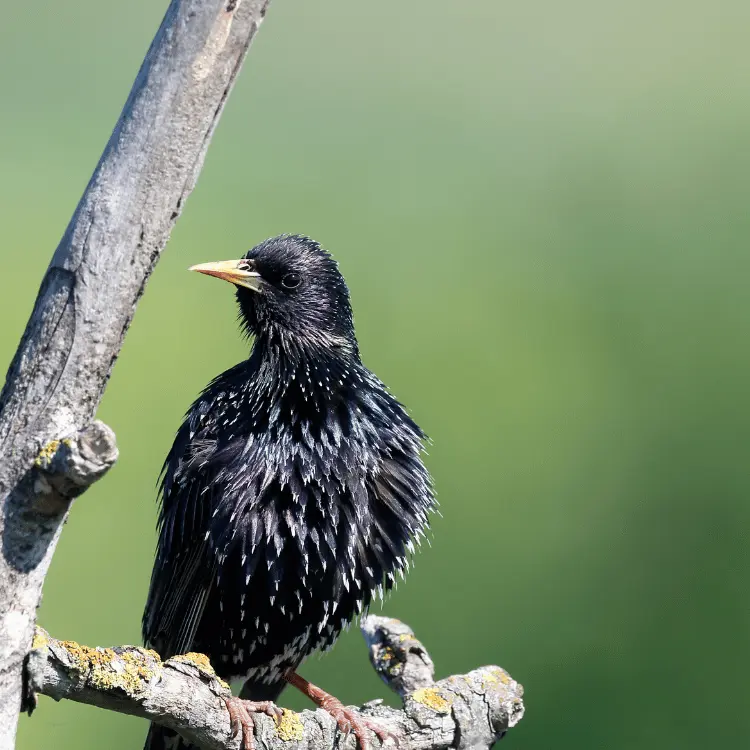
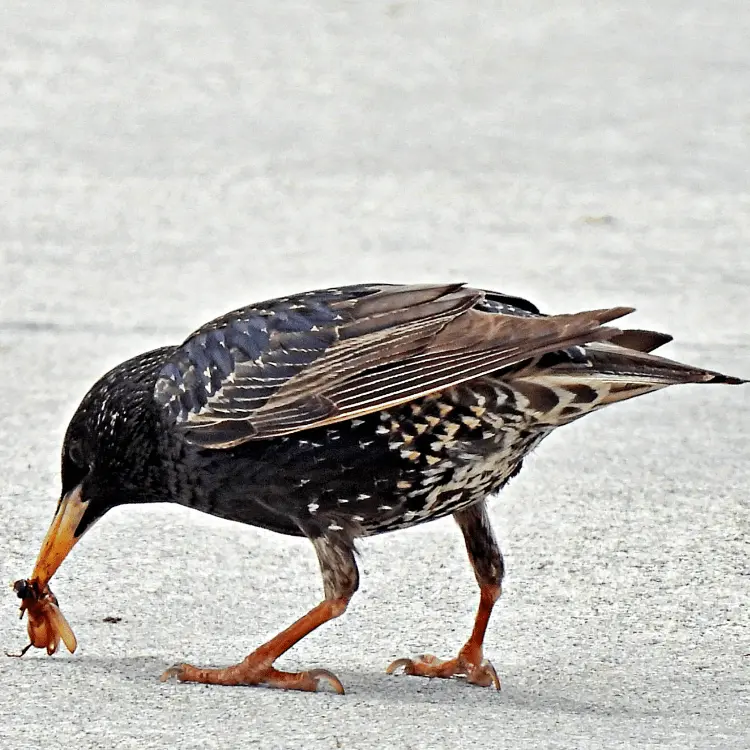
The starling is a medium-sized bird of the starling family with a distinctive appearance: dark plumage that, in certain light, can show a green, purple or blue sheen. It has a strong beak that changes colour – dark in winter and yellow in summer. Although at first glance it may seem an ordinary bird, the starling has certain physical features that make it easy to recognise.
Physical characteristics of starlings
Plumage colour: The starling has black-brown plumage with a metallic sheen that ranges from green to purple depending on the light. In winter the plumage can take on lighter tones.
Beak: Its short, strong beak makes feeding easier, as it is adapted for grabbing small food items.
Eyes: Its eyes are dark and round, which adds to its lively appearance.
Starlings have adapted very well to life in urban environments, often settling in towns, parks and gardens, where they find plenty of food and places to nest.
Starling habitat and distribution
The starling is an extremely adaptable bird that can live in a wide range of environments, from rural fields to towns and cities.
Distribution
The starling is found almost everywhere in Europe and Asia, and also in North America and Australia, where it was introduced.
This bird prefers open areas, including wide meadows, woodland edges and towns. Thanks to its adaptability, the starling quickly settled in urban areas, where it has become a common sight.
What do starlings eat?
Starlings are omnivores and can feed on a wide range of foods. Because they can adapt to changes in their environment, starlings are able to survive in very different conditions and feed on almost any available food source.
Types of food
Insects: Starlings often hunt insects, worms and beetles, especially in spring and summer.
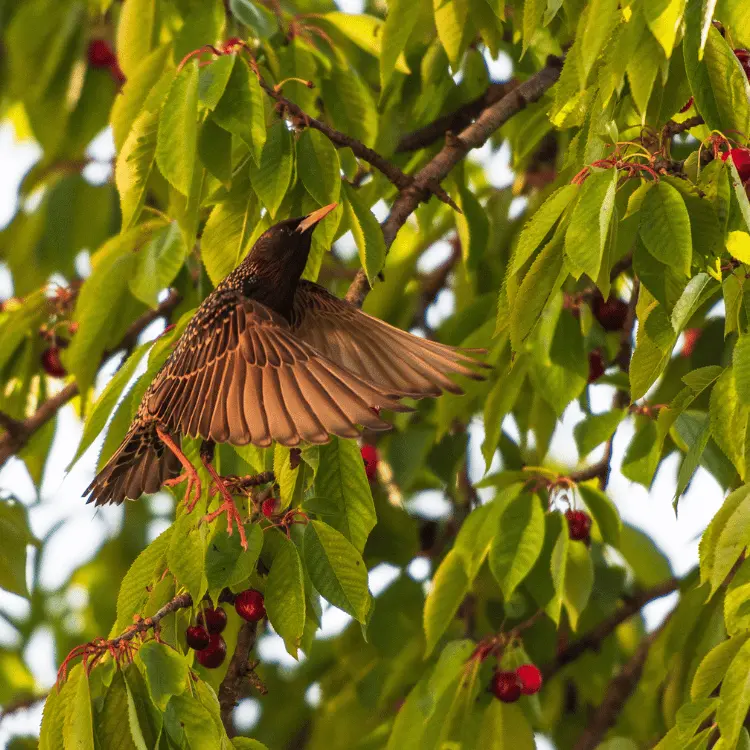
Fruit and seeds: They also feed on fruit, berries and seeds.
Food from human settlements: In urban environments, starlings will also eat food that people leave behind, which helps them survive in towns and villages.
Starling behaviour
Starlings are extremely sociable birds that live in large flocks. Because of their social behaviour, starlings are known for forming very interesting and noisy groups, often found in city parks and at the edges of woods.
Social behaviour
Flocks and migration: Starlings live in large flocks that can number tens of thousands of birds. In winter they move south in large flocks, and in spring they migrate back north.
Sounds: Starlings are very noisy birds that make a wide variety of sounds. Their calls can be heard over long distances and are often used for communication within the flock.
Defence strategies
Protection from predators: Starlings band together to protect themselves and their nests from predators. Their close social ties help them avoid danger.
How do starlings nest?
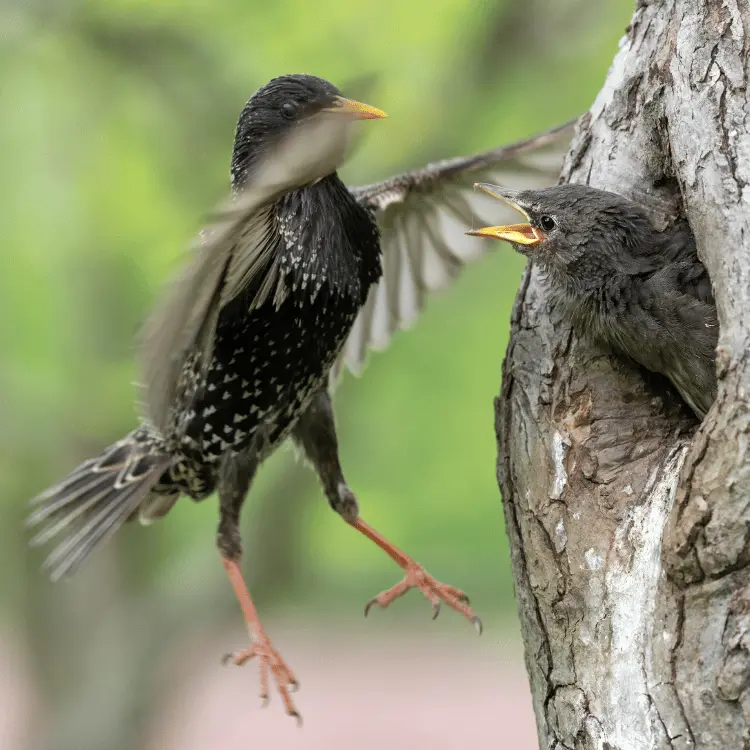
Starlings are not very fussy when it comes to choosing a nesting site. They usually nest in tree hollows, buildings or wooden nest boxes that give them safe shelter.
Choosing a nest site
Nest: Starlings build their nests from twigs, grass and other natural materials. Interestingly, a nest is often a joint project of several birds, so several starlings may end up sharing the same nest.
Eggs: The female usually lays between 4 and 6 eggs, which she incubates together with the male.
Caring for the young: Both parents feed the chicks, which grow quickly and soon become independent.
Interesting facts about the starling
A once-hated bird: In the past, starlings were considered pests because of their behaviour in gardens and fields, but today they are seen as an important part of the ecosystem.
The “murmuration” phenomenon: One of the most impressive aspects of starling behaviour is the so-called murmuration – a spectacular gathering of birds flying in unison in complex patterns across the sky, creating incredible shapes and breathtaking scenes.
Mimicking sounds: Starlings are known for imitating the sounds of other birds and even human sounds, which makes them very entertaining to watch.
Research on the starling
Research on starlings mainly focuses on their social life, migration patterns and impact on the ecosystem. Scientists study how starlings respond to changing climate conditions and how they migrate in the face of global environmental change. The effects of urbanisation on starling behaviour are also being investigated, as their growing presence in towns has made a new way of life possible.