Everything you need to know about the red squirrel
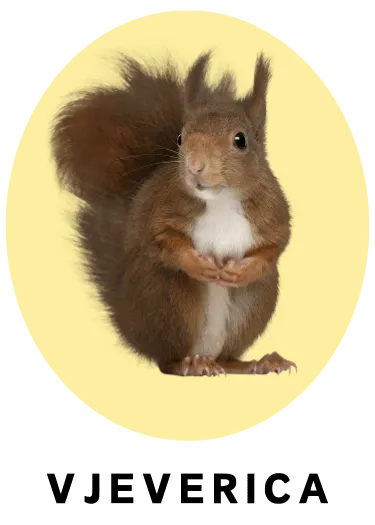
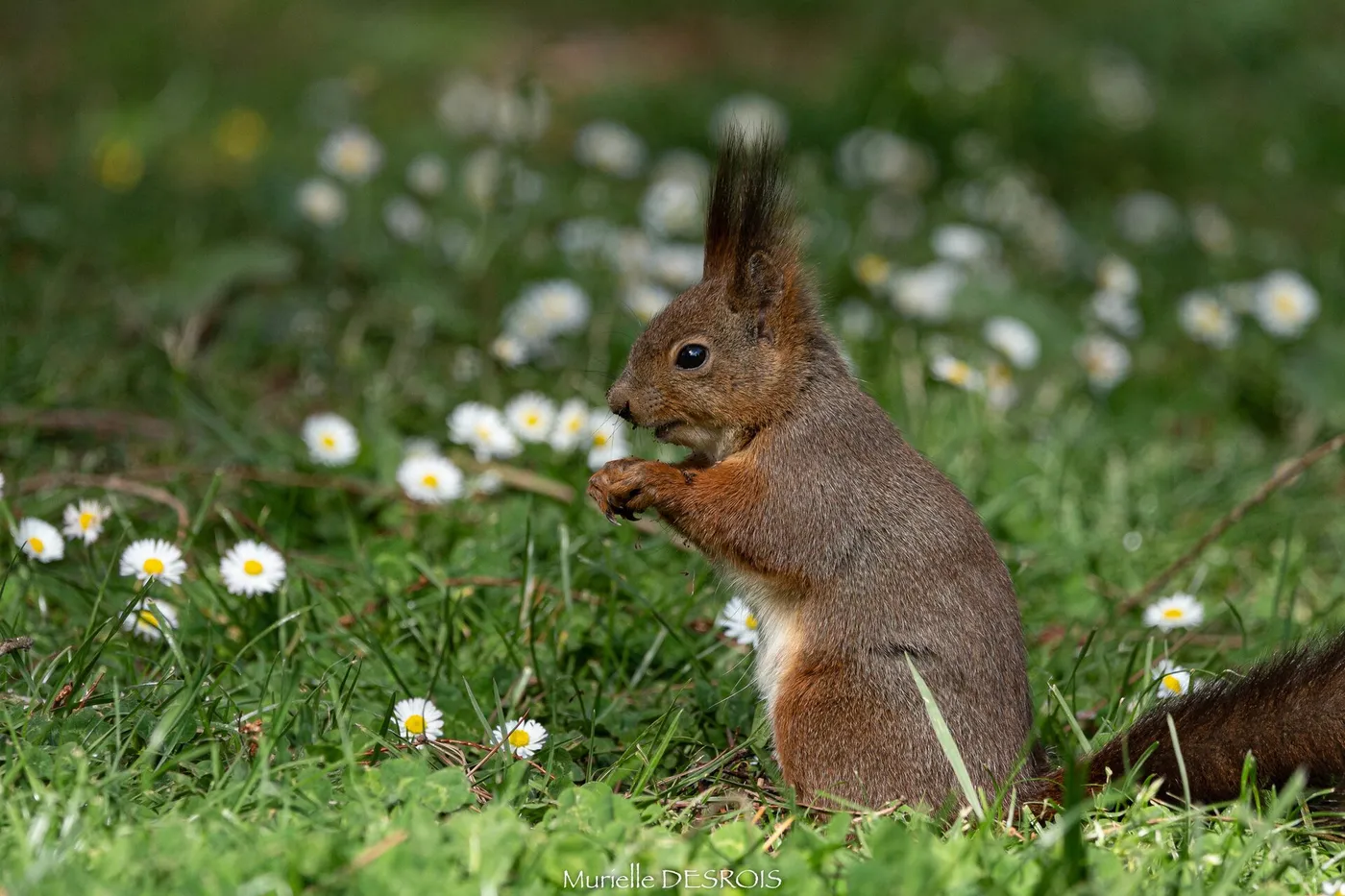
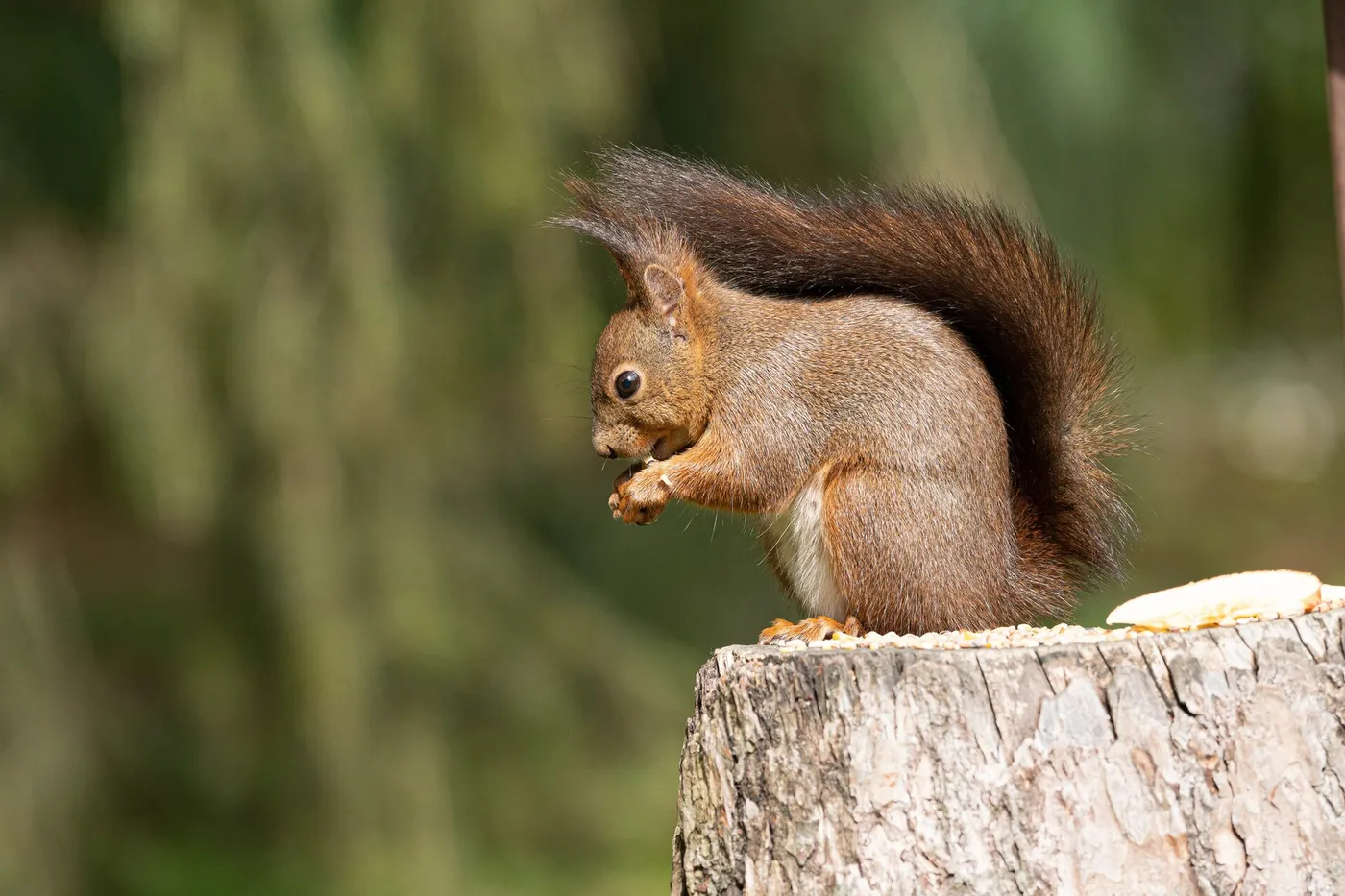
The red squirrel (Sciurus vulgaris) is one of the most recognisable woodland animals in Europe. With its reddish fur, bushy tail and large eyes, it has become a symbol of woodland wildlife. This small rodent plays a key role in the ecosystem, especially in seed dispersal and maintaining biodiversity.
Lifespan and habitat of the red squirrel
In the wild, red squirrels usually live for 3 to 7 years, while in captivity they can live for up to 10 years. Their lifespan depends on the availability of food, predators and climatic conditions.
Red squirrels live in forests across Europe and Asia, preferring coniferous and mixed forests. They can also be found in town parks and gardens, where they find shelter and food.
Nesting and reproduction
Red squirrels build nests (dreys) in trees, using moss, leaves and grass to provide warmth and protection. Their nests are ball-shaped, with an entrance small enough to keep predators out.
The breeding season begins in late winter or early spring, and in warmer regions there may be a second breeding cycle in summer. Females are pregnant for about 38 days and usually give birth to 3–6 young (kits), which are blind at first and completely dependent on their mother.
Red squirrel behaviour
Red squirrels are solitary animals, but in winter they sometimes huddle together to keep warm. They are active during the day, especially in the morning and late afternoon. They are known for their habit of building up winter food stores, for example by burying nuts and seeds.
What do red squirrels eat?
Their diet is varied and depends on the season. Red squirrels eat:
Nuts
Seeds
Fungi
Tree buds
Fruit and insects
In winter their food stores help them survive, although they often forget where they buried some of their food, which contributes to the spread of plants.
Interesting facts about red squirrels
Red squirrels communicate using chirping calls or clicks, which help them warn of danger and mark their territory. Their tail has several functions – it is used for balance, signalling and keeping warm.
Sadly, the red squirrel faces challenges such as:
Habitat loss
Competition with the eastern grey squirrel (Sciurus carolinensis), an invasive species from North America.
Red squirrel research and conservation
Scientists monitor red squirrel populations to understand their impact on woodland ecosystems. Key projects include:
Habitat protection
Reducing the impact of invasive species
Reintroducing red squirrels to areas where they have died out, for example in Great Britain.
Conclusion
The red squirrel is not only an important part of woodland ecosystems but also a symbol of natural beauty and resilience. Its role in maintaining biodiversity and its contribution to the ecosystem make it essential to keeping our forests healthy.