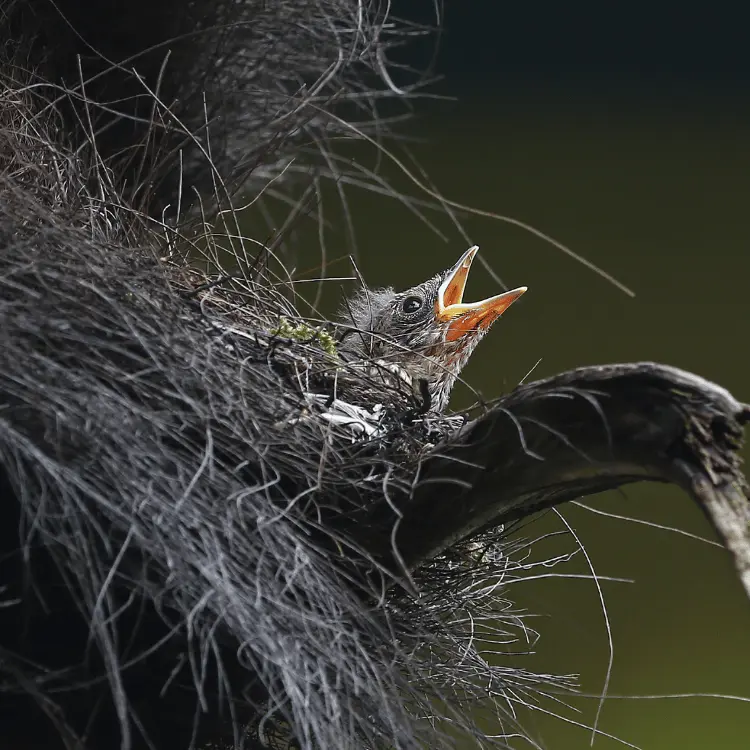
The spotted flycatcher (Muscicapa striata) is a small but extremely useful bird from the Old World flycatcher family (Muscicapidae). It is known for its skill at catching insects in flight, which gives it an important role in the ecosystem. Despite its modest appearance, its behaviour and hunting techniques make it a fascinating resident of our gardens, parks and woods
Appearance and physical characteristics of the spotted flycatcher
Its body length is 13–15 cm and its wingspan about 23–25 cm.
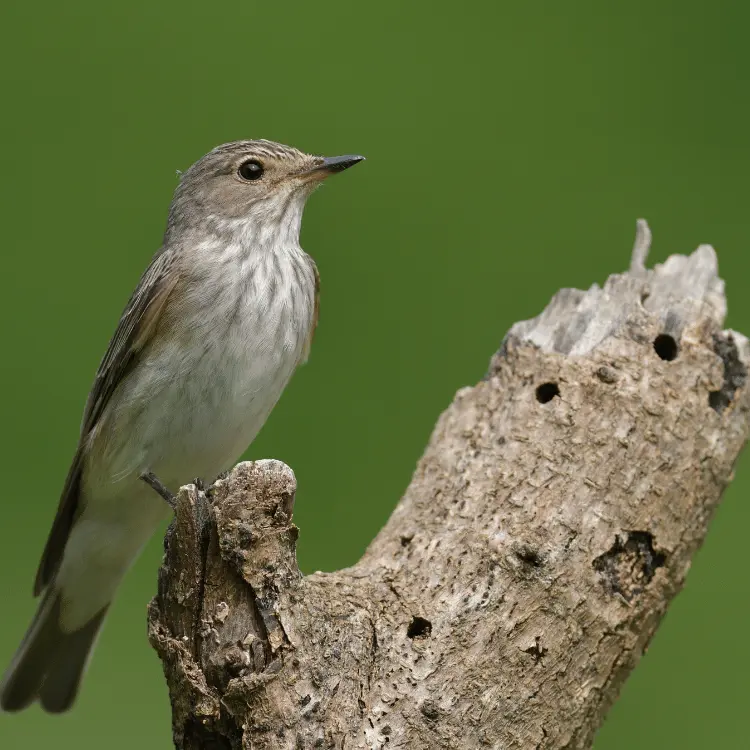
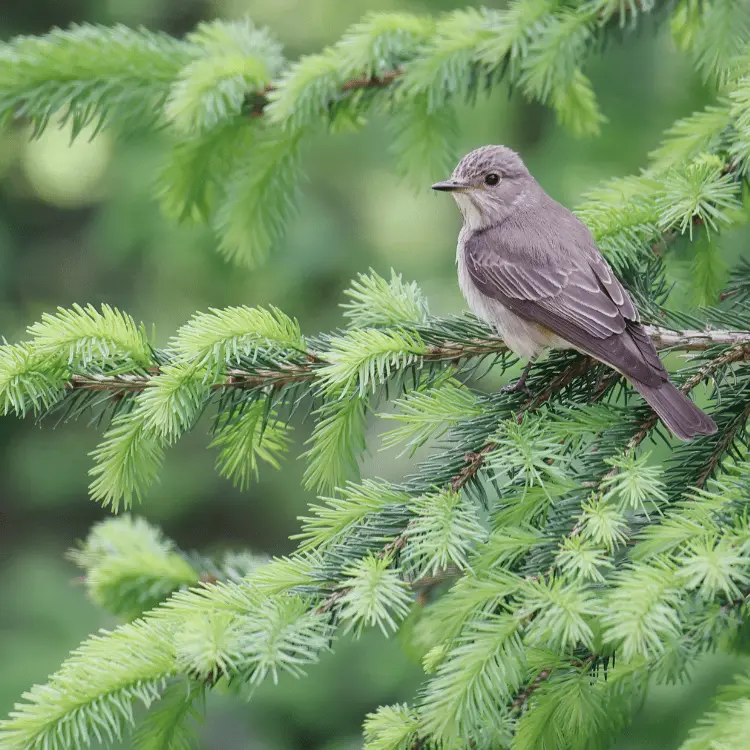
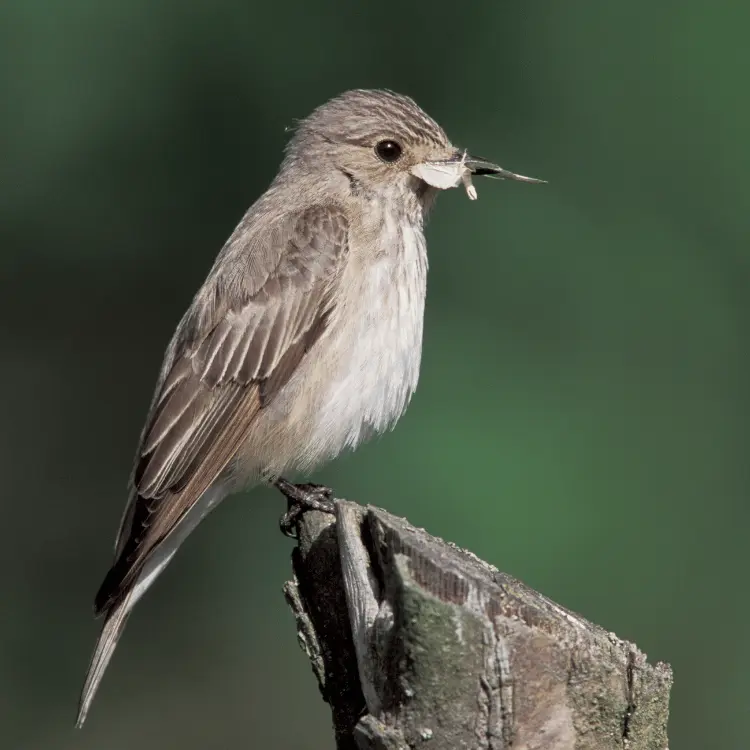
The plumage is inconspicuous, with brownish tones on the back and pale underparts streaked with fine dark lines.
The eyes are large and dark, adapted to spotting prey quickly.
The thin, pointed bill is perfectly adapted to catching insects in flight.
The tail is medium-length and often flicks slightly while the bird watches for prey.
Habitat and distribution
The spotted flycatcher is a migratory bird widespread in Europe, North Africa and parts of Asia. With the arrival of the colder months, it migrates to tropical Africa, where it spends the winter.
It lives in open deciduous and mixed woodland, parks, orchards and gardens.
It can often be seen in Dalmatia, especially in the spring and summer months, when it hunts insects in low shrubs and trees.
It also adapts to urban areas, where it uses trees and fences as lookout posts for hunting.
Diet and hunting technique
The spotted flycatcher is an insectivorous bird, which means it feeds exclusively on insects and other small invertebrates.
It feeds on flies, mosquitoes, grasshoppers, butterflies and spiders.
It uses a sit-and-wait tactic – it sits quietly on a branch or post, watching for movement of prey.
With a fast, precise sally it catches insects in the air, then returns to the same or another lookout post.
This strategy allows it to save energy while catching a large number of insects every day.
Breeding and nesting
Nesting begins in late spring and lasts into summer.
It builds its nest in tree hollows, cracks in walls, under roofs or in dense vegetation.
The female lays 4–6 eggs, which she incubates for about 12–14 days.
The young stay in the nest for another 12–16 days before they are able to fly.
The parents continue to feed them for several more weeks until they are fully independent.
Migration and migration routes
The spotted flycatcher is a long-distance migrant; it leaves Europe in early autumn and moves to sub-Saharan Africa.
It returns to its breeding grounds in spring, when the arrival of warmer weather guarantees plenty of insects.
It migrates at night, which helps it avoid predators and take advantage of more stable atmospheric conditions.
Threats to the spotted flycatcher and its protection
Although the spotted flycatcher is a relatively common species, it faces several threats:
Loss of habitat due to logging and urbanisation.
Declining insect populations due to pesticide use and climate change.
Collisions with windows and traffic, especially during migration.
Destruction of nests, as it often builds them near human dwellings.
How can we help the spotted flycatcher?
Preserving natural habitats such as woods, parks and gardens.
Using fewer pesticides, to preserve insect populations.
Putting up artificial nest boxes in gardens and on buildings, where it often nests.
Education about the importance of this bird in controlling insect numbers.
Conclusion
The spotted flycatcher (Muscicapa striata) is a modest-looking but extremely useful bird that helps control insect populations and contributes to the balance of nature. Although it faces the challenges of the modern world, proper habitat protection and awareness of its role can ensure the long-term survival of this species.