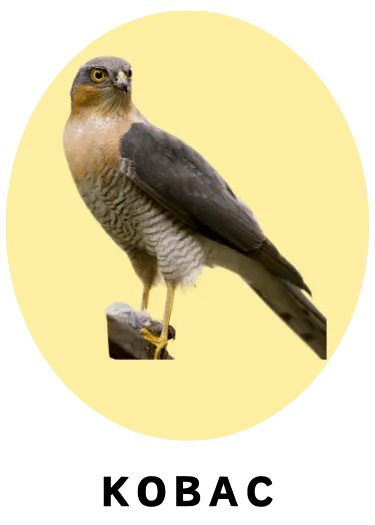
The Eurasian sparrowhawk (Accipiter nisus) is a medium-sized bird of prey from the hawk family (Accipitridae), known for its incredible speed, precision and hunting skill. This raptor dominates woodland and open landscapes, where it uses sudden dashes to catch its prey.
Appearance and distinctive features
The male and female differ considerably in size (sexual dimorphism).
The male is smaller, with a body length of 25–30 cm and a wingspan of 50–60 cm.
The female is larger, 35–40 cm long, with a wingspan of up to 75 cm.
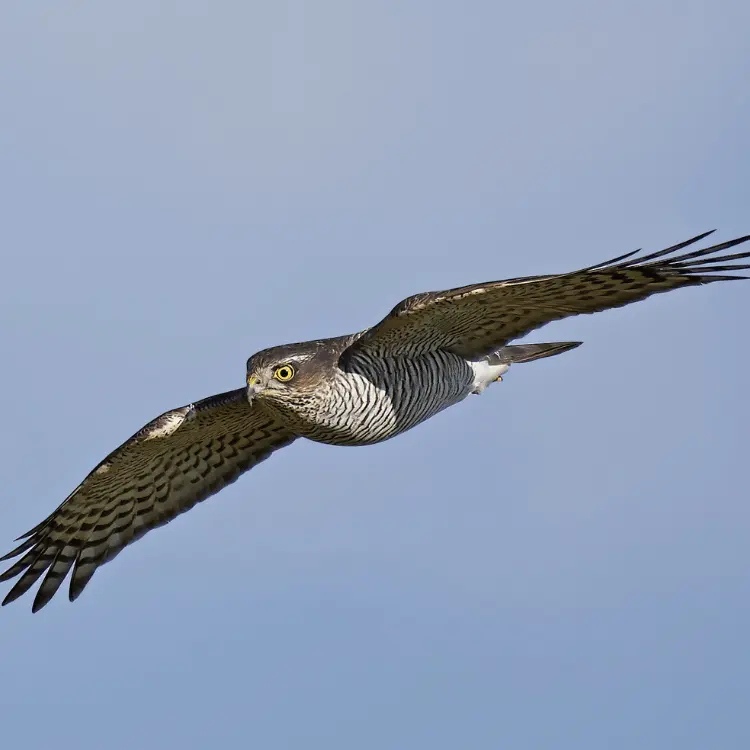
The male’s plumage is bluish-grey on the back, and the breast is barred with reddish tones.
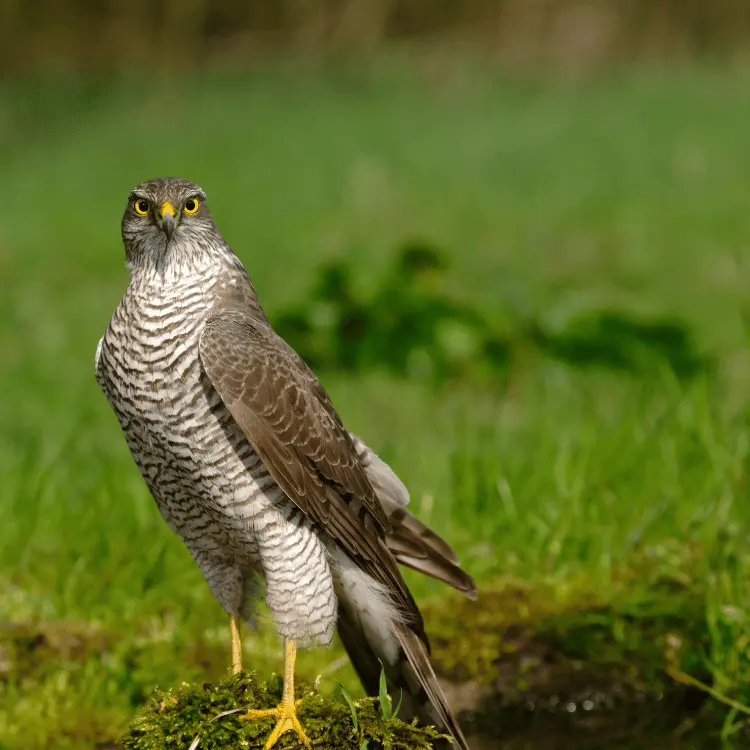
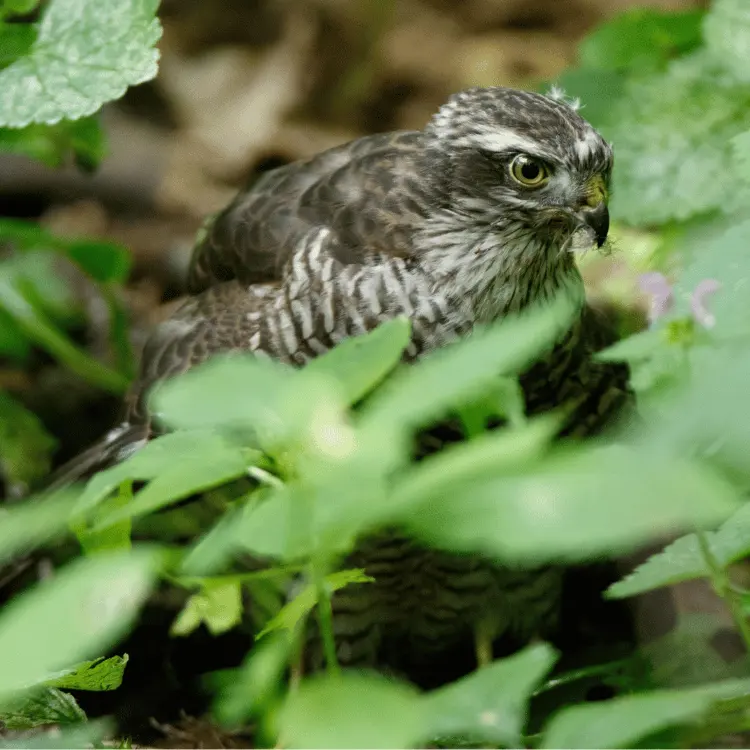
Females are brownish-grey, with pronounced barring on the underparts.
The eyes are yellow or orange, with a sharp gaze that marks a true predator.
The long tail with dark bands helps it navigate quickly through dense branches.
Habitat and distribution
The sparrowhawk is widespread throughout Europe, Asia and parts of Africa. The species has adapted to a variety of habitats, but most often lives in:
Dense deciduous and coniferous forests
Woodland edges and open areas with shrubs
Farmland and parks
Towns and urban gardens, where it often hunts smaller birds
The sparrowhawk also lives in Croatia, including Dalmatia, where it uses forests, karst areas and even city parks as hunting grounds.
Diet and hunting technique
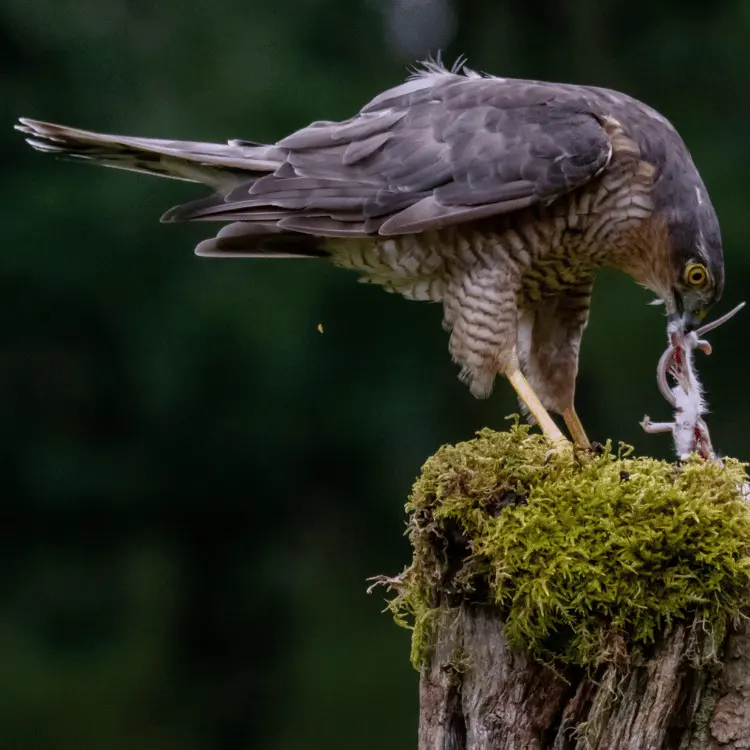
The sparrowhawk is a specialist bird hunter, and its hunting technique is adapted to fast, surprise attacks:
It feeds mainly on smaller birds such as sparrows, tits, pigeons, turtle doves, starlings and finches.
It attacks from ambush, using exceptional agility and quick manoeuvres between trees.
It flies low and fast, using the cover of vegetation to get close to its prey.
It launches surprise attacks, catching prey in the air or on the ground.
It may also hunt in gardens, using quick, precise movements to surprise birds at feeders.
Breeding and care of the young
The nesting season lasts from April to June.
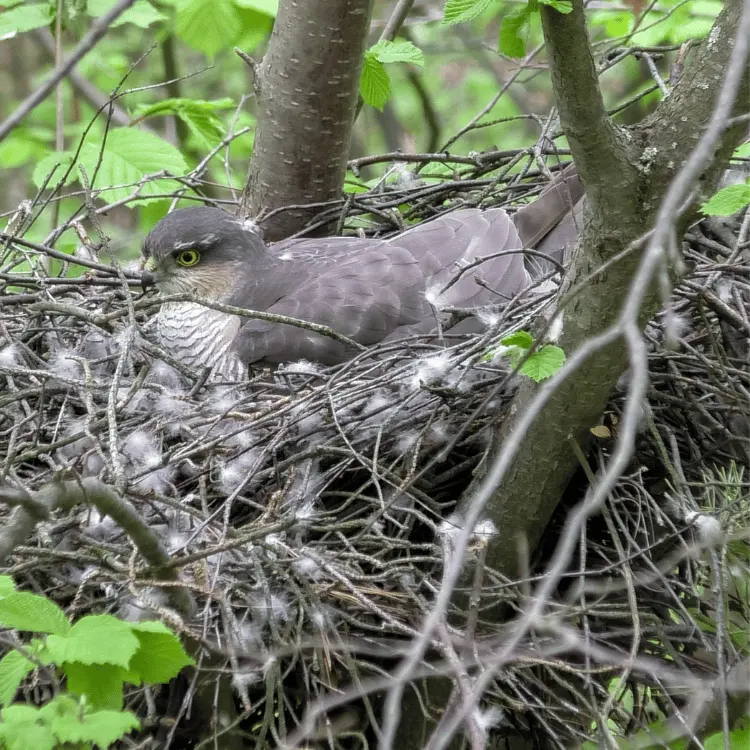
It builds its nest high in the treetops, often using abandoned nests of other birds of prey.
The female lays 3–6 eggs, which she incubates for about 30 days.
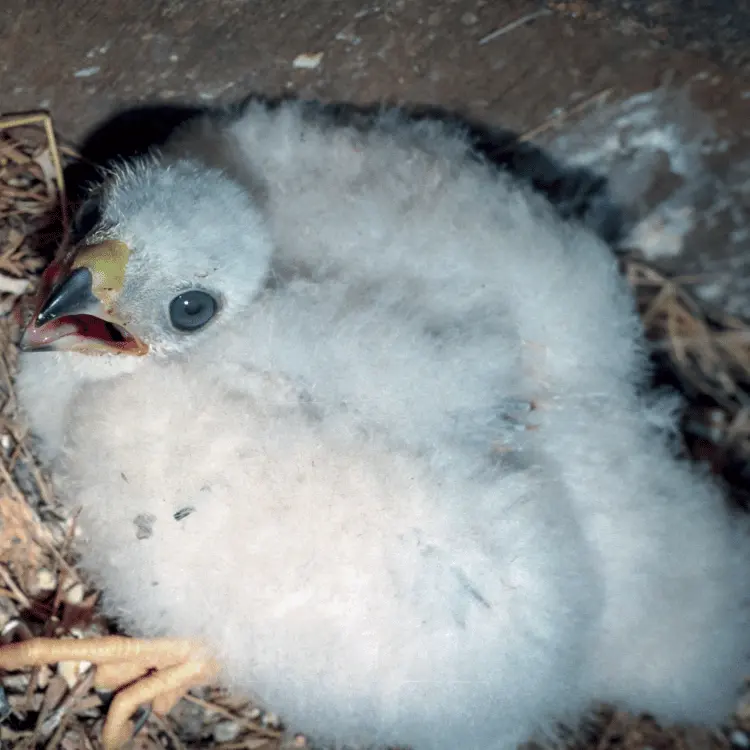
The young stay in the nest for 4–5 weeks, after which they are able to make their first flight.
The parents keep feeding them for several weeks after they leave the nest, until they become fully independent.
Behaviour and flight
The sparrowhawk is highly territorial, especially during the breeding season.
Its flight is fast, with short, powerful wingbeats followed by a brief glide.
It adapts extremely well to different environments, including urban areas.
It can often be seen darting through tree branches, catching prey in flight.
Threats to the sparrowhawk and its protection
Although the sparrowhawk is not directly endangered, it faces certain challenges:
Loss of habitat due to logging and urbanisation.
Declining populations of small birds, which affects the availability of food.
Pesticide poisoning, as pesticides enter the food chain through contaminated birds.
Conflict with people, as it may hunt birds near pigeon lofts and poultry houses.
How can we help the sparrowhawk?
Preserving natural woodland habitats and limiting the use of pesticides.
Monitoring the population and protecting nests to reduce negative human impact.
Education about the importance of birds of prey in the ecosystem, as they regulate populations of smaller birds and rodents.
Conclusion
The Eurasian sparrowhawk (Accipiter nisus) is an incredible hunter, known for its speed, agility and precise attacks. Its ability to adapt to different habitats, including forests, farmland and urban areas, makes it one of the most successful predators in Europe. Although it faces certain challenges, preserving natural habitats and educating people about the importance of this species can secure its stable future.