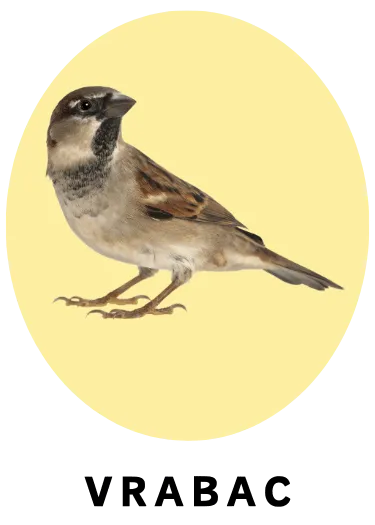
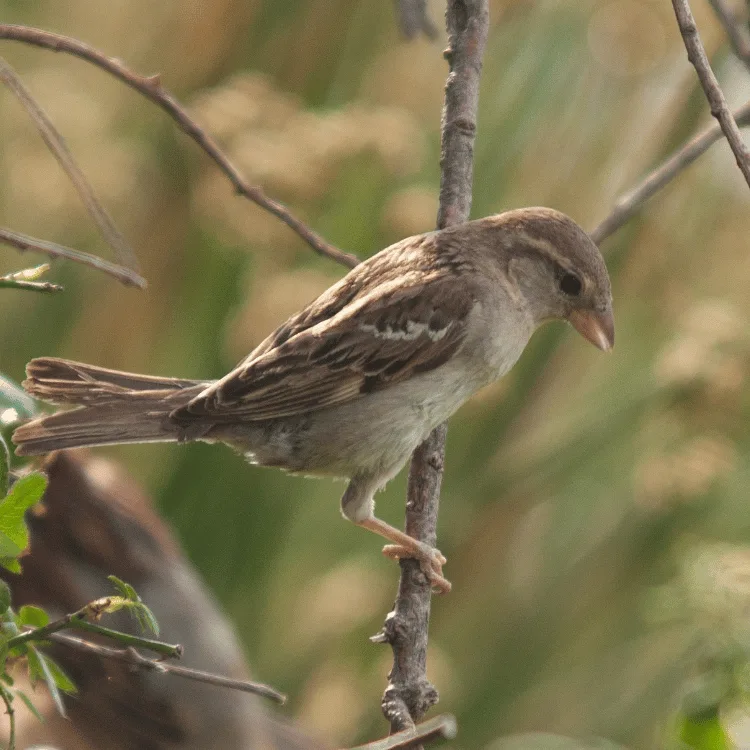
The house sparrow (Passer domesticus) is one of the best-known and most widespread birds, living in urban, rural and suburban areas all over the world. Because it has adapted so well to living alongside people, the sparrow has become a symbol of human settlements and everyday life. Although it is often associated with towns, the sparrow also plays a significant ecological role in maintaining the balance of ecosystems, especially in keeping insect numbers in check.
House sparrow (Passer domesticus)
Sparrow species and their distribution in Croatia
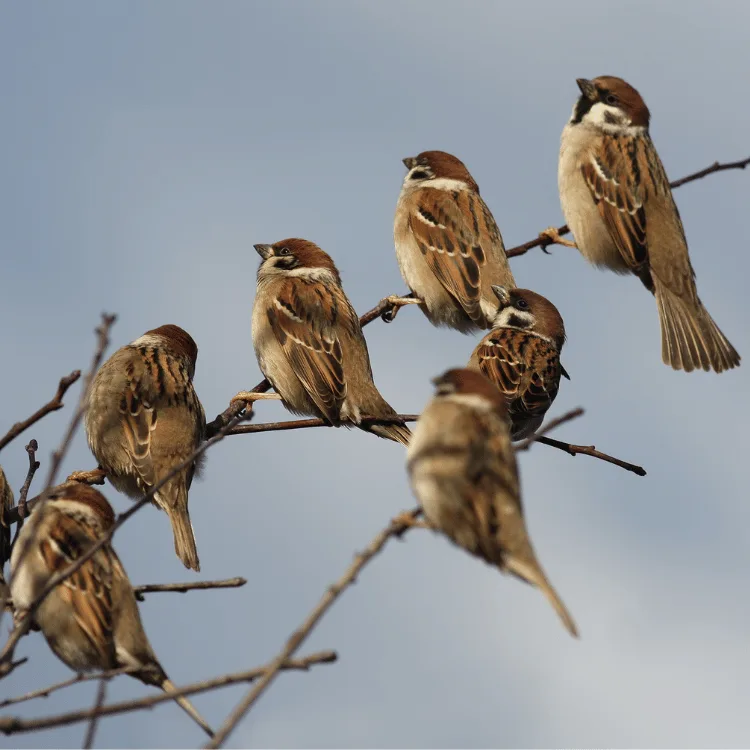
In Croatia the best-known and most widespread sparrow species is the house sparrow (Passer domesticus), which is found in almost every kind of human settlement, including towns, villages, fields and gardens. The house sparrow has adapted easily to living alongside people, making its home in buildings, on roofs and in other man-made structures. Although it is the one most often seen, several other sparrow species also live in Croatia, such as the Eurasian tree sparrow (Passer montanus), which is somewhat rarer but still present in rural areas, and the Spanish sparrow (Passer hispaniolensis), which can occasionally be seen on the Adriatic coast.
Sparrow habits and behaviour
The sparrow is a very sociable bird. It is usually seen in small groups, but in the winter months it forms larger flocks that roam in search of food. The sparrow is very adaptable, and most of its activities are linked to human settlements. It feeds on a wide range of seeds, grains and fruit, but it can also eat small insects. Interestingly, the sparrow is not a fussy eater and often feeds on scraps from people’s homes, as well as in parks, gardens and fields. One of the main reasons why sparrows are so common in towns is their ability to adapt to living close to people. The sparrow can use buildings for nesting and shelter, and it is also known to enjoy fruit and vegetables, as well as the seeds of plants found in gardens and parks. It is also known for searching around in the winter months for food that people leave behind.
Nesting and family life
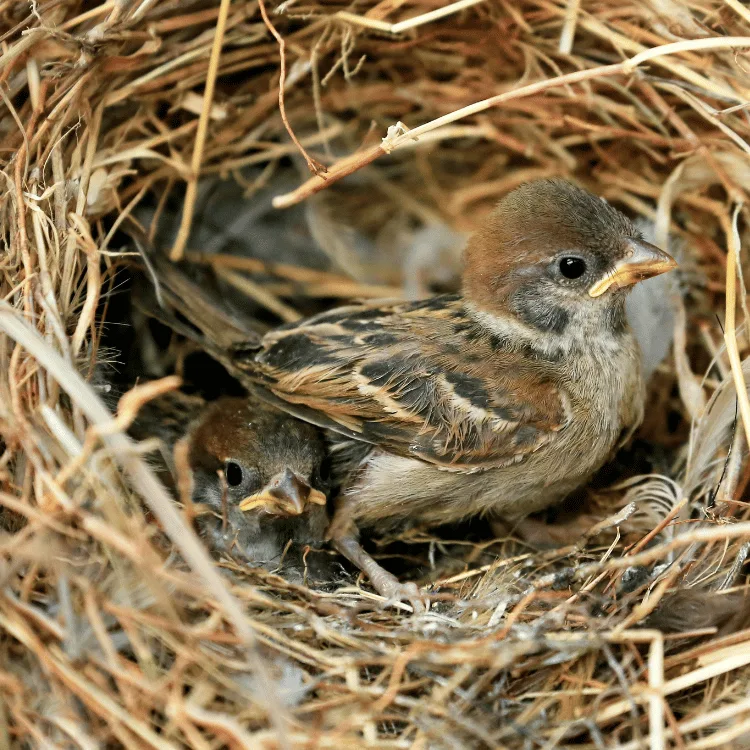
Sparrows usually nest in spring, when pairs form and look for safe places to build their nests. Sparrows are known for building nests in cracks in buildings, under roofs, in tree hollows or in wooden nest boxes. The female lays 3 to 7 eggs, which she incubates for about 10 days. Once the chicks hatch, both parents feed and protect them. The young stay in the nest for a few weeks until they are grown enough to leave it and start feeding themselves. Sparrows adapt quickly to different conditions, which allows them to live in almost all human settlements and to maintain high numbers. Interestingly, young sparrows often gather in groups, while adult sparrows stay in family groups or pairs. The sparrow’s life cycle is very fast, and the young usually become independent within a few weeks.
Lifespan
In the wild, a sparrow usually lives for 3 to 5 years, although many birds never reach this age because of predators, disease, accidents or the hazards of moving around. In protected conditions, such as urban areas where predators and threats are fewer, sparrows can live longer – up to 9 years or more. Interestingly, sparrows in towns are often exposed to pollution, traffic accidents and attacks by birds of prey, which affects their lifespan.
Facts and research
Sparrows are the subject of many scientific studies because of their adaptability to urban environments and their social behaviour. Scientists have studied how environmental changes, such as urbanisation and climate change, affect sparrow populations. Sparrows have also shown interesting adaptations to human activity, such as finding food in areas that were once unused. One interesting fact about sparrows is that they are very sociable birds, known for communicating within the flock through a variety of sounds and behaviours. Sparrows are also very sensitive to changes in their environment, and the size of their populations often serves as an indicator of the health of urban ecosystems.
The ecological role of the sparrow
The sparrow plays an important ecological role in maintaining the balance of urban ecosystems. As plant-eaters, sparrows help to keep the numbers of plants and seeds in check, while as insect-eaters they help reduce the numbers of insects and small invertebrates. In this way they help maintain the balance between the plant and animal worlds. Sparrows also help disperse seeds, which can contribute to the spread of certain plant species.
Conclusion
The sparrow is a bird with an important role in the ecosystems of both urban and rural areas. Its adaptability to living alongside people, its ability to survive in different conditions and its sociable nature make it a fascinating part of our everyday lives. Although they face threats such as pollution and urbanisation, sparrows remain a symbol of life in towns and cities and an important part of the ecological balance.