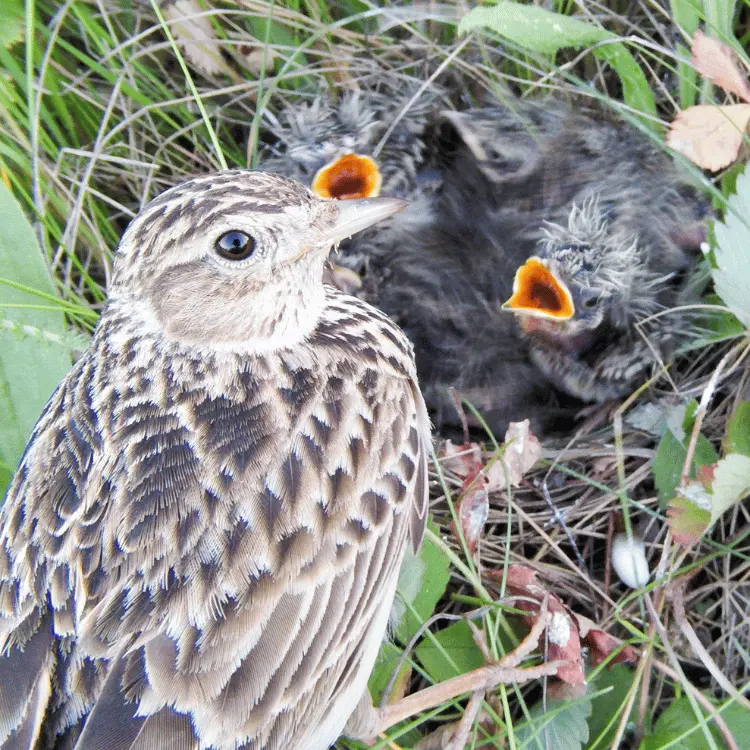
The Eurasian skylark (Alauda arvensis) is a bird known for its distinctive song, appearance and behaviour. This small member of the lark family (Alaudidae) is widespread in Europe, Asia and North Africa, where it lives in open fields, grassy meadows and woodland clearings. Thanks to its melodious song, the skylark is a favourite among lovers of birds and nature.
What does the skylark look like?
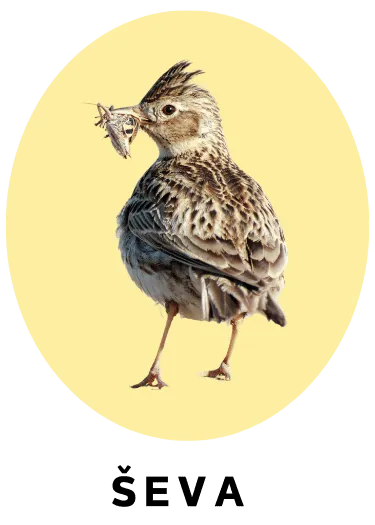
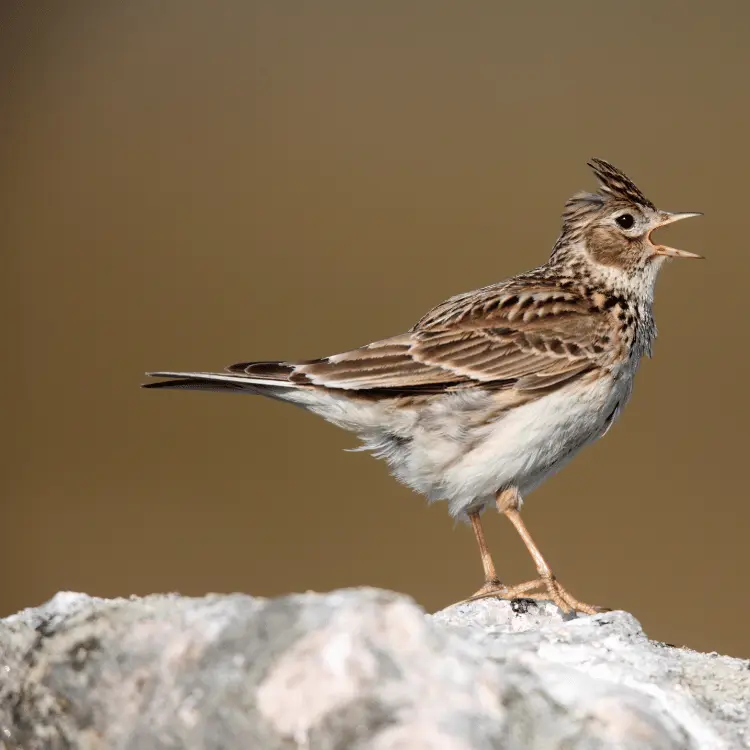
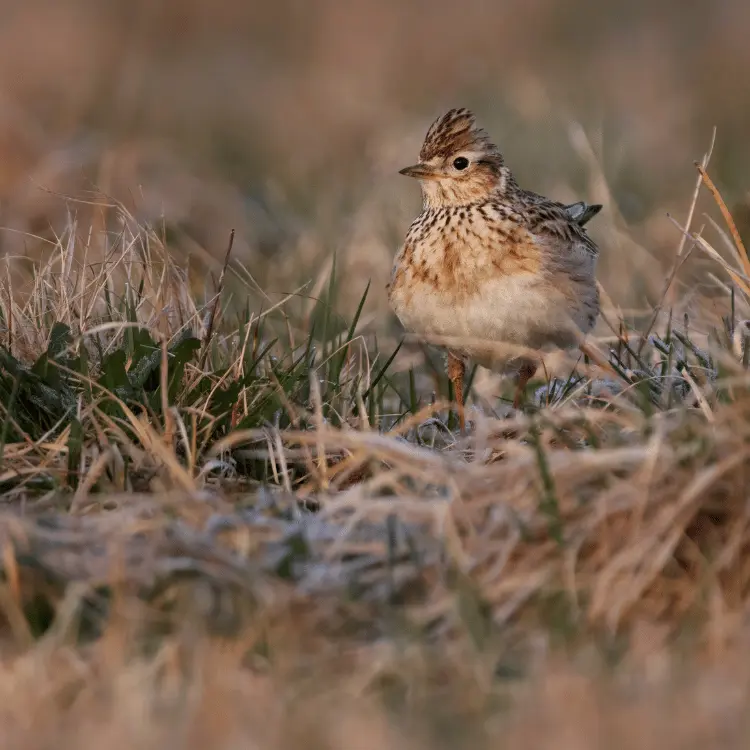
The skylark is a medium-sized bird with a very recognisable appearance that is typical of the species.
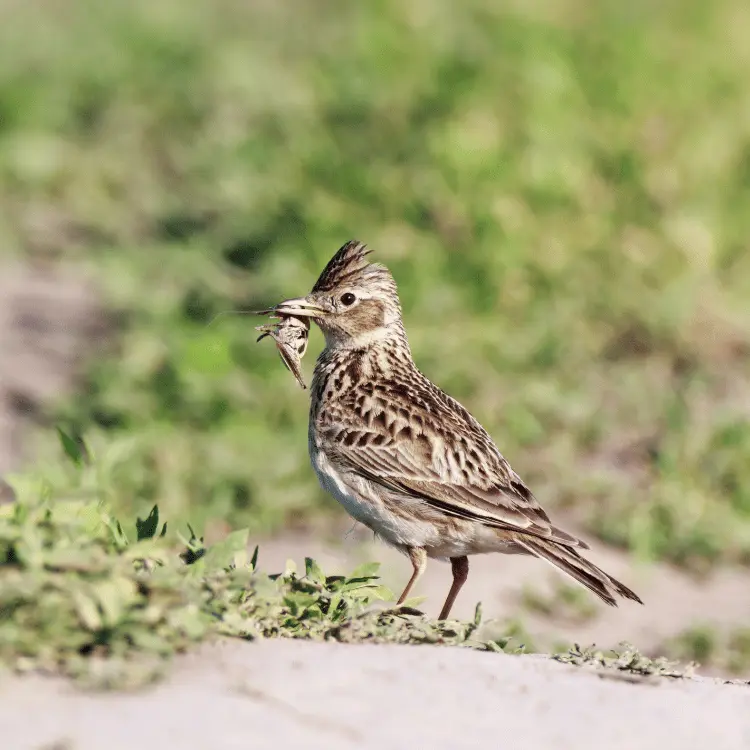
Body and plumage: the skylark is mostly brownish, with darker feathers on the back and a paler belly. Its plumage is often covered with small streaks and spots, which help it blend into its surroundings.
Size: the skylark is a medium-sized bird, about 18 to 20 cm long, with a wingspan of 35 cm.
Beak: its beak is adapted to make it easier to catch and pick up insects and other small creatures.
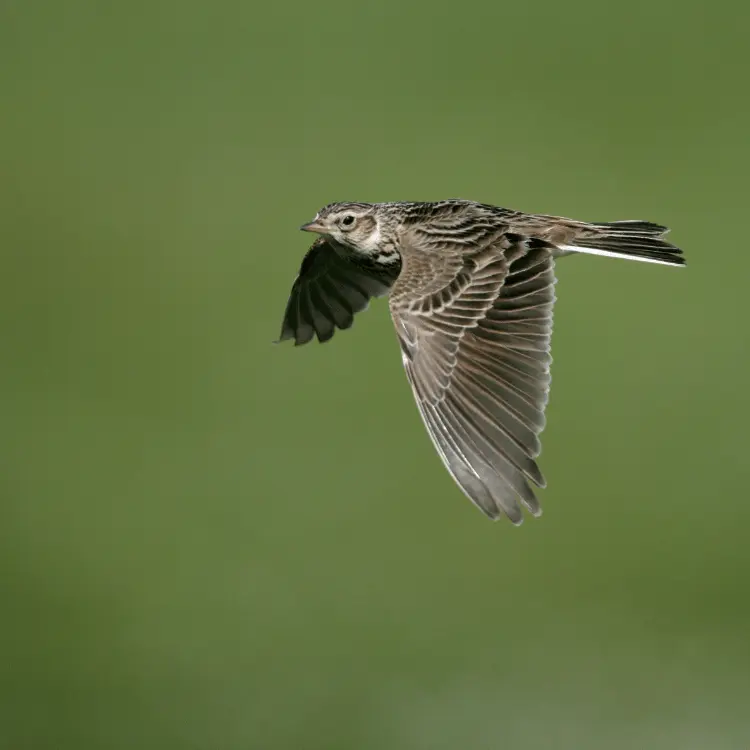
Tail: its tail is triangular and relatively long, which helps it manoeuvre in flight.
Skylark habitat and distribution
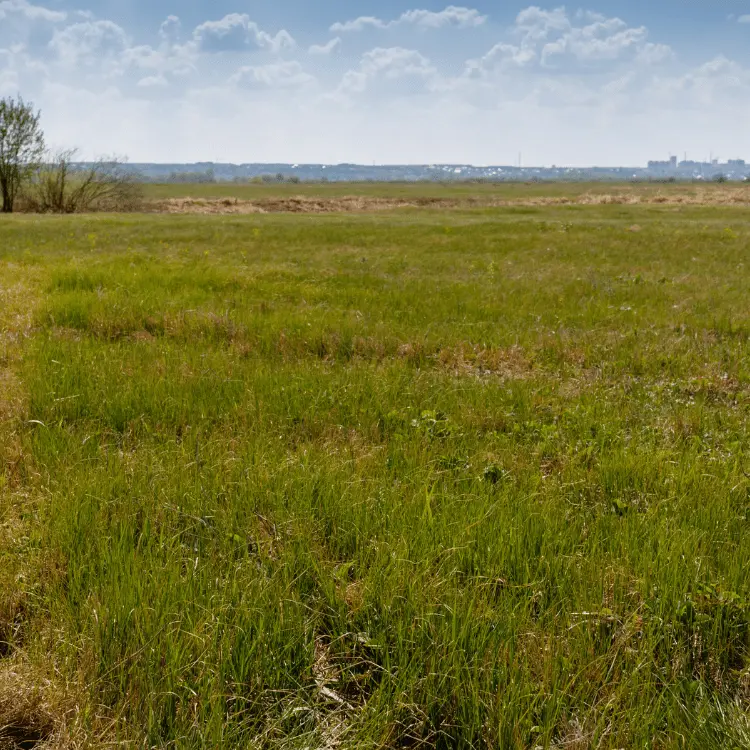
The skylark prefers open country, such as fields, meadows, pastures and abandoned farmland.
Distribution
The skylark is a very widespread bird that can be found across most of Europe and Asia. It is also present in North Africa, and it migrates south in autumn.
This bird is often seen on farmland, in areas that are not intensively farmed, where it can find enough food.
What does the skylark eat?
The skylark is an insectivorous bird that hunts and eats small insects, but it also occasionally eats seeds
Insects: the skylark’s diet consists mainly of insects such as beetles, ants, grasshoppers and spiders.
Seeds: although insects are its main source of food, the skylark also occasionally eats seeds and plants.
Hunting method
The skylark forages on the ground, looking for small insects in the grass or soil. It also catches insects in flight from above.
Skylark behaviour
The skylark is known for its lively and energetic nature. These birds often perform characteristic song flights, singing from high in the sky and creating a special atmosphere in the countryside
Song: the skylark is known for its melodious song, which it often delivers in flight. This aerial concert lasts several minutes, and its song has inspired many poets and musicians.
Flight: the skylark performs spectacular flights, weaving above the ground and occasionally dropping low towards it.
Quick movements: although the skylark loves to fly, you can often see it running along the ground looking for food.
The skylark’s voice is very recognisable; it often sings high-pitched melodies that can be heard from a great distance. Its song has a pronounced rhythm and many varied phrases.
Nesting and caring for the young
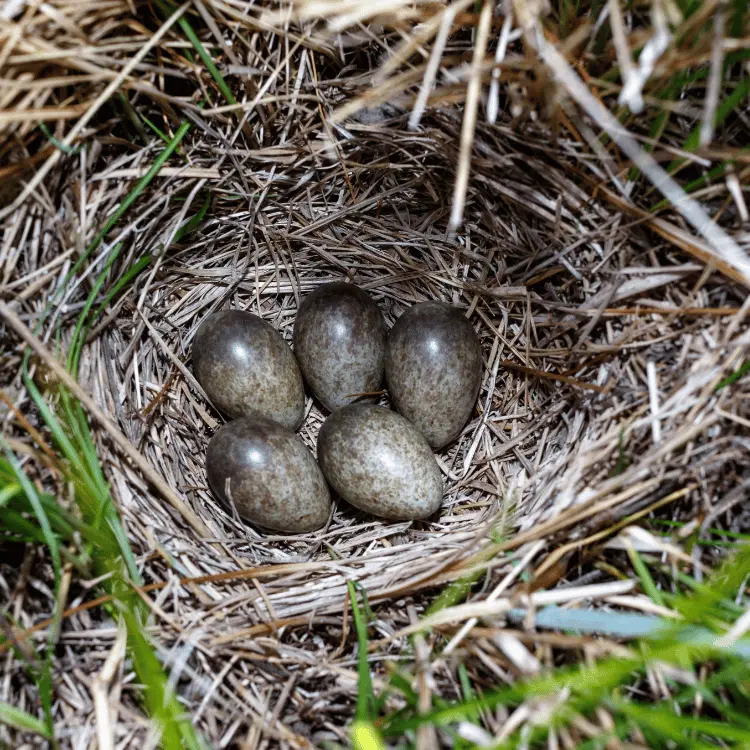
The skylark’s nest is usually on the ground or very low down in vegetation. The female lays 4 to 6 eggs, which she incubates for about 12 to 14 days.
The nest is made from grass and leaves, and the inside is lined with softer materials such as hair or feathers.
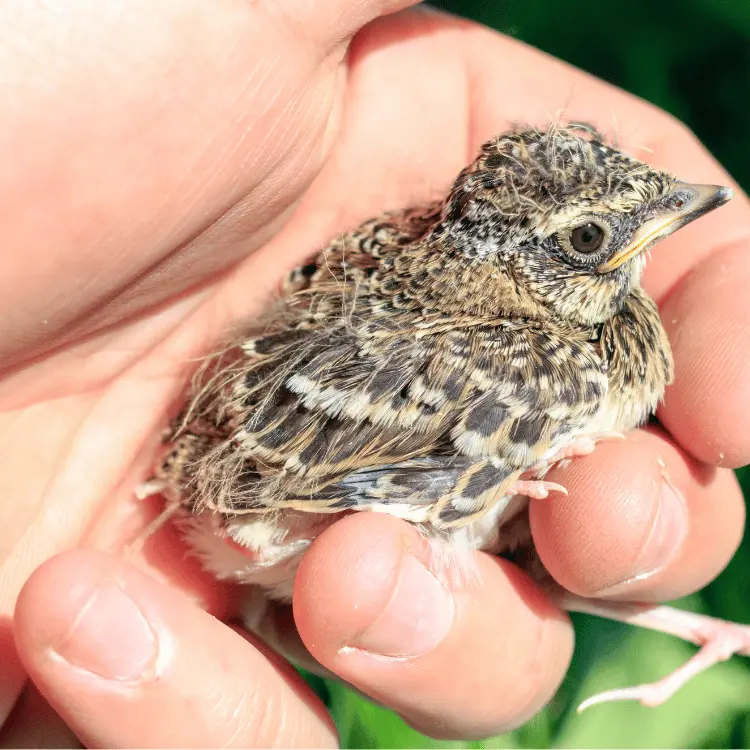
Both parents look after the young, feeding them insects until they are developed enough to leave the nest.
Interesting facts about skylarks
Singing in flight: the skylark is famous for singing while flying. Birds that sing in flight are rare, and the skylark is one of the best known.
Migration: although the skylark mostly stays in temperate regions, it migrates to more southerly areas in autumn in search of warmer places.
Evolutionary adaptation: the skylark is well equipped to survive in open country, where it uses its resourcefulness to find food and avoid predators.
Conclusion
The skylark is one of the best-known birds of fields and grassland. Its melodious song, lively behaviour and remarkable adaptability make it a fascinating inhabitant of the countryside. If you love birds, the song of the skylark is sure to delight you and remind you of the beauty that nature offers.