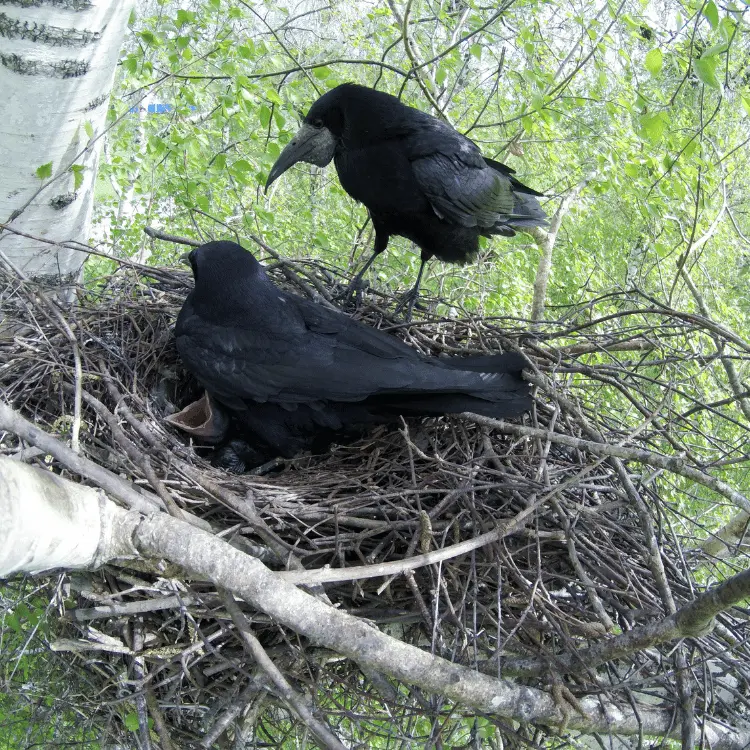
The rook, whose scientific name means “fruit gatherer”, belongs to the crow family and is widespread across Europe and Asia. Although similar to the hooded crow, this bird has unique features that make it easy to recognise. Below we take a closer look at the physical characteristics, behaviour, feeding habits and other interesting facts about this bird.
Rook (Corvus frugilegus)
What does a rook look like? Distinctive features
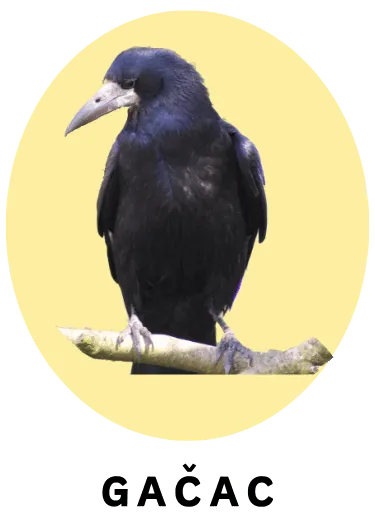
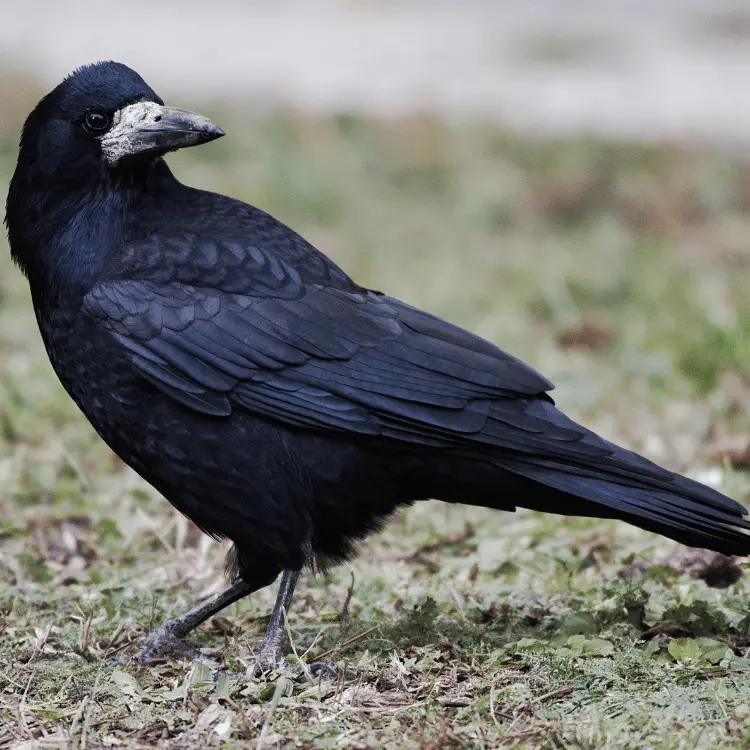
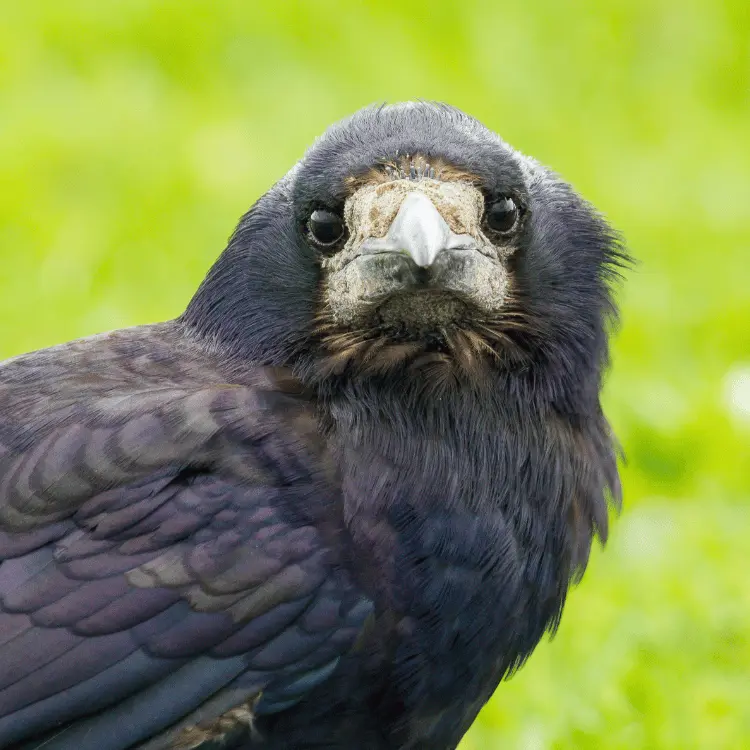
The rook is a medium-sized black bird with a body length of 45 to 47 cm and a wingspan of 80 to 100 cm. Its glossy black plumage has a metallic sheen in purple or blue tones, which makes it recognisable, especially in sunlight. In addition, the rook’s beak is light grey, almost white, with a characteristic bare patch at the base in adult birds. Young rooks have a black beak, and the area around the beak is covered with feathers. Unlike other crow species, the rook looks slimmer and has longer legs, and its gait often looks rather “lordly”.
Behaviour and intelligence: sociable birds with high cognitive abilities
Rooks are very sociable birds that gather in large flocks which can number hundreds or even thousands of individuals. Breeding colonies (rookeries) are a key feature of their social organisation. These birds are known for their intelligence, and although they have not been studied as much as other crow species, they learn quickly and adapt to all kinds of situations, including foraging in urban areas. Rooks use a range of sounds to communicate, from the typical “caw-caw-caw” call to more complex vocalisations in different contexts.
Rook lifespan
In the wild, rooks usually live between 10 and 15 years, while in captivity they can reach over 20 years with proper care. Their longevity depends on environmental conditions and the availability of food.
Diet and feeding habits: versatile and resourceful
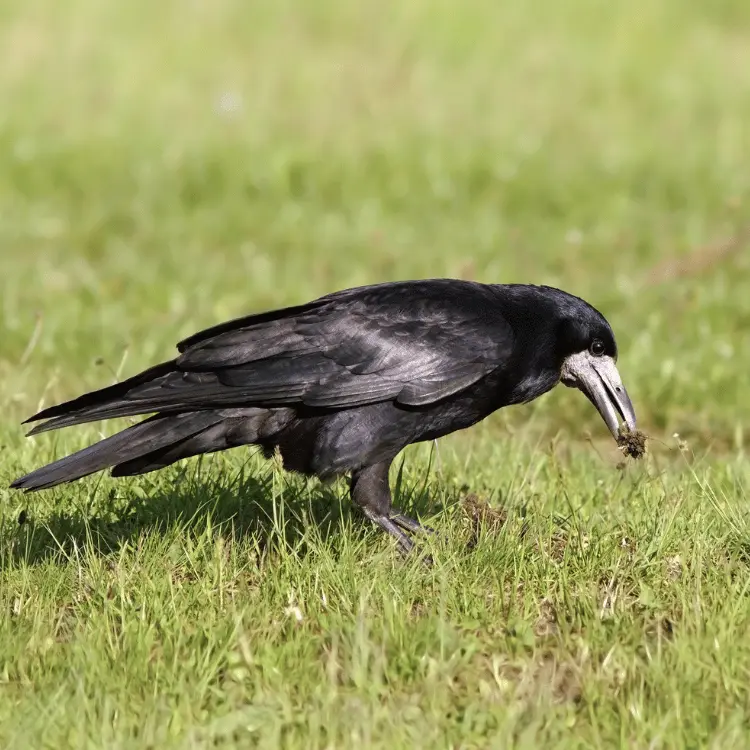
Rooks are omnivorous birds that feed on a wide range of foods, including insects, worms, fruit, grain and small animals such as mice. They often visit farmland looking for seeds or for insects in the soil, and in urban areas they search through rubbish and make use of human leftovers. Interestingly, rooks often cooperate when foraging, with their flocks systematically searching grassland or fields using a collective approach to maximise their feeding success.
Nesting and breeding: colonial birds with monogamous bonds
Rooks are colonial birds that nest in large groups. Their nests are built in tall trees, often in parks, small woods or farmland. Breeding colonies can exist for decades, and the birds often return to the same place every year. Rook pairs are monogamous and stay together for life. They build their nests from twigs, grass, leaves and feathers. The female lays 3 to 5 eggs, bluish with dark speckles, and incubation lasts about 16 to 18 days. Both parents look after the chicks, feeding and protecting them. The young leave the nest after about four weeks but stay close to their parents until they have learned to survive on their own.
Interesting facts about rooks: fruit gatherers and sociable birds
The grey heron (Ardea cinerea) is one of the most elegant birds living in wetlands and coastal areas. This large bird is recognisable by its long legs, slender neck and incredible patience when hunting. In many cultures it symbolises silence, patience and caution, reflecting its calm and deliberate way of life.
Habitat and territory: open habitats and conflicts with people
Rooks prefer open habitats, including fields, meadows, small woods and urban areas. Unlike other crow species, they rarely stay in dense forest. In towns they can often be seen in car parks, on rooftops and on lawns. Because of their colonial nature, conflicts with people sometimes arise, especially when rookeries cause noise or mess near homes.
Research on rooks: advanced social and cognitive skills
Although rooks have not been studied as much as other crow species, research has shown that they have advanced social and cognitive skills. Their ability to adapt to urbanisation and to changes in the environment is key to their wide distribution. Rooks are an example of how birds can live successfully close to people, using their intelligence to survive.
Conclusion: the rook – a complex and adaptable member of the bird world
The rook is a fascinating bird that combines intelligence, sociability and adaptability. Its presence both in the wild and in urban environments plays a key role in ecosystems. Although we sometimes see it as a nuisance, it deserves our respect for its complex nature and its contribution to the natural world.