The robin – a symbol of spring and the beauty of nature
The European robin (Erithacus rubecula) is a small but highly recognisable bird, known for its bright red breast and melodious song. One of the best-loved members of Europe’s fauna, it is often associated with the arrival of spring and is frequently a symbol of new life and hope. Robins live in a variety of habitats, from forests and gardens to urban areas, and are known for their boldness and curiosity. Whether it is their beautiful song or their unusual behaviour, the robin makes a strong impression on anyone who watches it.
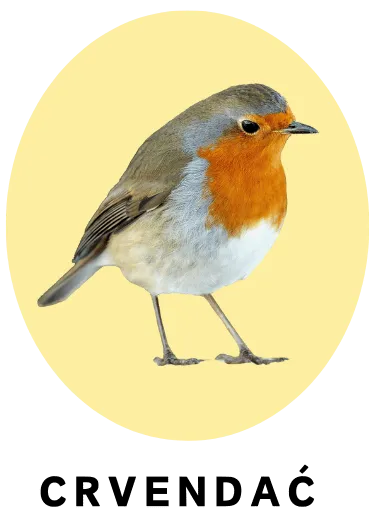
European robin (Erithacus rubecula)
What does a robin look like?
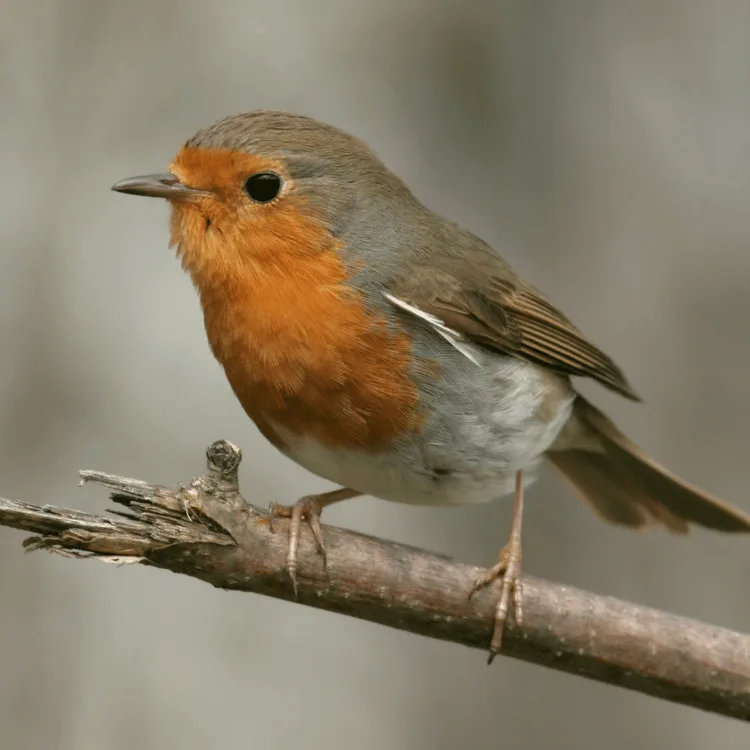
The robinis a small bird, about 12–14 cm long, with a wingspan of 20–22 cm. Although these birds are quite modest in size, their vivid colouring and striking behaviour make them easy to recognise.
Characteristic physical features
Head and breast: the characteristic red colour extends from the eyes down to the upper breast Back: brownish-grey Belly: pale, beige-white Eyes: dark and prominent, with a faint ring Beak: short and sharp, ideal for catching small insects and other food
Habitat and distribution
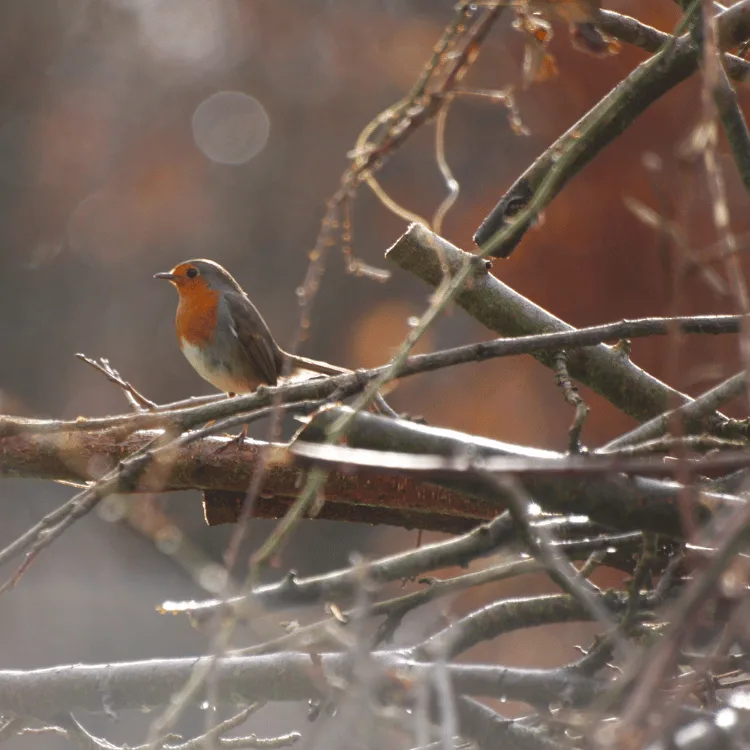
Robins live in woodland, gardens, parks and mountain meadows, so they can be seen almost everywhere in the European Union. Beyond Europe, robins are also found in North Africa, the Middle East and Asia. Interestingly, these birds are very adaptable and often live in urban areas too, such as gardens and parks in towns, where people leave food out for them and create suitable living conditions. Because of their fondness for human settlements, robins are very well known and loved among nature lovers.
What do robins eat?
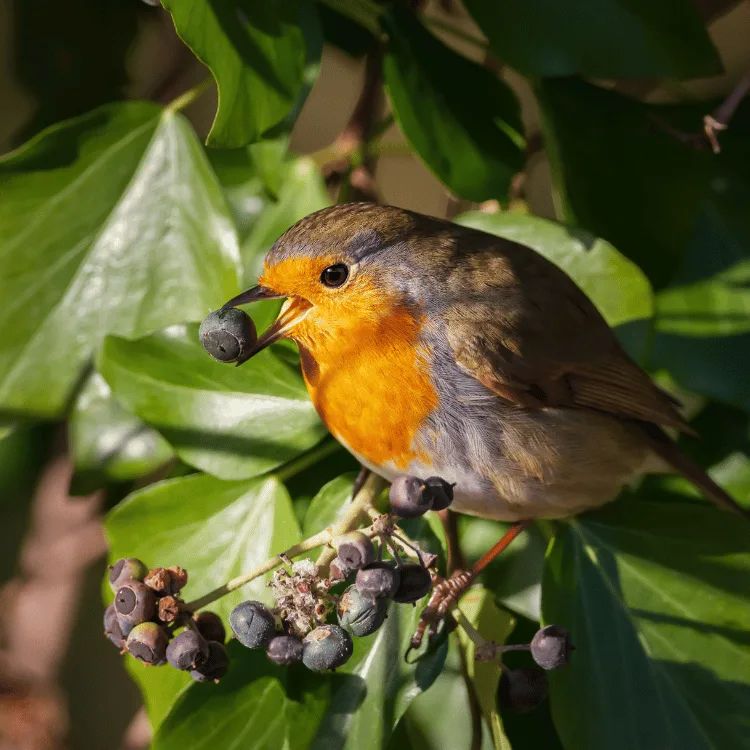
Robins are insectivorous birds, meaning that they mainly feed on: Insects such as flies, mosquitoes and worms Spiders and small invertebrates Seeds, berries and fruit Small prey such as little beetles and snails Although they are known as insect hunters, robins will also eat plant food, especially in winter when natural food sources are scarcer. They can often be seen digging in the soil or searching low vegetation for food.
Behaviour and communication
Robins are known for their melodious song, which is especially prominent in the spring months. The robin’s song is complex, with varied melodies and high notes, and is used to mark territory, attract a mate and communicate with other birds.
Interesting facts about robin behaviour
A bold and curious bird – Robins are known for their boldness and will often come close to people or perch on branches right next to them. Territorial singers – During the breeding season, male robins actively defend their territory and use their song to drive off other males. Winter diet – In winter, when natural food sources become scarce, robins may visit gardens and yards in search of food that people leave out for them.
How do robins breed?
The robin’s breeding season begins in spring, when males start singing intensively to attract females. Nests are usually found on low tree branches or in dense vegetation, where they are safe from predators.
Nesting and caring for the young
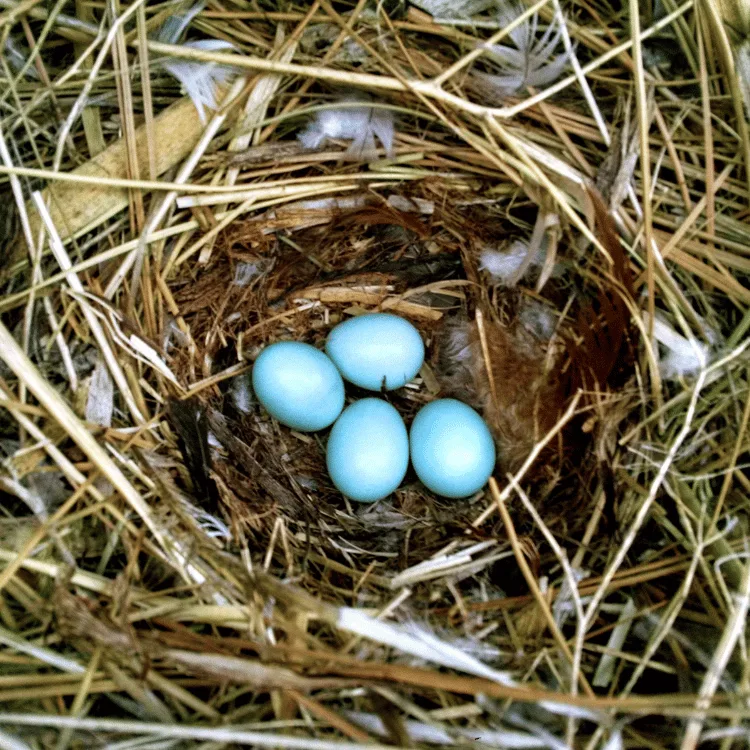
The European robin (Erithacus rubecula) usually lays 4 to 6 eggs, but the number can vary from 3 to 7. The female lays them in a nest hidden in dense vegetation, in cracks in trees or even in abandoned buildings. Incubation lasts about 13 to 15 days, during which the female sits on the eggs while the male feeds her. After hatching, the young stay in the nest for another 12 to 15 days before they fledge.
Interesting facts about the robin
A symbol of spring – The robin is often regarded as a symbol of spring and new beginnings because of its song and its arrival in the first weeks of the year. Singing in the dark – Although most birds are quiet at night, robins sometimes carry on singing into the evening, especially in spring. Local beliefs – In some cultures the robin is considered a symbol of good luck, and according to folk belief, a robin arriving in the garden can bring a good harvest. They choose nesting sites carefully – Robins usually choose safe, hidden spots for their nests to protect their young from predators.
Research on the robin
Scientists have studied robins to better understand their communication system and behaviour. Territorial song – Research has shown that song is a key part of the robin’s territorial behaviour and that the melodies differ depending on location. Learning songs – Young robins learn to sing by imitating adults, which means they repeat the melodies they hear from their parents. The effect of the environment on survival – Scientists are studying how climate change and urbanisation affect robin numbers in certain regions.
Conclusion
The robin is not only a beautiful bird but also a symbol of vitality and new beginnings. With its melodious song, adaptable behaviour and attractive appearance, the robin makes a strong impression in any setting. Whether it is its playful singing in spring or its curious nature, the robin remains a favourite bird in many parts of the world.