The red-backed shrike (Lanius collurio) is a fascinating bird known for its unique hunting behaviour and distinctive appearance. Although this small predatory bird looks delicate at first glance, it is an extremely skilful hunter that uses a special tactic to catch its prey
Appearance and distinctive features
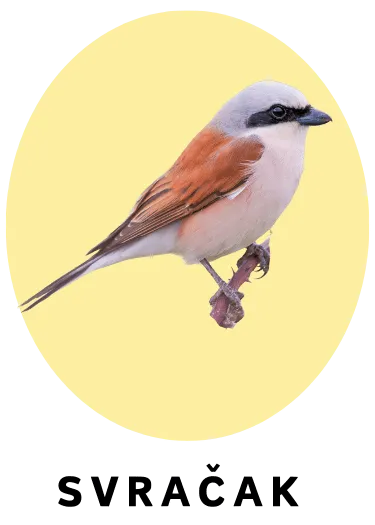
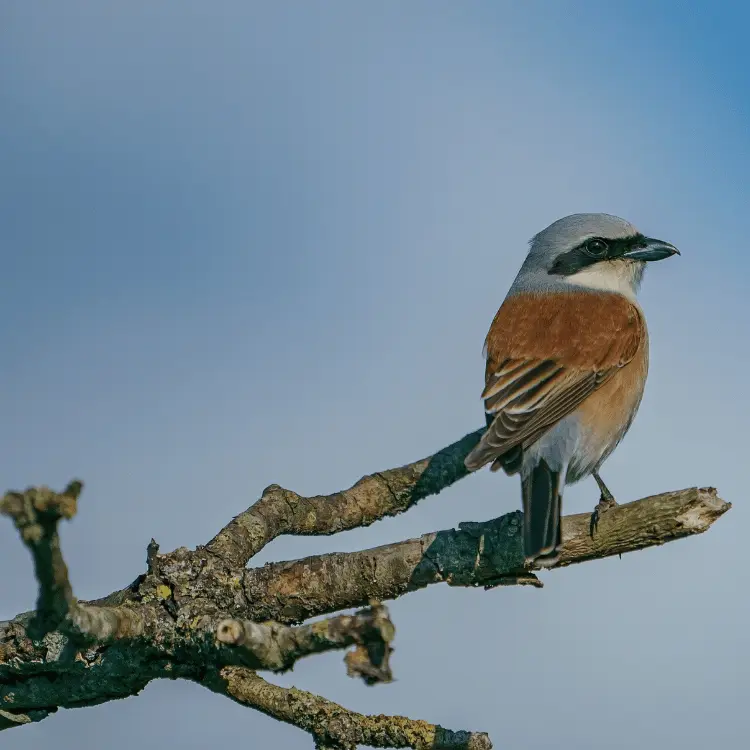
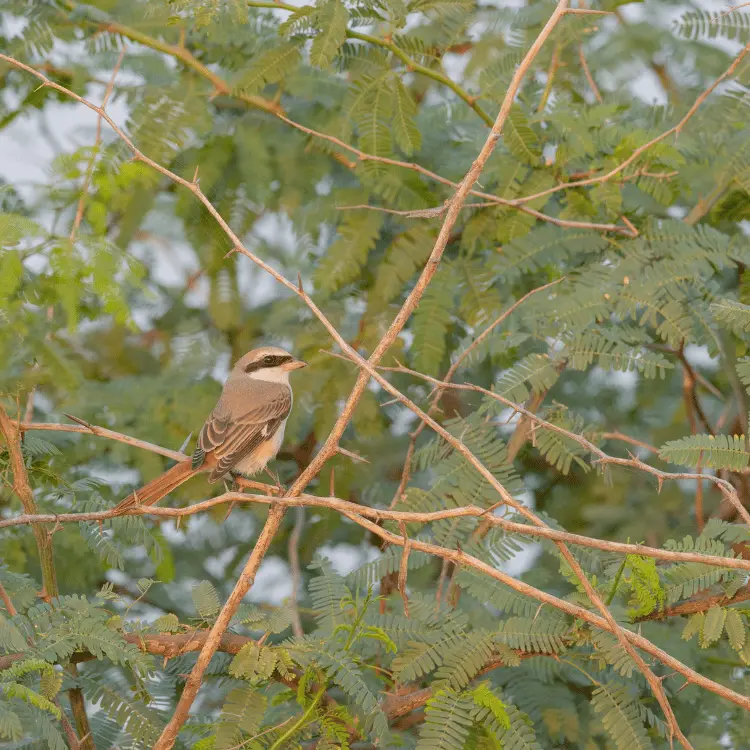
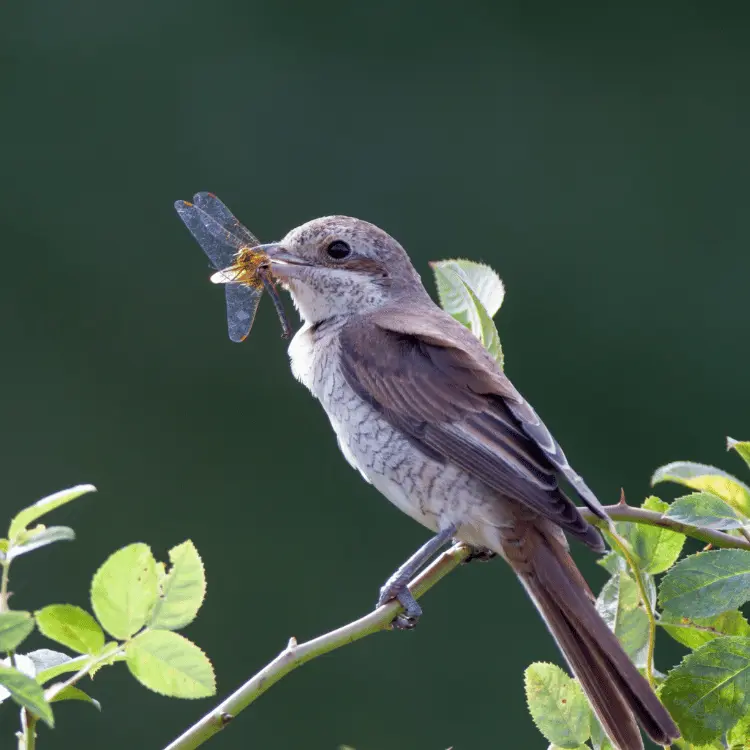
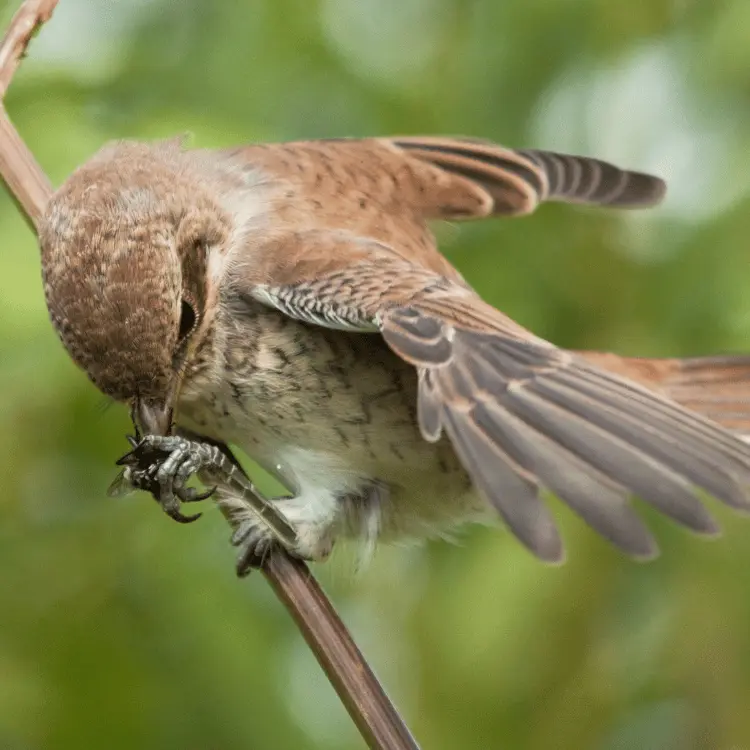
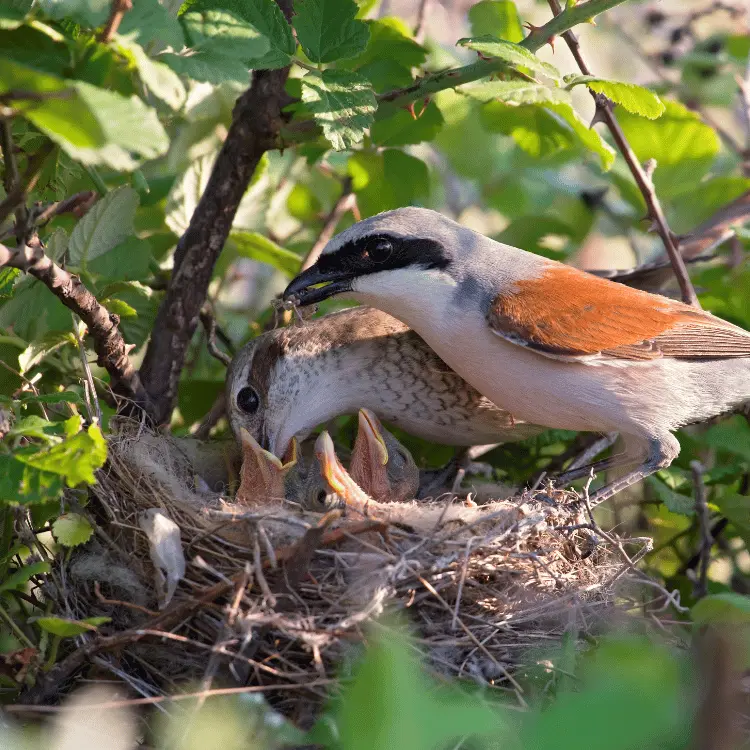
The red-backed shrike has distinctive colouring and body shape. Males are easy to recognise by their grey head, the black stripe (mask) across the eyes, their reddish-brown back and pale belly. Females are more modestly coloured, with brownish tones that help them stay camouflaged.
Their sharp, hooked beak reveals their true nature – although they are small birds, they are real predators among the passerines.
Habitat and distribution
This species lives in open countryside, woodland edges, pastures and areas rich in shrubs. It is found mostly in Europe and western Asia, and in autumn it migrates to Africa, where it spends the colder months.
Diet – a small hunter with a big strategy
Although small, the red-backed shrike is an excellent hunter. It feeds mainly on insects, small rodents, lizards and birds, and is known for an unusual technique for storing its prey.
“Shrike larders” – an impressive hunting tactic
One of the most interesting characteristics of the red-backed shrike is the way it stores food. It impales captured prey on the thorns of shrubs or on spiny branches, creating a kind of larder for later. This strategy helps it survive periods when food is scarcer.
Behaviour and breeding
During the breeding season the male attracts the female by bringing her food and performing fluttering display flights. The nest is usually built in dense shrubs or low trees, where the female lays 4 to 6 eggs. Once the young hatch, both parents feed them until they become independent
Conservation and threats
The red-backed shrike is still a relatively common species, but habitat loss and intensive farming threaten its population. Preserving natural meadows, shrubland and uncultivated land is key to its survival.
Conclusion
The red-backed shrike is not only a beautiful and interesting bird but also an important part of the ecosystem. Its special hunting strategy and adaptability make it a true master of survival. Watching this bird in the wild is a real pleasure for any lover of birds and nature.