
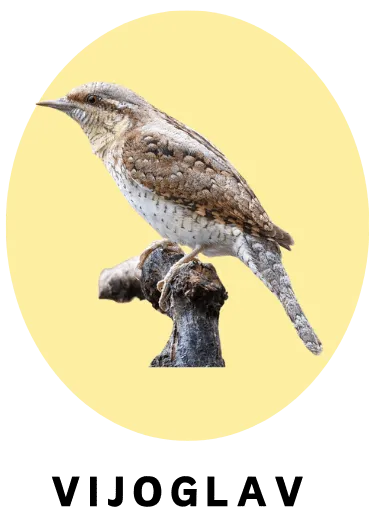
Raising a baby wryneck
Hand-rearing and rehabilitating a wryneck chick
The Eurasian wryneck (Jynx torquilla) is an unusual woodpecker that does not drill holes in trees but uses existing cavities for nesting. Unlike most woodpeckers, it spends more time on the ground looking for ants and their larvae, which are its main food. Hand-rearing this species is demanding because of its specialised diet and the need for gradual adaptation to a natural way of life.
If you have found a young wryneck, it is very important to follow the right steps in its rehabilitation. This guide describes in detail how to raise the chick properly, give it suitable housing and prepare it for its return to the wild.
Housing and warmth
A wryneck chick should be kept in a warm, quiet place, in a soft nest made of cotton fabric or paper towels.
In the early stage the temperature should be 30–32°C, using a hot-water bottle or an infrared lamp; as the chick grows, it is gradually reduced to room temperature.
It is important to avoid draughts and sudden changes in temperature, as chicks are sensitive to hypothermia.
Once the chick is feathered, it should be moved to a larger cage with branches so it can practise climbing and flying.
Diet
The wryneck is an insectivorous bird that feeds on ants and their larvae in the wild, but in captivity its diet has to be adapted to the alternatives available.
The best foods for hand-rearing:
Ant eggs and larvae (the ideal diet, if available)
Fly larvae (Calliphora – blue bottle fly larvae) – soft and rich in protein
Waxworms (Galleria mellonella) – soft, easily digestible larvae, but give them in moderation as they are fatty
Spiders, small grasshoppers, crickets – an excellent natural source of protein
Soaked pellets for insectivorous birds (e.g. Nekton Insectivor or specialised mixes).
What to avoid?
Mealworms (Tenebrio molitor) – they contain too much chitin and can cause digestive problems
Hard insects with a thick shell – the wryneck does not have a strong beak like other woodpeckers and finds them harder to digest
How often to feed?
The chick should be fed every 2 hours during the day, in small amounts, using tweezers or a soft stick. Once it starts taking food by itself, offer it insects in a small dish and gradually encourage it to hunt.
Preparing for release into the wild
When the chick starts eating on its own and shows an interest in flying, it should be moved to an outdoor aviary so that it can strengthen its muscles and develop its natural reflexes.
It is a good idea to put branches and hiding places in the aviary so that it can adapt to its environment as well as possible.
Its food should be gradually adapted to its natural diet by offering it live insects that it has to catch itself.
If possible, it is a good idea to let it come into contact with wild wrynecks so that it learns their behaviour.
When and where to release a wryneck chick
A wryneck is released when it is fully feathered, able to catch insects on its own and well trained in flying.
The ideal time for release is late summer or early autumn, when there are still enough insects in the wild.
The release site should be a woodland edge, old orchards, or oak and mixed woods with lots of old trees, where it can find natural cavities and enough food.
For the first few days after release, you can leave food nearby to help the chick adjust more easily
Conclusion
The wryneck is a specialised bird that needs the right diet, safe housing and gradual preparation for the wild. The key to success is a diet as natural as possible and gradual acclimatisation to outdoor conditions. If it is raised properly, it can be successfully returned to the wild and carry on its natural life.