
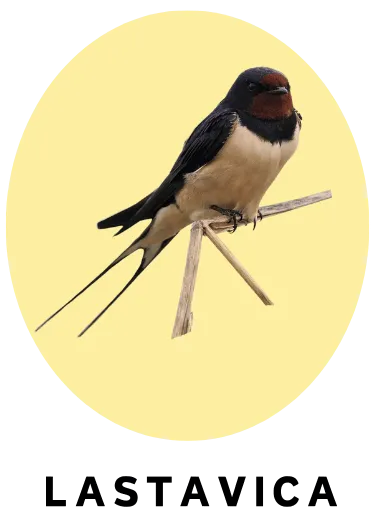
Raising a baby swallow
Hand-Rearing a Young Red-Rumped Swallow
The red-rumped swallow (Cecropis daurica) is a beautiful bird with a slender body and long, elegant tail feathers. Like other swallows, it is an exceptionally fast flier and an insectivore, which means it feeds entirely on flying insects. If you find a young red-rumped swallow, it needs proper care and feeding, because these chicks require special attention before they are ready to return to the wild.
First steps after finding a duckling
If you find a young swallow on the ground, first assess its condition:
A naked or sparsely feathered chick (nestling) – if its feathers are not fully developed, it is a chick that should still be in the nest. If you know where the nest is and can reach it, try to put it back.
A chick with developed feathers but clumsy in flight (fledgling) – if it has simply landed on the ground and is not injured, its parents are probably nearby and will keep feeding it. Watch from a distance before you pick it up.
If it is exhausted or injured – it needs to be placed somewhere warm and safe and, if necessary, you should contact bird experts.
Swallows are extremely social birds, so if a chick is left alone, it is important to give it proper care until it becomes independent. Place it in a box lined with paper towels.
Diet:
Swallows are strict insectivores, which means they cannot be raised on food such as seeds, bread or dairy products. Their diet must be based on insects and other small invertebrates.
The right diet
The best food for a young swallow includes:
Mealworms and superworms – a good source of protein, but they need to be chopped up and combined with a variety of other foods.
Small flies, mosquitoes and other flying insects – the most natural diet, but harder to obtain.
Fruit flies (Drosophila) or other small insects – you can breed them as a food source.
How do you feed a baby swallow?
Use tweezers to gently place the insects into the chick's beak.
Never force-feed a swallow – the chick will open its beak by itself when it is hungry.
The food must be fresh and must not contain pesticides.
Water is not given directly; the chick gets its fluids from juicy food.
Young swallows need very frequent feeds, as often as every 20-30 minutes during the day, because they have an extremely fast metabolism.
Preparing for independence
When the swallow starts taking food by itself and exercising its wings, it is time to prepare it for flight.
Give it enough space to exercise its wings in a safe environment.
Encourage it to hop and flap its wings so that it builds up its muscles.
Keep human interaction to a minimum, as swallows are not birds that adapt easily to life in captivity.
Release into the wild
A red-rumped swallow is ready for release when it:
Flies actively indoors.
Catches insects by itself or shows interest in them.
Has fully developed feathers and good flight control.
Release it near other swallows, ideally in open country with meadows and water, where there are enough insects to feed on. Release it on warm days, because swallows cannot survive without a natural food source.
Conclusion
Hand-rearing a red-rumped swallow requires a suitable insect-rich diet, frequent care and gradual preparation for independent flight. If it is raised properly and released in the right place, it has a very good chance of joining a flock and continuing its natural life.