
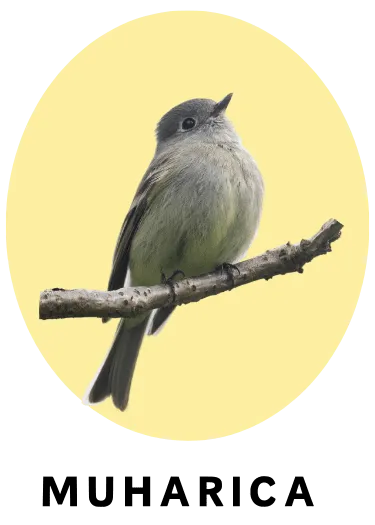
Raising a baby spotted flycatcher
How to raise a spotted flycatcher chick
The spotted flycatcher (Muscicapa striata) is a small bird of the Old World flycatcher family, known for its ability to catch insects in flight. If you have found a chick, it is important to give it the right care and conditions so that it recovers as well as possible and is prepared for its return to the wild. Here you will find a detailed guide on how to raise this chick properly, give it ideal housing and prepare it for life in the wild.
Ideal housing for a spotted flycatcher
The spotted flycatcher likes wooded and farmland areas, where it hunts insects. For the chick to recover properly and be ready to return to the wild, it needs suitable housing.
The chick needs room to move freely and develop its muscles. It is best kept in a cage or aviary measuring at least 40x40x40 cm, with enough space to fly and move around freely.
The cage should be kept in a quiet place where the chick will not be exposed to sudden temperature changes, draughts or direct sunlight.
Use soft materials such as paper or cloth, and avoid wire-mesh floors, which can injure the chick.
Very young chicks need a constant temperature of 30-35°C, which you can provide with a hot-water bottle or an infrared lamp. Gradually lower the temperature as the chick grows.
How to feed a spotted flycatcher properly
The spotted flycatcher is an insectivorous bird, which means it feeds on insects and their larvae. In the wild, flycatchers catch insects in flight, so when hand-rearing you will need to mimic this kind of diet as closely as possible.
Food for a spotted flycatcher
Live insects – the best options are fruit flies, grasshoppers, ants, crickets, worms and mealworms. You can buy insects from specialist shops or breed them yourself.
Insect substitute – if you don't have access to live insects, you can use a mix of dried worms, but it is always better to give the chick real, live food.
Mashed hard-boiled egg – in small amounts you can offer it mashed hard-boiled egg or a low-fat cheese mix as a temporary source of protein.
Vitamins and minerals – add natural supplements such as calcium powder for healthy bones and feathers.
How to feed the chick
Use tweezers – to feed young chicks, give them insects or mashed food with tweezers. You can also offer food in a shallow dish if the chick is old enough, i.e. close to release.
Soft feeding – if the chick cannot catch insects yet, you need to feed it small pieces of insects or use a special diet for young insectivorous birds.
Feeding frequency – very young chicks (up to 7 days) should be fed every hour during the day, while older chicks (7-14 days) can be fed every 2 hours.
Amount of food per feed
Small chicks should be given small amounts of food – roughly 2 small insects or a similar-sized portion per feed. Gradually increase the amount as the chick grows and develops its hunting skills.
Water – a chick that is learning to feed itself must have constant access to fresh water, whereas small chicks do not drink water, because they get the fluids they need from juicy food. Excess fluid causes diarrhoea and death.
How to prepare the chick for its return to the wild
Once the chick is strong and healthy enough, it needs to be prepared for its return to the wild.
The first step is to move the chick into an outdoor aviary or a safe outdoor space so that it can start practising flying and catching insects.
Gradually reducing contact with people – the bird should have minimal human contact so that it stays as wary and natural as possible. You must not tame it, as this can make its return to the wild more difficult.
Mimicking natural conditions – do everything you can to recreate its natural habitat. Put branches, pebbles and other natural elements in the aviary so that the chick feels as much as possible like it is in the wild.
Testing its hunting skills
Before you release the chick, make sure it can catch insects in flight. If it cannot hunt on its own yet, keep feeding it, but reduce the amount of food you give by hand until it learns to hunt and feed itself.
Release into the Wild
Habitat: open woodland, woodland edges, orchards, parks with tall trees.
Release site: near a wood or an older orchard with plenty of insects. An ideal place would be an area with dense tree canopies and branches for shelter.
Release time: morning or early afternoon, in settled weather.
It is important to observe its behaviour before release – if it is active, reacts quickly and flies normally, it is ready for the wild.
Conclusion
Hand-rearing a spotted flycatcher chick (Muscicapa striata) requires careful monitoring of its diet and housing. Providing the right food (especially insects), a suitable temperature and room to move, as well as gradual preparation for its return to the wild, is key to a successful recovery and reintegration of this bird into the wild. With proper care, a young spotted flycatcher can become a healthy, free bird that will go on catching insects in its natural way.