
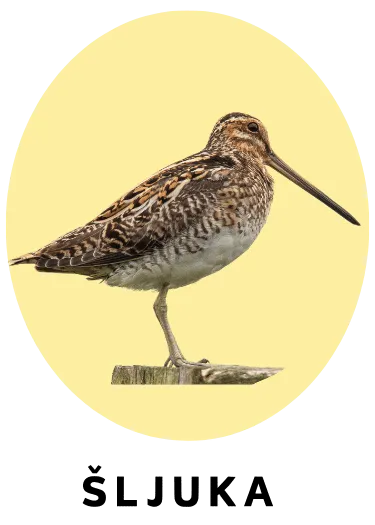
Raising a baby snipe
Hand-rearing and rehabilitation of a snipe chick
A common snipe chick (Gallinago gallinago) needs special attention and specific conditions to develop properly and later return successfully to the wild. This species is known for its secretive nature and its adaptation to life in wetland habitats, so it is essential to provide suitable conditions during hand-rearing and rehabilitation.
First steps after finding a duckling
The chick must be warmed up immediately, as young birds lose body heat very quickly. The ideal temperature in the first few days of life should be between 32 and 35°C. You can use an incubator, a heat lamp or a hot-water bottle wrapped in cloth to avoid burns. The temperature is gradually lowered as the chick grows.
The housing should be safe and well ventilated, but free of draughts. A cardboard box with a soft lining (towels or paper lining) will do at first. Later, when it becomes more active, it can be moved to a larger space with a more natural substrate such as damp soil, moss and grass, to prepare it for life in the wild.
Diet – the key to successful hand-rearing
Snipe are insectivorous birds, which means they feed mainly on invertebrates that they find in mud and soil. The chick should be fed 12 times a day in the first week, and then the number of meals is gradually reduced as it grows.
What the meals consist of
Live insects and larvae – mealworms, flies, spiders, small grasshoppers
Soft insects – fruit flies, small caterpillars
A moist food mix – blended insects with added minerals and vitamins
Lightly soaked food for insectivorous birds – combined with natural prey
A few finely chopped fresh earthworms – a rich source of protein
Food should be offered with tweezers or placed on a shallow tray, encouraging the chick to explore and try pecking by itself. As it grows, it should be encouraged to catch insects on its own, which is essential for surviving in the wild.
Ideal housing through the stages of development
In the first days the chick should be kept in a warm, safe space, but once it starts growing feathers and becomes active, it needs a larger area with natural elements.
Damp soil, moss, shallow water – mimics its natural habitat
Plants and twigs – provide cover and allow natural behaviour
Minimal contact with people – reduces the risk of imprinting
As it develops, it should gradually be accustomed to outdoor conditions by being moved into an outdoor enclosure, where it can explore and forage.
Preparing for release into the wild
Once the chick is fully feathered, able to fly and feeding independently, it is time to plan its return to the wild. Ideally, choose wetland areas with shallow water and a muddy bottom, where there is plenty of natural food.
The best time for release is at dawn or dusk, when the bird is less exposed to predators. For the first few days you can watch from a distance to make sure it has adapted successfully.
The snipe should be released in a natural wetland habitat where insects and natural food sources are present. Release it in summer, when the days are longer and the young bird can find its bearings more easily.
Conclusion
Hand-rearing a snipe chick requires patience, responsibility and the right conditions, so as to avoid dependence on people and to make sure the bird can survive in the wild. The key factors for success are the right diet, gradual adaptation to natural conditions and keeping contact with people to a minimum.
If everything is done correctly, the snipe will have the chance to return successfully to its natural habitat, helping to conserve this fascinating species.