
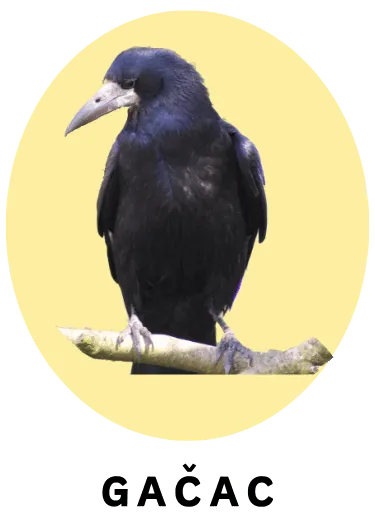
Raising a baby rook
Hand-Rearing a Rook (Corvus frugilegus)
The rook (Corvus frugilegus) is an intelligent and social bird that needs specific care while it is being raised and prepared for release into the wild. This guide covers the key steps, from the right diet to learning to find food on its own.
Recognising Age and Preparing Housing
- Up to 1 week: The chick is naked and has closed eyes. It depends on warmth and regular feeds.
- 2–3 weeks: Downy feathers start to grow and the eyes open, but the bird is not yet steady on its feet.
- 4–5 weeks: The plumage becomes denser, and the chick starts standing and exploring its surroundings.
- 6+ weeks: The bird is fully feathered, is learning to fly and is becoming more independent.
Preparing housing
- First stage (up to 2 weeks): Keep the rook in a box lined with soft towels, providing a temperature of 30–32°C with a heat lamp or hot-water bottle.
- Later stages (2+ weeks): Move the rook to a larger space with enough room for flight practice and independent exploration.
Diet from day one
Crows can eat a varied diet from the very first day. The key to success is providing high-quality protein, vitamins and minerals.
Basic diet
- Raw meat: Finely chopped chicken, turkey or beef forms the basis of the diet.
- Chicken liver: A source of iron and vitamins important for growth.
- Fruit and vegetables: Finely chopped fruit (apples, pears, berries) and vegetables (carrot, courgette, peas). Vegetables are best blanched to make them easier to digest.
Supplements to prevent rickets
- Calcium: Add cuttlebone (finely grated) or calcium powder to the food. Ground eggshells are also a good source of calcium.
- Vitamin D: Expose the bird to natural light (not through glass) or use a UVB lamp for vitamin D3 synthesis.
Feeding Frequency
- Up to 2 weeks: Feed the rook every 2–3 hours during the day, including night feeds.
- 3–4 weeks: Gradually reduce the frequency to every 3–4 hours.
- From week 5: Continue feeding every 5 hours, reducing the amount of food as the bird becomes more independent.
Preparing for release into the wild
Physical Fitness
Once the bird has full plumage (6–8 weeks), move it to a larger aviary or a safe outdoor space where it can practise flying and build up its muscles. This is essential for its physical fitness before release.
Learning to Feed Independently
One of the key parts of preparing a rook for release is encouraging its ability to find food on its own.
Placing food in different spots: Reduce the amount of food you give the rook directly and start placing it in different spots around the aviary. This way the bird will have to use its instincts to find food.
Help at the start: At first you can put food in easily accessible areas, but gradually make it more challenging so the bird has to think and use its abilities to feed itself.
Simulating natural food: Use seeds, berries, insects and other kinds of food the bird can find in its natural habitat.
Reducing Contact with People
One of the first and most important steps in preparing a rook for release is reducing contact with people. If the bird becomes too dependent on humans, it may struggle to adapt to life in the wild.
Gradually reducing interaction:
Start cutting back on every form of contact with the rook. Handle it less and avoid interaction except when necessary (e.g. feeding).
Limiting physical contact:
If the rook is used to physical contact with people, reduce it gradually. Avoid stroking and picking it up, and instead encourage it to explore the space around it.
Recommended space:
Make sure the rook spends time in a larger space (e.g. an aviary or a yard) where it can move freely and behave according to its instincts.
Setting Up an Aviary in a Natural Environment
The move from captivity to a natural environment is important for the rook because it helps it get to know the real conditions of life in the wild.
Choosing a suitable location: Place the aviary somewhere that mimics the rook’s natural environment, with natural plants, trees and shelter from wind and rain.
Gradual exposure: If the rook has been kept indoors, let it get to know the outside world gradually through the aviary. Put out feeders with food it could find in nature (seeds, berries, insects).
Finding Food Independently
One of the key parts of preparing a rook for release is encouraging its ability to find food on its own.
Placing food in different spots:
Reduce the amount of food you give the rook directly and start placing it in different spots around the aviary. This way the bird will have to use its instincts to find food.
Help at the start:
At first you can put food in easily accessible places, but gradually make it more challenging so the bird has to think and use its abilities to feed itself.
Simulating natural food:
Use seeds, berries, insects and other kinds of food the bird can find in its natural habitat.
Checking Physical and Mental Readiness
Before the rook is fully ready to return to the wild, you need to check its physical and mental readiness.
Physical readiness:
The bird must be healthy and have an adequate weight and fitness to survive in the wild. Check its flight and its ability to move around its surroundings.
Mental readiness:
The rook must show signs of independence, such as exploring new areas and instinctive behaviour (searching for food, avoiding threats).
Socialising with Other Birds
If possible, it is important to let the rook socialise with other birds of the same or similar species that live in the wild.
Expose the rook to other birds:
While preparing it for release, put the rook in an aviary together with other birds. This will help it learn the social interactions and behaviours that are normal in the wild.
Watching its reactions:
If the rook reacts normally to other birds, shows interest in interacting and behaves naturally, that is a good sign it is ready for life in the wild.
Gradually Removing the Need for Human Help
To ensure an independent life in the wild, human help must be reduced step by step.
Limit food and water outside the aviary:
Try to limit the amount of food and water you give the bird outside its natural habitat. This will help the rook come to rely on its own survival skills.
Using natural resources:
Encouraging the rook to use natural resources will help it prepare for life in the wild.
Choosing the Right Moment for Release
Once all the previous steps have been completed successfully, you are ready to release the rook into the wild. Choosing the right moment is important so the bird has the best chance of a successful transition.
Choosing a safe place:
Release the rook in an area that is safe, has enough food and shelter, and is natural for this species.
Watch the weather: It is best to release the bird in calm weather, without strong wind or rain, so that conditions are optimal for it to adapt.
Conclusion
Preparing a rook for release takes a careful approach and patience. Gradually reducing contact with people, letting it find food on its own, socialising it with other birds and checking its physical fitness are the key steps in this process. With the right preparation, your bird will be ready to return to nature and live successfully in the wild.