
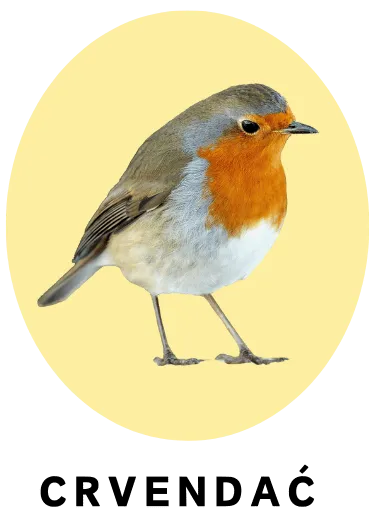
Raising a baby robin
First aid and housing for a robin
When you find a young robin, it is important to give it safe, warm housing straight away. Ideally, use a cardboard box or a small cage lined with soft paper, a cotton cloth or kitchen paper. The bird must feel protected from draughts, noise and sudden changes in temperature.
To maintain the ideal warmth (25–30°C), you can use a heating pad, a warm bottle wrapped in a cloth, or an infrared lamp placed at a safe distance. The bird must not be directly exposed to strong heat, but it should feel a gentle, constant warmth that imitates a nest.
Feeding a robin –
Robins are insectivorous birds, which means their diet must be rich in protein and fat.
Ground insects (dried or fresh, such as mealworms and grasshoppers)
Insectivore pâté – a special food rich in protein and fat, available as a soft paste or moist pellets in well-stocked shops for birds and exotic pets
Finely chopped hard-boiled egg (a temporary solution)
Kibble for toy-breed puppies, soaked in warm water until soft and swollen
Meat-based baby food (without salt or seasoning)
Small worms and small caterpillars (a robin’s natural food)
How to feed a robin
Always give the food lukewarm, not cold, using tweezers, a small stick, a dropper or a small syringe. If the bird is very young and weak, the food should have a mushy texture.
Very young birds (those that do not yet have their full feathers) are fed every 20–30 minutes during the day, but not at night.
Older chicks eat every 45 minutes to an hour, and as they grow the number of meals is gradually reduced.
When the robin starts exploring food on its own, leave small insects and soft food out for it so that it learns to peck at them.
Do not give water directly – the bird gets the fluids it needs from its food.
Gradually introducing a natural diet
As the robin grows, it is important to prepare it for feeding itself. Start introducing berries, seeds and insects so that it gets used to the food it will eat in the wild. Gradually reduce hand-feeding, encouraging it to take food from a dish by itself.
Preparing for release into the wild
Before a robin is ready to return to the wild, it must develop independence and the skills it needs to survive.
Reducing human contact – To prepare the bird for the wild, you should gradually reduce interaction and let it become independent.
Learning to fly – Give it a safe space to practise flying, such as a closed room or a covered aviary, so that it builds up strength and coordination.
Releasing it properly – It is best to release a robin early in the morning into a natural habitat with plenty of food and cover. If possible, release it in the same area where it was found.
Conclusion
Hand-rearing a robin requires patience, the right diet and gradual preparation for its return to the wild. By providing safe housing, suitable food and the chance to practise flying, you increase its chances of adapting successfully to life in the wild.
If you need more advice on rescuing and rehabilitating birds, follow our website for useful information and guidance!