
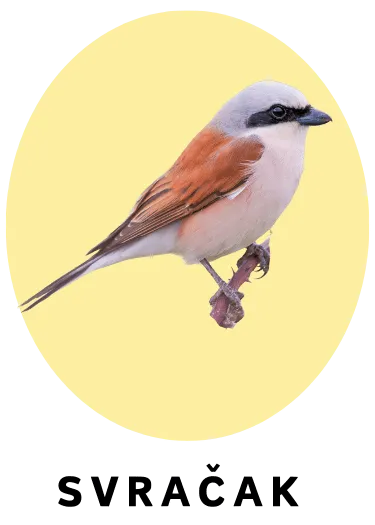
Raising a baby red-backed shrike
Hand-rearing and rehabilitation of a red-backed shrike chick
The red-backed shrike (Lanius collurio) is a predatory bird of the shrike family, known for its distinctive way of hunting and storing its prey. Properly rearing chicks of this species requires special attention, the right diet and gradual preparation for their return to the wild.
First steps after finding a duckling
The chick first needs to be warmed up, as young birds lose body heat easily. If it is chilled, it's best to place it on a warm surface (a hot-water bottle wrapped in cloth, or under a heat lamp) and let it warm up gradually. The ideal temperature in the early stage is between 30 and 33°C, and it is then gradually lowered.
Its housing must be safe, quiet and free of draughts. At first you can use a cardboard box or a transport cage with soft bedding such as cotton cloth or paper towels. As the chick grows and gets stronger, give it a larger space with natural branches so that it can practise balancing and prepare for flight.
The right diet – the key to successful rearing
Shrikes are carnivores, which means their diet must be rich in animal protein. The chick must be fed every 2 hours during the day, i.e. 8 meals a day.
Live insects – crickets, grasshoppers, flies, insect larvae, mealworms, superworms
Small pieces of meat – chicken or quail, raw and cut into tiny pieces
Soft parts of earthworms – a rich source of protein and moisture
Calcium and vitamin supplements – needed for the proper development of bones and feathers
Food should be offered with tweezers or placed on a shallow tray until the chick learns to feed itself. As it grows up, it should be encouraged to catch live insects, which will prepare it for an independent life in the wild.
Ideal housing through the stages of development
For the first few days the chick must be kept in a safe, warm and quiet space. Once it grows stronger and starts flapping its wings, it needs room for climbing and flight practice.
Small branches in the cage – encourage natural behaviour and build up muscles
Gradual exposure to outdoor conditions – getting used to the sounds and temperatures of nature
Minimal contact with people – to prevent imprinting and make the return to the wild easier
As the chick progresses, it should be moved to an outdoor aviary where it can practise flying and learn to catch prey.
Preparing for release into the wild
Release into the wild is the most important step in rehabilitation. The bird should not be released until it is fully independent at hunting and flying.
The best time for release is late summer or early autumn, when shrikes naturally migrate. The ideal location is an area rich in insects, shrubs and low trees, where it can find cover and prey.
Release should take place in the early morning or late afternoon, so that the bird has enough time to get used to its new surroundings before nightfall.
Conclusion
Hand-rearing a red-backed shrike requires patience, a carefully balanced diet and gradual adaptation to natural conditions. The key is to provide a meat-based diet, room to practise flying and reduced contact with people so that it is as well prepared as possible for an independent life.
If everything is done properly, the bird will be ready to return to the wild, helping to conserve this species in the ecosystem.