
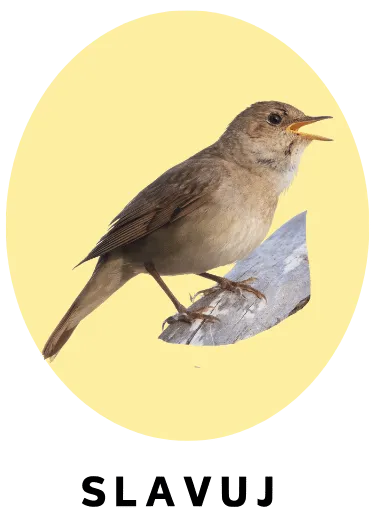
Raising a baby nightingale
Hand-rearing and preparing for release into the wild
Finding a baby nightingale can be an emotional moment, but it is important to know how to raise the bird properly and prepare it for its return to the wild. Nightingales are sensitive birds that need a specific approach in order to survive and later be able to live independently in the wild.
Housing a baby nightingale
A baby nightingale needs a warm and safe space in which to grow and develop. Ideally, keep it in a room with a constant temperature (around 25-30°C), away from direct sunlight and draughts. The cage should be spacious enough for the bird to move around and exercise, but not so large that it no longer feels safe.
For heating, you can use a heat plate that provides a stable temperature. Heat lamps are not recommended as they can be too intense, and the heat source should be positioned so that the bird cannot come into direct contact with it. If the baby nightingale is very small and has no feathers, you can use low-temperature heaters or even electric blankets, but make sure the temperature does not get too high.
Feeding a baby nightingale
To feed a nightingale properly, you need to provide food that is rich in nutrients, especially protein. At first, if the baby nightingale cannot eat on its own, you will need a hand-rearing formula (available in pet shops) or preparations based on insectivore food mixes; pellets for insectivorous birds are available in well-stocked pet shops and online shops.
Meals are given every 2-3 hours, including a night feed if the bird is very young. If you feed the nightingale with a syringe or pipette, it is important to be careful and not give too much food at once, to prevent choking. The first meals can be around 1-2 ml, and as the bird grows, the amount of food increases depending on its age and size.
For older birds that have started eating on their own, you can offer food such as insects, mealworms, superworms, fruit, seeds and insectivore pâté. Nightingales love eating insects (such as worms, ants and grasshoppers), and fruit such as berries or apples can also be a source of nutrients for them.
Amount of food and number of meals
While the baby is still very young, it should have 5-6 meals a day to build up the energy it needs. Over time, the number of meals can be reduced to 3-4 a day until the bird becomes independent enough.
Release into the wild
When the baby nightingale reaches the right age and is able to survive on its own, it is time to release it into the wild. It is best to release the bird in an area of natural nightingale habitat, away from busy roads and other dangers. It is important to give it a safe start on its return to the wild and to keep an eye on how it adapts.
Final thoughts
Hand-rearing a baby nightingale and preparing it for the wild is a process that requires a careful approach and a lot of patience. Providing the right diet, warmth and exercise will allow your baby nightingale to grow into a healthy, strong bird that can return to the wild. Bear in mind that every bird is unique, so its care may need adjusting to the specific needs of your baby nightingale