
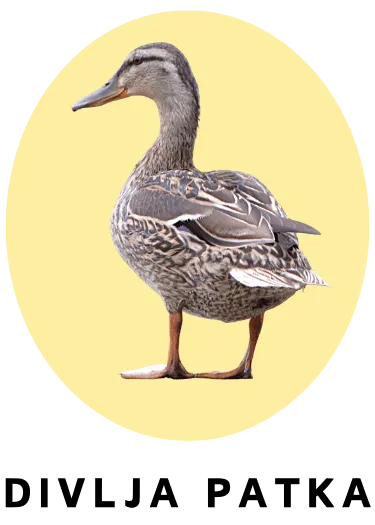
Raising a mallard duckling
Raising a young duckling:
Wild ducklings, such as those of the mallard (Anas platyrhynchos), may be found alone for various reasons – separation from their mother, a predator attack or the loss of the whole brood. Proper care and feeding are key to their survival, because in the wild they are vulnerable to hunger, cold and predators.
First steps after finding a duckling
If you find a duckling on its own, it is important to check first whether the mother is nearby:
If you can see an adult duck and other ducklings nearby, it is best to return it to them. Ducks accept lost ducklings.
If the duckling is completely alone and the mother has been gone for hours, it has probably lost her or she has died. In that case it needs to be hand-reared and later returned to the wild.
Housing and warmth
Ducklings cannot regulate their body temperature and in the first days of life they depend on their mother's warmth. If you are raising a duckling, give it a warm and safe environment:
A cardboard box or plastic container with soft bedding (hay, paper towels).
A heat source – It is best to place a lamp (40 W) or a heat mat at one corner of the box so the duckling can choose a warmer or cooler area.
A clean, dry environment – Damp surroundings can cause hypothermia.
Diet:
The best food for a young duckling includes:
Duckling or duck starter feed – If available, it provides all the necessary nutrients.
Finely chopped leafy greens – Dandelion, lettuce, young clover, spinach (in small amounts).
Boiled eggs – Finely crumbled, they are good in the first few days of life.
Insects and worms – Mealworms, superworms, small earthworms.
Cooked rice, oats or corn grits – Without salt or additives.
DO NOT GIVE: Bread, milk, salty or spicy food, or dry grains that have not been soaked.
How to feed a duckling
Put the food in a shallow dish, as ducklings peck at their food themselves.
Fresh water must always be available, but in a shallow dish so the duckling cannot drown.
Always moisten the food so it is easier to digest.
Ducklings eat often – every 1–2 hours in the first days, and then, as they grow, the intervals between meals get longer.
Preparing for independence
As the duckling grows, it needs to be gradually adapted to natural conditions:
Introducing swimming – After a few weeks, the duckling can have controlled access to water (under supervision) to strengthen its muscles and learn natural behaviour.
Space to explore – Once it is bigger, give it a safe outdoor space so it can adapt to its environment.
Less human contact – So it keeps its natural instincts and returns to the wild more easily.
Release into the wild
It is best to release the duckling when it:
Has fully developed feathers (usually at 6–8 weeks of age).
Can swim and feed itself.
Has a suitable environment – a calm river, lake or marsh with enough food and shelter.
It is ideal to release it near other wild ducks, as it will adapt more easily if it can join a flock.
Conclusion
Raising a duckling requires warmth, the right diet and gradual adaptation to natural conditions. If it is raised properly and released in a suitable place, it can successfully integrate into the wild and lead a normal life as a wild duck.