
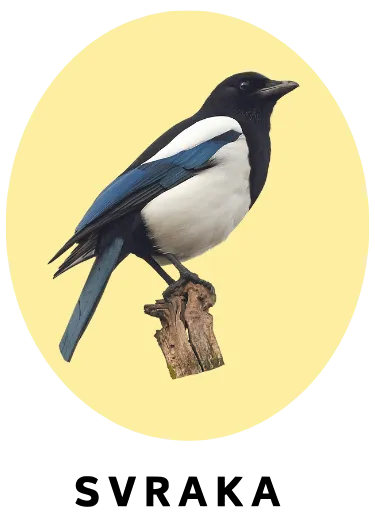
Raising a baby magpie
Found a baby magpie?
If you have found a young magpie chick and want to help it return to the wild, this guide gives you all the information you need on proper care, feeding and preparation for release into the wild. The magpie is a wild bird that needs special attention and preparation to return successfully to its natural environment. Follow these steps to give the young magpie the best possible chance of survival in the wild
How do you tell a fledgling from an unfeathered nestling?
A fledgling is a young bird that has left the nest but is still learning to fly. It can hop along the ground and has most of its feathers.
An unfeathered nestling is much younger, with no feathers or just a little down, and has usually fallen out of the nest.
If the chick is a fledgling, it is best to leave it alone. Its parents are probably nearby and looking after it. If it is in danger (near a road or predators), you can move it to a safe place nearby.
If it is an unfeathered nestling, it needs your help.
What should you do if the chick is injured?
If you notice that the chick is injured (e.g. it is bleeding, has a broken wing or cannot stand), first put it somewhere warm and quiet. Do not give it food or water until you have consulted an expert. Contact a vet or a wildlife rescue centre for further instructions.
How to choose housing for a young magpie chick
Choosing suitable housing for a young magpie chick is key to its safety, health and well-being.
The first step in choosing housing for a young chick is to ensure its safety. Put the chick in a closed box or a larger cage, away from any potential predators and hazards. The cage should be spacious enough for the chick to have enough room to move. This will give it safety as well as the freedom to explore its space, which is important for its development.
Young chicks, including magpies, need a warm environment to grow and develop properly. Using heaters or a hot-water bottle is recommended to maintain the right temperature. The ideal temperature for a young magpie chick is between 28 and 30°C, which will let it feel comfortable and safe while it grows.
To reduce stress and create a pleasant environment, it is important to give the chick privacy. Avoid too much noise, sudden movements and frequent handling. Let the chick calm down and adjust to its new space, as too much stress can hamper its adaptation and health. A calm environment will help it feel safe and reduce the risk of it falling ill.
Feeding from day one
Feeding a young chick takes patience and attention. Magpies are omnivores, but they have specific dietary needs. The first food should be easy to digest and rich in protein. You can offer:
Chopped raw or lightly cooked meat – beef, chicken meat and offal (without seasoning or salt)
Insects (e.g. mealworms, superworms, grasshoppers, crickets)
Pieces of fruit (e.g. apple, pear, seedless grapes, banana, watermelon)
Soft berries (e.g. blueberries, blackberries). Use tweezers to serve the food.
Add ground eggshells to the food for calcium.
Recommended amount of food per feed:
Unfeathered nestlings (just fallen out of the nest): about 5-10% of body weight per feed.
Fledglings (already feathered but not yet independent): meals are less frequent, every 1-2 hours, with larger portions.
The chick should fill its tummy well, but must not be overfed. When it starts refusing food, it means it is full. As it grows, gradually lengthen the intervals between meals
How to prepare a magpie for release into the wild
Preparing a young magpie chick for its return to the wild takes patience, a careful approach and a series of key steps. Every magpie must be physically and mentally ready for an independent life in the wild. Follow these tips to make sure the magpie is as well prepared as possible for release into the wild:
A natural diet
Gradually introduce the chick to natural food such as insects, superworms, earthworms, fruit and seeds. This step is very important, because the chick has to learn how to find and eat food on its own. Getting it used to a natural diet will help it develop the skills it needs to survive in the wild.
Flight practice
Let the chick practise flying and coordination. This is a key part of the preparation, because a magpie must be able to fly and move in a coordinated way to survive in the wild. Gradually increase the space in which the chick can fly so that it gets stronger and gains confidence in its abilities.
Reducing dependence on people
A bird's dependence on people can have long-term negative consequences for its survival in the wild. Birds that are used to human help with feeding and care cannot recognise threats in their environment and will not be able to find food or shelter without help. Too many close interactions with people can also interfere with birds' natural instincts, such as their ability to fly, find their way and survive in the wild. The purpose of bird rehabilitation is not only physical recovery, but also strengthening their natural skills and instincts.
How can you reduce a bird's dependence on people?
One of the most effective ways to reduce a bird's dependence on people is to reduce interaction gradually. At first you may need to keep the bird close to you for its care, feeding and recovery, but the more physically active the bird becomes, the more important it is to start reducing contact.
If the bird is not sick or injured, avoid contact with it. Don't touch it or pick it up unless it is necessary for its rehabilitation.
Although you may be in the habit of talking to the bird, using your voice less will also help it rely on you less. Birds in the wild will have no human interaction, so they need the chance to get used to silence.Instead of feeding the bird by hand several times a day, start offering food the way it would find it in the wild, such as placing food in the cage or somewhere it has to reach by itself.
Finding food on its own
One of the most important steps in preparing a bird for life in the wild is letting it start to find food on its own. This is how the bird redevelops its feeding instincts.
Set up a feeder that the bird can reach easily, but so that it has to explore a little to get to the food. This can include putting food directly on the floor of the cage or in corners it has to search.
Use natural food that the bird can find in its natural habitat, such as seeds, insects, earthworms or fruit. This will help the bird recognise the food it can find in the wild, which is key to its survival.
Introducing natural challenges
For the bird to become independent, you need to expose it to natural challenges that simulate conditions in the wild.
Place obstacles in the cage or area where the bird lives, such as small objects it has to move to reach its food or water. This will help it develop survival skills.
By introducing the sounds of natural predators (such as birds of prey, dogs and cats), you can help the bird recognise the dangers in its surroundings and learn how to react to them.
Give the bird more space to explore
For the bird to develop its instincts for finding its way and surviving, it is important to give it more space to fly and explore. If the bird has access to a larger space, this will allow it to:
Develop its flying skills and coordination.
Explore the different surfaces and objects in its surroundings, which connects it with its natural instincts.
This is the process in which the bird develops the ability to recognise and respond to the factors in its environment that matter for its survival. It includes several aspects:
Identifying danger: The bird must learn to recognise potential threats in its surroundings, such as predators (other birds, cats, dogs) or dangers from the human world (e.g. traffic). This is a key skill that allows the bird to respond to danger in a natural way, whether by taking cover or fleeing.
Recognising food sources: In the wild, birds have to learn where and how to look for food. This means the bird must develop the ability to recognise the plants, insects, seeds and other food sources available to it, and understand how to get them. Through practice and exposure to different kinds of food under controlled conditions, the bird will learn where and how to find food in its natural habitat.
Finding its way around: The bird must learn to move around its environment, recognise safe places to rest and build its nest. Finding its way also includes the ability to fly, navigate and recognise areas where it can be safe and where there may be risks. In the wild, a bird looks for shelter, high places to nest, or trees it can use as cover from predators.
All these aspects help the bird to recognise the circumstances in its surroundings and, based on them, make decisions that ensure its survival in the wild.
How to tell when a magpie is ready for release
To know that the bird is fully prepared to return to the wild, you need to look out for a few key signs:
Feeding itself: The bird must be able to find and eat food on its own, without any help from you.
Flight and coordination: The bird must be able to control its flight and manoeuvre through space, avoiding obstacles and predators.
Less dependence on people: Birds that no longer seek your attention and show independence in their behaviour (such as exploring their space and looking for food) are ready to return to the wild.
Where to release a magpie?
Choosing the right place to release a magpie into the wild is also crucial. Here are a few guidelines:
Natural habitat: The bird should be released into its natural environment, away from urban areas, roads and human settlements. Ideally, choose woodland, parks, meadows or other green spaces with natural food sources and places to build a nest.
The bird will have a better chance of survival if it is released in an area rich in trees, shrubs and other plants that provide natural resources. In such surroundings, a magpie can find food, a safe place to rest and shelter.
It is important to choose an area that is safe for the bird, without large predators such as cats and dogs or other dangers that could threaten its life – and, of course, one where magpies live.
A quiet location: The bird’s return to the wild should be as calm as possible, without crowds or noise that could stress it and stop it from settling down and adapting to its new surroundings.
The best time for release
Releasing a magpie at the right time is also extremely important. Consider the following factors:
Summer or early autumn: It is best to release a magpie into the wild during the warm months, when conditions for survival in the wild are at their best. Summer or early autumn gives the bird time to settle in, learn to survive and find food before the colder months arrive.
Avoid winter conditions: If possible, avoid releasing birds in winter or late autumn, as cold and food shortages can threaten their survival. In the winter months, birds may struggle to find food and shelter.
Avoid bad weather: Choose a day with a favourable weather forecast. Ideally, release the bird in sunny, calm weather, without rain or strong wind, which can make it harder for it to find its way in its new surroundings.
Conclusion
Releasing a magpie into the wild properly requires careful planning and an assessment of its readiness. The bird must be physically and emotionally ready for an independent life, and the place where you release it must be safe and suited to its needs. By following these guidelines, you can help a magpie survive in the wild and enjoy the freedom it deserves💚