
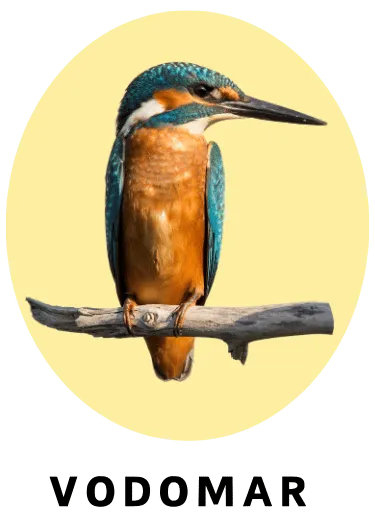
Raising a baby kingfisher
How to hand-rear a kingfisher chick properly
Raising a young kingfisher requires special attention, the right diet and gradual preparation for an independent life in the wild. This bird species specialises in catching fish, so it needs a suitable diet and conditions in order to adapt successfully to the wild.
Housing and warmth
A kingfisher chick must be kept warm, but not too hot. It is best to provide an incubator or a box with a heating pad placed under part of the floor, so that the chick can choose between a warmer and a cooler zone. The ideal temperature for a very young chick is around 30-32°C, and it can be lowered gradually as the chick grows.
The cage or box should be safe and quiet, without too much interaction with people, so that the bird does not become too used to human presence. Keep the bedding dry and clean, using paper towels that are changed regularly.
Diet and feeding frequency
Kingfishers are fish-eaters, so it is essential to provide them with small, fresh fish. If whole fish are not available, fish fillets can be used, but always fresh and never frozen. Insects can be added occasionally, but fish must be the main source of food because of its essential nutrients.
A young chick needs feeding every 45 minutes during the day. As it grows, the intervals between meals can be gradually increased. It is important to match the size of the meal to its age – at first it will need small pieces of fish, while later it will be able to swallow whole small fish such as picarel and the like.
Preparing for the return to the wild
As the kingfisher develops, it is important to reduce contact with people and let it catch its food by itself. It can be moved to a larger space with shallow water, where it can practise catching fish. At first it can be offered live fish in small containers of water, and later it should be given a larger “pool” where it can practise hunting.
Once the chick is able to catch food on its own and shows signs of being ready for the wild, it should be released in a suitable area near a river or lake, rich in fish and vegetation. It is best to release it early in the morning or late in the afternoon so that it has enough time to get used to its new surroundings.
Conclusion
Proper rearing and preparation of a young kingfisher are key to its survival in the wild. Providing the right diet, gradually reducing human contact and giving it the chance to practise hunting all increase its chances of a successful return to the wild. With patience and proper care, this beautiful little bird can return to its natural way of life and play its part in the ecosystem it belongs to.