
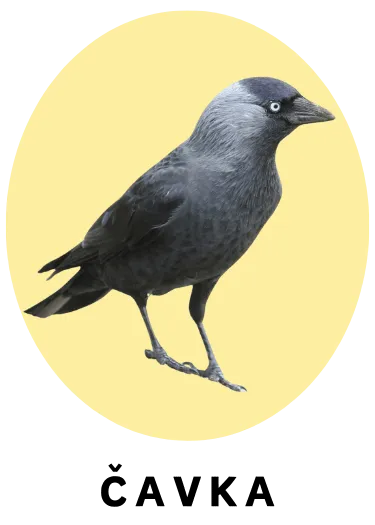
Raising a baby jackdaw
Hand-rearing a jackdaw and releasing it back into the wild
Raising a jackdaw from day one requires careful attention, correct feeding and proper preparation for its return to the wild. Jackdaws, birds known for their intelligence and social behaviour, can be successfully hand-reared and prepared for a free life in the wild with the right approach. Below you can read the detailed steps for raising a jackdaw and preparing it for release.
A safe environment for a baby jackdaw
When you find a baby jackdaw, the first thing you need to do is give it safe and comfortable housing. Young jackdaws cannot regulate their own body temperature and need a warm, sheltered environment.
Housing and keeping it warm
- A safe box: Put the jackdaw in a box or basket lined with soft materials such as cotton or a towel. Make sure there are no sharp edges or dangerous objects.
- Warmth: Use a heating pad or a hot-water bottle wrapped in fabric to keep the temperature at 30°C during the first days.
- Peace and quiet: Keep the jackdaw in a quiet room, away from noise and stress.
- A safe box: Put the jackdaw in a box or basket lined with soft materials such as cotton or a towel. Make sure there are no sharp edges or dangerous objects.
- Warmth: Use a heating pad or a hot-water bottle wrapped in fabric to keep the temperature at 30°C during the first days.
- Peace and quiet: Keep the jackdaw in a quiet room, away from noise and stress.
Urgent condition check
Health check: If you notice injuries or unusual behaviour, contact a vet who treats wild birds straight away.
The right diet and care
Feeding a jackdaw correctly in the first days is key to its healthy development. Young jackdaws need a high-protein diet that mimics what they would get from their parents in the wild.
Feeding
A jackdaw needs a varied diet, such as liver and meat (e.g. chicken, veal, young beef, beef), berries, banana, watermelon, earthworms, mealworms, superworms, cottage cheese and puppy kibble for small breeds. It is important that the food is warm, i.e. lukewarm, and of course raw.
Development and learning to feed independently
As the jackdaw grows, its development goes hand in hand with the move to independent feeding and learning basic survival skills.
Feeding independently
- Placing food in the nest: Encourage the jackdaw to feed itself by leaving food near its nest.
- Practical exercises: Teach it how to use its beak to pick up food – simulate hunting with small pieces of food.
- Hiding food: Hide seeds, fruit and insects in cracks in wood, under leaves or in the grass to encourage the jackdaw to explore.
- Using natural food sources: Add fruit and insects from the surroundings, such as worms or ants, so the jackdaw learns to associate these sources with food.
- Reducing hand-feeding: Slowly reduce the amount of food you give directly to encourage the jackdaw to look for food by itself.
- Increasing the challenge: Hide food in less accessible places, e.g. in dense foliage or in cracks.
Even though the bird has already become less dependent on you, it is important to cut out every form of human interaction completely. If you still go to it every day, stop hand-feeding it. Instead, put food in different places inside the aviary, such as the higher parts (branches or platforms), where it has to use its instincts to find food. This simulates conditions in the wild, where a bird has to search for food in its surroundings.
Reducing interaction: Avoid any contact that is not necessary. Do not talk to it, do not touch it and do not call it to get its attention. The bird must be able to get to know its surroundings and learn to respond to them, not to you.
Socialisation and interaction
- Social contact: Jackdaws are social birds and enjoy interaction. If you are raising several jackdaws, let them play together.
Meeting other birds: If you have access to a flock of wild jackdaws or other members of the crow family, try to introduce the bird to a natural life among other birds. If possible, give it opportunities to communicate with other birds, learn about their behaviour and feeding strategies, and develop social skills. This is crucial, because birds that are imprinted on humans usually do not recognise the proper social dynamics within their own species.
Recognising threats and how to react to them:
It is essential that the bird learns how to react to threats in the wild. This includes reacting to predators and getting to know bird species that may compete for food, or other animals that may pose a threat.
Getting used to the environment:
Sounds of nature: If the aviary is not outdoors, try to move it outside, where the bird will hear the sounds of nature, such as birds, wind and other wild animals. If you cannot put the aviary outside, let the bird out into a safe outdoor space for a while every day, under your supervision. This will help it get used to the sounds of nature, which is key to adapting to life in the wild.
Feeding natural food:
Keep putting out food that is typical for its species and can be found in the wild, such as seeds, berries and insects, and gradually reduce the amount of food you give it. This is crucial because, even though the bird has started looking for food, it is still adapting, so it is important to wean it off your help step by step.
First time out of the aviary
At this stage the jackdaw is ready for more intensive preparation for release into the wild. This preparation involves strengthening its physical abilities and instincts.
A safe space to start with: The first outing from the aviary should be in a protected space, such as a fenced garden, where the bird can explore but is still supervised. It is important that it is surrounded by elements of the natural environment (branches, trees, flowers) and has places to hide if it feels threatened.
Gradual independence: At first you can spend time in that space with it, gradually giving the bird more freedom. In the beginning, try feeding it in a natural way (without you being there) by placing food on high branches or in corners, encouraging it to look for food by itself.
Monitoring and assessing progress
Watching its behaviour: Throughout the process, keep a close eye on the bird. If you notice that it behaves independently (flies, looks for food, acts like a wild jackdaw), you can start to reduce supervision. If it seems unsure, you can still step in and help it again.
Release into the wild: When the bird has become independent enough, stops seeking your help and behaves according to its natural instincts (looks for food, hides from threats, moves with a flock, knows how to avoid danger), it is ready to be released into the wild. It is best to do this in early spring or autumn, when conditions in nature are more favourable and a flock can offer extra support.
Final release into the wild
Deciding when to release: When you judge that the bird is independent enough, take it to a safe, quiet place in nature. You can do this near a natural jackdaw habitat, where jackdaws naturally live, so it can join a wild flock.
The end of your involvement: After the release, leave the bird to nature and do not try to pick it up again. The bird should now be able to survive on its own and integrate into its flock. If it gradually integrates, it should from now on live completely independently.
Note: Even though you will take every step to make the bird as independent as possible, you should be aware that imprinted birds always find it harder to survive in the wild. That is why the process must be gradual and careful, and it is always a good idea to consult experts in wild birds or wildlife rehabilitation if problems with adaptation arise.