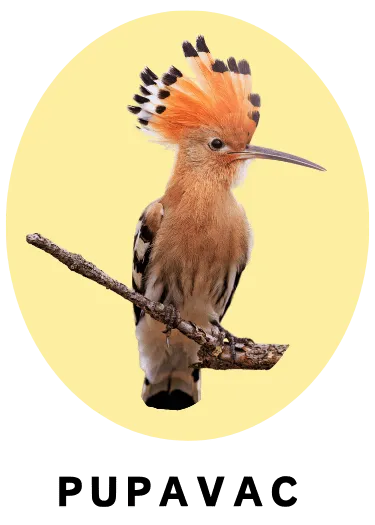
The Eurasian hoopoe (Upupa epops) is an unmistakable bird with a characteristic crest on its head and a long, curved beak. If you have found an abandoned or injured chick, it is important to give it proper care, the right diet and gradual acclimatisation so that it can successfully return to the wild.
First steps – warmth and housing
A young hoopoe needs a warm and safe environment. An ideal place to keep it is a cardboard box or pet carrier lined with paper towels. In the early stage the temperature should be around 30-32°C, which you can achieve with a heating pad or an infrared lamp. As the chick grows, gradually lower the temperature until it has adjusted to room conditions.
Diet – what to feed and how?
Hoopoes are insectivorous birds, which means they feed on insects and other small invertebrates.
In captivity you can feed them:
Live or dried insects (mealworms, superworms, grasshoppers, crickets, flies, insect larvae)
Soft parts of raw meat (chicken heart, liver – finely chopped) Special formulas for insectivorous birds (if available)
Food is offered with tweezers every 2 hours during the day, and the amount is adjusted to the chick's age and size. As it grows, the intervals between meals get longer until it starts feeding on its own.
Hygiene and care
The chick's enclosure should be cleaned regularly to prevent infections. After feeding, it is important to wipe the beak and the area around it to prevent food from building up and fungi or bacteria from growing.
Preparing for independence and the return to the wild
As the hoopoe grows up, it should gradually be accustomed to natural conditions. This includes:
Gradually reducing contact with people so that it does not become too attached.
Introducing natural food – live insects it can catch by itself.
Letting it into an outdoor enclosure where it can learn to fly and get used to the outside world.
The best time for release into the wild is when the chick feeds on its own, flies well and shows natural behaviour. Ideally, release it near the place where it was found, in a safe area with enough food and shelter.
Conclusion
Hand-rearing a hoopoe takes patience, knowledge and proper care. The aim is to ensure healthy growth and successful adaptation to the wild, which increases its chances of survival after release