
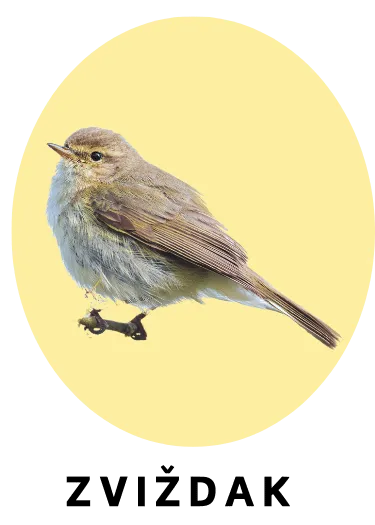
Raising a baby chiffchaff
Hand-rearing and rehabilitation of a chiffchaff chick
The common chiffchaff (Phylloscopus collybita) belongs to the family Phylloscopidae.
Chiffchaffs used to be classified in the family Sylviidae (Old World warblers), but genetic studies later showed that they form a separate family, Phylloscopidae, which includes various species of leaf warblers of woodland and meadow (such as the wood warbler, the western Bonelli's warbler and other related species).
The chiffchaff is an insectivorous bird that spends most of its life in the treetops, feeding on tiny insects and spiders.
If you have found a chick of this kind, it is crucial to take the right measures to ensure it recovers properly and gets the right food and housing before it returns to the wild. Below you will find all the information you need on how to raise, house and prepare a chiffchaff for release into the wild.
Ideal housing conditions for a chiffchaff chick
The chiffchaff is a small, delicate chick, so it needs a warm and safe environment from the very start. The ideal temperature for a young chiffchaff is between 28°C and 32°C, provided by a hot-water bottle or an infrared lamp. These birds are extremely sensitive to cold, and in winter or the colder months warmth is crucial for their survival.
Housing and space
The chick's housing should be comfortable and safe. In the early stage of rehabilitation you can keep the chick in a small box or incubator, where it will have enough room to move but will also be protected from draughts. Inside the box or incubator, use a soft cloth or paper towels as bedding. These materials are clean and help the chick feel comfortable.
Once the chick starts flying and becomes more active, you can move it to a cage. The cage should be safe, with enough room for the chick to fly freely, exercise its wings and develop its skills. There is no need for a large cage, as the chiffchaff is a small bird, but it is important to make sure it has enough room to practise.
The right diet for a chiffchaff chick
The chiffchaff is an insectivorous bird, which means it feeds mainly on insects and other small invertebrates. The right diet is key to its quick recovery and healthy growth. The diet of a chick in rehabilitation must be rich in protein and vitamins to ensure proper development.
Type of food
Insects: fruit flies, larvae, grasshoppers, crickets, grubs.
Small invertebrates: tiny beetles, aphids.
Mixes for insectivorous birds: commercial mixes with a high protein content, made specifically for insectivorous species, are recommended.
Diet and meal size
The first meals should be smaller and more frequent. The chick should be fed 6 times a day during the first days of rehabilitation. Each meal should be 2 ml of food, depending on the chick's age and needs. As the chick grows, increase the amount of food, and the number of meals can be reduced to 4 a day.
Meals should be fresh, and the food must be soft and easy to digest. Ideally, use tweezers to feed the chick so that you can control the amount of food and place it precisely in the beak.
How to keep a chiffchaff chick warm
Chicks of this species are very sensitive to changes in temperature, so it is very important to provide constant warmth. If you use heat lamps, position them so that the temperature in the chick's housing stays stable. Make sure the temperature is not too high, as this can cause overheating, while too low a temperature can reduce the chick's vitality.
Hot-water bottles and heating pads can also be useful for maintaining the right temperature. You can keep the chick in a warm place with a stable temperature while it is still recovering. Avoid direct exposure to draughts.
Preparing the chick for release into the wild
Once the chick is independent enough at feeding and flying, it is time to prepare it for its return to the wild. It is recommended to introduce the chick gradually to outdoor conditions, where it can get used to its natural habitat. Ideally, move the chick to a small outdoor aviary that allows it to practise flying, catch insects and develop its instincts.
For the transition to the natural environment, choose a quiet location where the chick will not be exposed to excessive disturbance from people or animals. Chiffchaffs live in woodland and shrubland, so it is advisable to release the chick in such places. It would be best to release it in an area rich in vegetation and insects, where the chick can find food and shelter.
When and where to release the chick into the wild
It is best to release the chick into the wild in the spring months, when conditions for young birds are most favourable. At that time the temperature is stable and food sources are readily available. Release the chick in the morning, once the day has begun, so that it has enough time to get its bearings and look for food.
Release the chick in an area with shrubs, young woodland and damp meadows, as these are the habitats chiffchaffs like best. Take care not to cause the chick too much stress during release, as this could have a negative effect on how it adapts.
Conclusion
Rehabilitating a chiffchaff chick requires patience, careful attention and gradual adaptation to life in the wild. With the right diet, suitable housing and gradual exposure to outdoor conditions, the chick can become independent and return to its natural environment. The key to success is getting the chick used to outdoor conditions, teaching it to hunt and gradually reducing human contact, so that the bird is as well adapted as possible to life in the wild.