
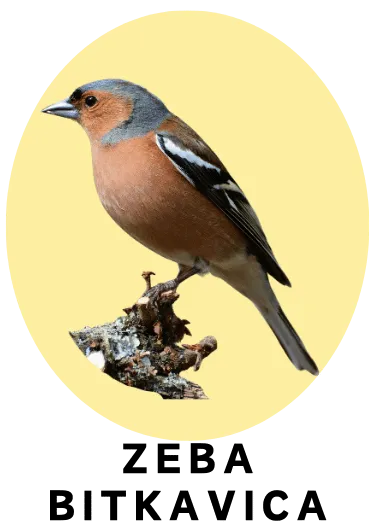
Raising a baby chaffinch
How to feed a baby chaffinch properly
Have you found a baby chaffinch and don’t know how to help it? The right diet and care are key to the chick’s recovery and growth. In this article we will go through everything you need to know to make sure the little chaffinch has everything it needs to develop healthily.
What to do when you find a baby chaffinch
When you find a baby chaffinch, the first thing to do is assess its condition. If the chick is injured or looks ill, it needs to be taken to a vet. If it is healthy but abandoned, you can help it with the right diet and care.
Important:Never give water directly to the chick, because a baby chaffinch gets the fluids it needs from moist food. Extra water can cause digestive problems.
Feeding a naked (unfeathered) chick-
Use a hand-feeding formula for birds (Nutribird A21 or a similar product).
A drop of probiotic or a little crushed bird calcium can be added occasionally
Never give milk, bread or water directly into the beak!
➡ Mix the formula in a ratio of 1:3 (1 part powder, 3 parts lukewarm water). The texture should be smooth, without lumps, like yoghurt.
➡ The food must be warm (about 38°C) – never cold or too hot! You can test a drop on the inside of your wrist.
Feeding technique
✅ Use a needle-free syringe or a soft pipette – this is the safest way to make sure the chick gets enough food.
✅ Feed from the side of the beak, giving small drops and waiting for it to swallow before continuing.
✅ Do not put food directly into the throat! – there is a risk of choking or food entering the windpipe.
✅ The chick will open its beak by itself when it is hungry – do not force it.
Feeding frequency
0–3 days old: Every 20–30 minutes (from morning to evening, not at night).
4–7 days: Every 30–45 minutes.
7–10 days: Every hour.
10+ days: The intervals get longer and the chick starts learning to eat by itself.
➡ When its crop (the pouch below the throat) is empty, you can feed it again.
How to keep a naked chick warm
Because it has no feathers, it cannot regulate its body temperature and can die quickly if it gets chilled.
✅ An incubator or improvised heater:
Use a heating pad (put it under a towel, never directly under the chick).
If you do not have a heater, you can use a bottle of warm water (wrapped in a towel).
Ideal temperature:
1–5 days: 34–36°C
5–10 days: 30–32°C
10+ days: 28°C, then lower it gradually.
✅ Nest:
Make a soft nest from warm cotton cloths or paper towels in a small box with ventilation holes.
Do not use cotton wool – it can get tangled around the chick’s legs.
➡ How do you know it is cold? If it does not move, shivers and is not active. If it is too hot, it will spread its wings and breathe with its beak open
If the chick already has feathers but is not yet eating on its own, its diet should be adapted to its developmental needs.
Type of food
✅ Hand-feeding formula (Nutribird A21 or similar) – mixed thicker than for younger chicks, like a runny purée.
✅ Soaked kibble for toy-breed puppies
✅ Finely chopped insects – dried mealworms, fruit flies, finely chopped grasshoppers.
✅ Soft food for insectivorous birds – available in bird shops.
✅ Soaked seeds – millet, canary seed, oats (leave them in water to soften).
🚫 Do not give milk, bread, dry unsoaked seeds, or salted or seasoned food!
NOTE; While they are developing, chicks need protein for proper growth and development!
Feeding frequency
10–14 days old: Every 1–2 hours; it may start pecking at food on its own.
15–20 days old: Every 3–4 hours; leave food available so that it starts learning to eat by itself.
20+ days: It starts feeding itself but may still ask to be hand-fed a few times a day.
➡ A sign that it is full: The chick stops begging for food and its crop (the pouch below the throat) is full.
Moving on to feeding itself
✅ Put a small dish of small seeds nearby.
✅ Show it the food – tap the dish gently with your finger so that it sees it is food.
✅ When you see it starting to eat on its own, gradually reduce hand-feeding.
✅ Always provide fresh water in a shallow dish.
➡ Once it has fully switched to feeding itself and can fly, it can be prepared for release into the wild.
How to provide the best conditions for growth
Besides diet, it is important to provide a comfortable and safe environment for the baby chaffinch:
Keep the chick in a warm, quiet place, away from draughts and noise.
Use soft bedding (e.g. paper towels) to prevent injuries.
Clean the bedding regularly to prevent infections.
When and how to release a baby chaffinch into the wild
When the young chaffinch is independent and able to fly, it is time to return it to the wild. It is best to release it in an area where there are other chaffinches and where it will be able to find food and shelter.
Conclusion:
Feeding and caring for a baby chaffinch properly takes patience and attention, but with the right steps you can give it healthy and safe development. By following these tips, you will give the little chaffinch the best possible chance of recovering and returning to the wild.