
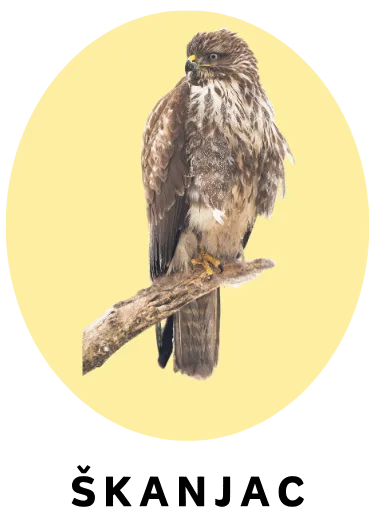
Raising a baby buzzard
Hand-rearing a Buzzard Chick
Hand-rearing a young common buzzard requires special attention, a proper diet and gradual independence so that it is prepared for its return to the wild. The key elements of successful rearing include a proper diet, suitable housing conditions and gradual adaptation to the natural environment.
Housing and warmth
A young buzzard should be kept in a warm, safe and quiet space. If its feathers are still sparse or it is still covered in down, extra heating is essential, for example a hot-water bottle or an infrared lamp positioned so that the chick can choose between a warmer and a cooler part of the space. The ideal temperature for very young chicks is between 30 and 35 degrees Celsius, and it is gradually lowered as the chick grows.
Diet and number of meals
The right diet is key to healthy development. Buzzards are carnivores, so they need to be offered raw meat – ideally day-old chicks, mice, quail, pieces of meat on the bone and offal. It is advisable to enrich the diet with calcium and vitamins, especially in the early stages of development.
The number of meals depends on the chick's age:
Very young chicks eat every 3 hours during the day. Each meal should be 20-30 grams of raw meat, cut into smaller pieces so that the chick can swallow and digest the food more easily.
Older chicks that are already starting to grow feathers eat 5 times a day. Each meal should be 30-40 grams of raw meat, with some offal or smaller pieces of mouse added.
Once they start eating on their own, the number of meals goes down and the portions increase to 60 grams of meat or prey per meal. Meals are reduced to 3 a day as the chick starts hunting on its own.
It is important to avoid minced meat and processed meat products, as they lack sufficient nutritional value.
Gradual adaptation to a natural way of life
When the buzzard grows stronger and starts showing interest in its surroundings, it should be moved to a larger cage or aviary, where it can develop its wing muscles and flight coordination.
The transition stages include:
Stimulating the hunting instinct – by leaving prey in the aviary instead of feeding it directly.
Getting used to outdoor conditions – spending time outdoors so that the bird adapts to the weather.
Limited contact with people – as little interaction as possible to prevent it becoming too attached to humans.
Preparing for release into the wild
When the buzzard starts hunting on its own and shows signs of full physical readiness, the time for release has come. The ideal approach is the soft-release method, which means the bird is gradually released from the aviary but is still provided with food for a few more days until it finds its feet in the wild.
Release should take place in the buzzard's natural habitat, far from urban areas and roads, preferably somewhere other birds of prey have already been recorded. If possible, it is a good idea to monitor the bird after release to make sure it has successfully adapted to life in the wild.
Proper rearing and rehabilitation of a buzzard increase its chances of surviving successfully in the wild, which is the main goal of everyone who rescues and cares for wild birds