
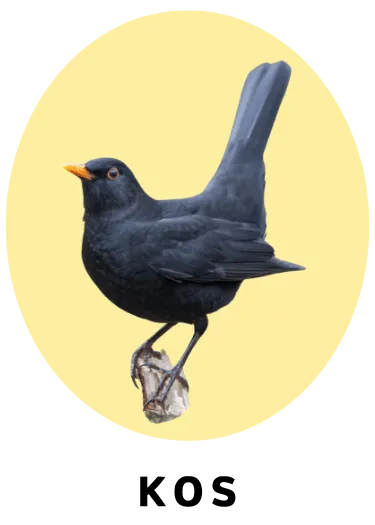
Raising a baby blackbird
Hand-Rearing a Young Blackbird: Until Its Return to the Wild
The blackbird (Turdus merula) is one of the best-known birds in Europe, recognisable by its black plumage and melodious song. Blackbird chicks sometimes fall out of the nest or lose their parents, and proper care allows them to grow up safely and return successfully to the wild.
First steps after finding a duckling
Naked or sparsely feathered chick (nestling) – If it has no feathers yet or only a few, it is a very young chick that should be in the nest. If possible, put it back in the nest.
Feathered chick that is clumsy in flight (fledgling) – If it is on the ground, it may be learning to fly and its parents may be nearby. Watch it from a distance to check whether the parents come. If they do not come after a few hours, take over its care.
Injured or exhausted bird – It needs to be put somewhere safe, warmed up and, if necessary, taken to a vet.
If the chick has to stay in your care, keep it in a warm, quiet environment – a box lined with soft paper or cloth.
Diet: what do baby blackbirds eat?
In the wild, blackbird chicks are fed by their parents every 20–30 minutes, so frequent feeding is needed at first.
The best food for a young blackbird includes:
Insects and larvae – Mealworms, superworms, small grasshoppers
Finely chopped earthworms – A natural and nutritious option.
Chicken hearts cut into strips – Briefly dipped in water, with no further preparation.
Chicken cut into strips – Also just dipped in water, easy to digest.
Berries – Raspberries, blackberries, currants.
How do you feed a young blackbird?
Use tweezers or the blunt end of a toothpick to put food directly into its beak.
The chick will open its beak by itself when it is hungry – do not force it.
Feed every 30–60 minutes during the day, but not at night.
Water is not given directly; it is provided through juicy food.
As the chick grows, the intervals between feeds get longer and the food is adapted for self-feeding.
Preparing for independence
Once the blackbird starts pecking at food by itself, it needs to be gradually accustomed to natural conditions:
Put out a dish with insects, fruit and strips of meat, encouraging it to take food by itself.
Limit human contact so it does not get used to people.
Give it space to hop and fly so it can strengthen its muscles.
Once it eats on its own and flies confidently, it is ready to be released into the wild.
Release into the wild
The blackbird is best released in a natural environment with shrubs and trees, where it will find cover and food.
Release it in the morning – That way it has the whole day to adjust.
Choose a safe place, away from predators and traffic.
It may come back for the first few days – Leave it a little food until it is fully independent
Conclusion
Raising a young blackbird takes the right diet, frequent feeding and gradual adaptation to the wild. Once it has gained independence and survival skills, it can return successfully to nature and lead a normal life as a wild bird.