
Raising a baby black redstart
How to raise a black redstart chick
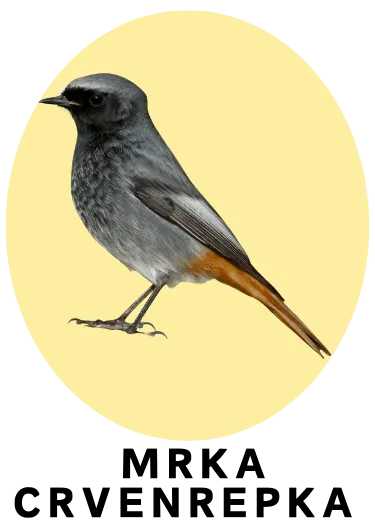
The black redstart (Phoenicurus ochruros) is a small bird of the Old World flycatcher family, recognisable by its distinctive orange-red tail. It often nests close to human settlements – in holes in walls, under roofs or in abandoned buildings. If you have found a young chick, the key is to recognise whether it needs help at all, to provide the right food and suitable housing and to prepare it for its return to the wild.
– how to recognise a fledgling
Many chicks that people find have not been abandoned; they are fledglings that are still being fed by their parents. An unnecessary rescue can reduce the bird's chances of survival, because the parents are always the best option.
Signs that a chick does not need help:
It has feathers and can stand or hop – young redstarts leave the nest before they learn to fly, but their parents keep feeding them.
It calls and moves about actively – healthy fledglings hop around on branches, roofs or the ground while they wait for their parents.
It is close to buildings, gardens or trees – the natural habitat of young redstarts.
If a chick shows these signs, it is best to leave it where it is and discreetly watch whether the parents come.
When does a chick need help?
If it is injured, covered in ants or badly chilled.
If it is in a dangerous place (a road, a pavement, the middle of a meadow with no shelter).
If the parents have not been around for a long time (more than an hour).
If the chick really does need help, go ahead with hand-rearing and preparing it for release into the wild.
Ideal housing conditions
The black redstart is a ground-loving bird that spends much of its time on the ground or on low branches, which means it needs a safe, warm space to stay in.
Warmth – very young chicks need a temperature of 33-36 °C, which can be provided with a hot-water bottle wrapped in cloth or an infrared lamp.
A secure box or small cage – ideally use a cardboard box with air holes or a small cage with a soft lining (cloth, paper towels). If you use a cage, it is important that it is spacious enough for the chick to move freely and develop its motor skills. The cage should measure at least 40x40x40 cm for one bird. If you plan to house several birds, the cage must be proportionately larger.
A calm environment – the bird should be kept in a quiet place away from direct sunlight and draughts.
Do not use wire-mesh floors – the chick can get injured if its feet get caught between the bars.
The right diet and feeding
The black redstart is an insectivorous bird, which means it feeds on insects and their larvae. Providing the right diet is key to the chick's proper growth and development.
What to feed:
Live insects and larvae – small flies, fruit flies, ants, grasshoppers, crickets, mealworms, superworms.
Mashed hard-boiled egg and low-fat cottage cheese – can be given in small amounts as a temporary source of protein.
Supplements – always add calcium powder and vitamins for proper bone and feather development.
Avoid seeds and bread – redstarts are not seed-eaters, so these foods can cause digestive problems.
How to feed:
Offer food with tweezers or, for chicks close to independence, put it in a shallow dish – this mimics the natural way of feeding. Soft insects can be chopped up a little for younger chicks and given with tweezers.
Let live insects move around – so that the chick learns to hunt and develops its reflexes.
Feeding frequency:
Very young chicks (up to 7 days) – every 30 minutes, until 8 pm.
Older chicks (7-14 days) – every 1-1.5 hours.
Close to independence (14+ days) – every 2-3 hours, while encouraging it to hunt insects.
A chick that is close to independence must have constant access to fresh water, but not in a deep dish, so that it cannot drown.
Preparing for release into the wild
Once the chick can fly and catch insects on its own, it needs to be gradually accustomed to conditions in the wild.
An outdoor aviary or enclosure – lets the chick practise flying and build up its muscles.
Minimal contact with people – to reduce the risk of it becoming tame and to make sure it adapts to life in the wild.
Testing its hunting skills – before release, the chick must be able to catch insects by itself.
Release into the wild
The right moment for release is when the chick can fly on its own, catch food and shows a natural wariness of people and predators.
Choosing the location – redstarts like open areas with low vegetation, rocks and walls close to human settlements.
The best time for release – early morning or early evening, when conditions are most favourable.
Gradual acclimatisation – if possible, first put the chick in an outdoor aviary so it gets used to outdoor conditions.
Conclusion
Hand-rearing a black redstart chick requires special attention, the right diet and gradual adaptation to natural conditions. The key is to avoid human contact, provide natural food sources and let it practise hunting before release.
Before you pick up a chick, always check first whether it is a fledgling being fed by its parents – an unnecessary rescue can rob the bird of the chance to develop naturally