
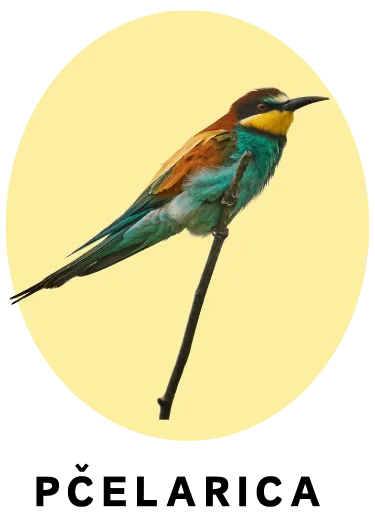
Raising a baby bee-eater
How to raise a bee-eater chick
European bee-eaters (Merops apiaster) are recognisable by their bright colours and graceful flight. If you have found a bee-eater chick, it is essential to provide the right diet, care and conditions so that it has the best chance of survival and a successful return to the wild.
Housing and conditions
The chick needs a warm, safe environment without draughts or direct sunlight. The ideal temperature in the first days of hand-rearing is 30-32°C, which can be provided with an incubator or a heating pad with a thermostat. The temperature can gradually be lowered as the bird grows.
Bee-eaters are social birds, so a mirror and a soft cloth shaped like a nest will help them feel safer.
Diet and feeding frequency
In the wild, bee-eaters feed mainly on insects, and the chicks need a protein-rich diet. The best substitute diet includes:
Soft insects such as mealworms, crickets, grasshoppers and flies.
Local insects such as wasps, bees (with the sting removed) and other flying insects that bee-eaters naturally eat.
Calcium and mineral supplements for proper bone and feather development.
Avoiding hard insect shells, because the chicks cannot digest them.
The chick is fed every 2 hours, depending on its age, with an average of 5-10 insects per feed. As it grows, the intervals between feeds can gradually be lengthened, and the number of insects per feed increased accordingly.
Preparing for release into the wild
Once the chick starts eating insects on its own and has grown its full plumage, it is time to gradually prepare it for its return to the wild.
The process includes:
Gradually reducing contact with people to prevent it from becoming too attached.
Letting it fly in a safe space so that its wings get stronger.
Moving it to an outdoor aviary, where it can watch its surroundings and adapt to natural conditions.
Returning it to a location with other bee-eaters, where it will find a flock more easily and learn to catch insects in flight.
When and Where to release a bee-eater?
A bee-eater is best released in a natural habitat that meets its needs. Bee-eaters are useful pollinators, so it is important to choose a place that offers suitable conditions for their survival and continued existence. Here are some recommendations on where to release a bee-eater:
Natural habitats of the bee-eater
Open spaces such as meadows, gardens, fields with flowering plants or orchards. Bee-eaters like places rich in flowers and nectar plants.
Being close to an apiary can be ideal, as bee-eaters often fly around beehives and help with pollination.
Close to woodland edges or areas with a wide variety of plant species, where they have access to a broad range of plants.
Release conditions
A bee-eater should be released in a quiet place away from busy roads to avoid accidents.
Ideally, release the bee-eater in a place with enough food (nectar and pollen) and safe shelter.
Release it in a natural place that allows it to blend into its environment, and make sure you only release it once it is ready to survive in the wild.