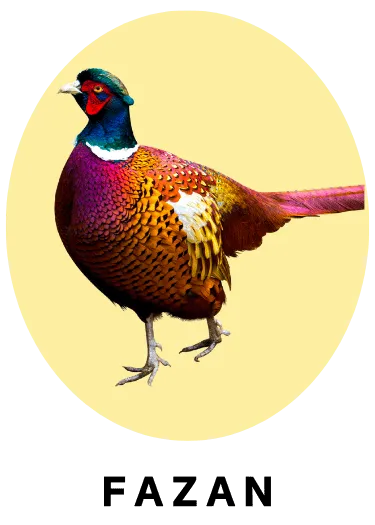
The common pheasant (Phasianus colchicus) is one of the best-known and most beautiful birds of the pheasant family (Phasianidae). This graceful bird is recognisable by its lavish plumage and long tail, and since ancient times it has been a symbol of nobility and luxury. Today pheasants are widespread, and besides living in the wild they are often bred for their meat, feathers and ornamental value. In some cultures they are considered a symbol of good fortune and prosperity.
Common pheasant (Phasianus colchicus)
Appearance and characteristics
Pheasants are medium-sized birds, and there are more than 30 subspecies, the most frequently mentioned being the common pheasant (Phasianus colchicus). Males are especially striking thanks to their vividly coloured plumage, while females look more modest so that they blend in more easily with their surroundings.
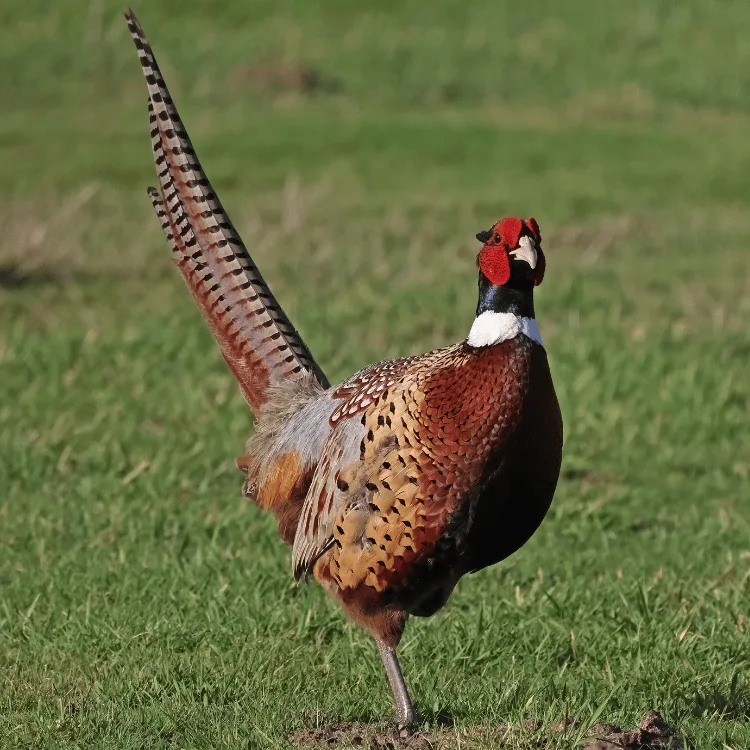
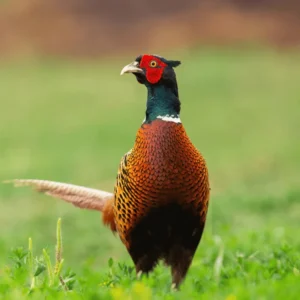
Male: Body length: about 75–90 cm, including the long tail Plumage colour: metallic gold, green, red, purple and bronze, with a characteristic white ring around the neck Eyes and beak: black eyes with red patches of bare skin around them, a short but strong beak Tail: long, tapering and often marked with dark bars
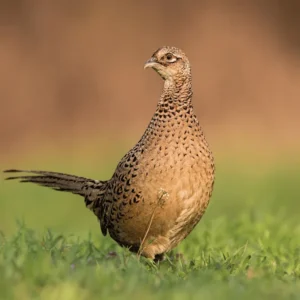
Female: Smaller than the male, 55–65 cm long Brown-beige plumage with darker markings that provide camouflage in the wild Short tail, not as prominent as the male’s
Habitat and distribution
Pheasants are adaptable birds that live in meadows, woodland, fields and the edges of marshes. They are native to Asia but, because of hunting and breeding, have been introduced to Europe, North America and other parts of the world. They are most often found near farmland, where they do well thanks to the abundance of food and shelter from predators.
What do pheasants eat?
Pheasants are omnivores, and their diet includes: Seeds and grain (wheat, maize, barley) Berries and fruit Leaves, buds and roots Insects, worms and small invertebrates They find most of their food by scratching the ground, using their strong legs and sharp claws to dig up seeds and insects.
Breeding and behaviour
The pheasant breeding season begins in spring, when males become extremely noisy and territorial. With loud crowing and spread feathers, they try to attract females and intimidate other males.
Nesting and caring for the young
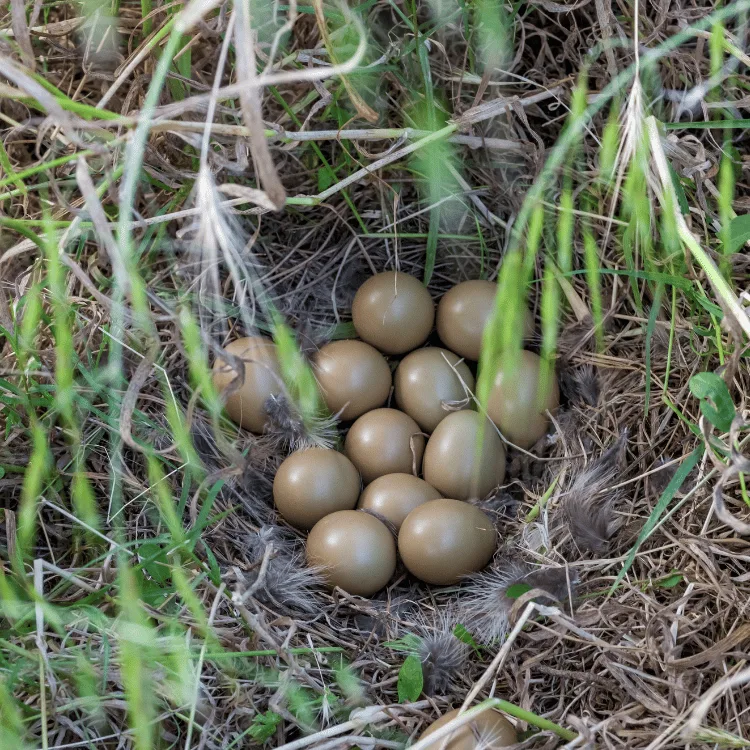
The nest is built on the ground, usually in tall grass or bushes The female lays 8–15 eggs, which she incubates for about 23–26 days The chicks are fully developed when they hatch and within just a few hours can follow their mother in search of food Males take no part in raising the young; the females protect them skilfully and guide them through the dangers of the wild.
Interesting facts about pheasants
A fast and agile bird – Pheasants can run at 30 km/h, and when fleeing predators they can fly at up to 90 km/h. Limited flight – Although they can fly, pheasants prefer to run and hop, and only take to the air when they have to A game species – Pheasants are among the most commonly hunted birds in Europe, which is why they are often bred and released into hunting grounds. Moulting – Once a year, males replace their magnificent plumage, which looks its most spectacular during the breeding season. Surviving the winter – Pheasants are resistant to cold, but in the winter months they depend on the food they can find or that people leave out for them
Research on pheasants
Scientific research on pheasants has produced a number of interesting findings: Visual perception – Studies have shown that pheasants have exceptionally well-developed eyesight, which allows them to react quickly to predators. Remembering their territory – Pheasants remember the locations of feeding sites and cover, which helps them survive. Social behaviour – Research has revealed that males form a hierarchy and display dominance through loud calling and fighting. The effect of the environment on populations – Scientists are studying how climate change and urbanisation affect pheasant numbers in the wild.
Conclusion
The pheasant is an impressive and adaptable bird that has become part of cultural heritage and natural ecosystems all over the world. Its splendid beauty, interesting behaviour and symbolic meaning make it one of the birds people value most. Whether you watch it in the wild, keep it in your yard or come across it in hunting grounds, the pheasant leaves the impression of an elegant, resourceful and hardy bird that has survived through the centuries despite many challenges.