
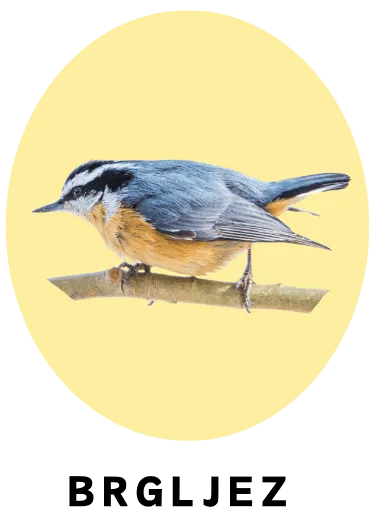
About the nuthatch
Nuthatch – a fascinating woodland bird
The Eurasian nuthatch (Sitta europaea), known in Croatian folk usage as “siva nestrpljivka” (the “restless grey one”), is a small bird that is easy to recognise thanks to its unique climbing abilities and distinctive appearance. It belongs to the family Sittidae and lives in wooded areas of Europe and Asia. Because of its adaptability and special characteristics, the nuthatch is a real attraction for ornithologists and nature lovers
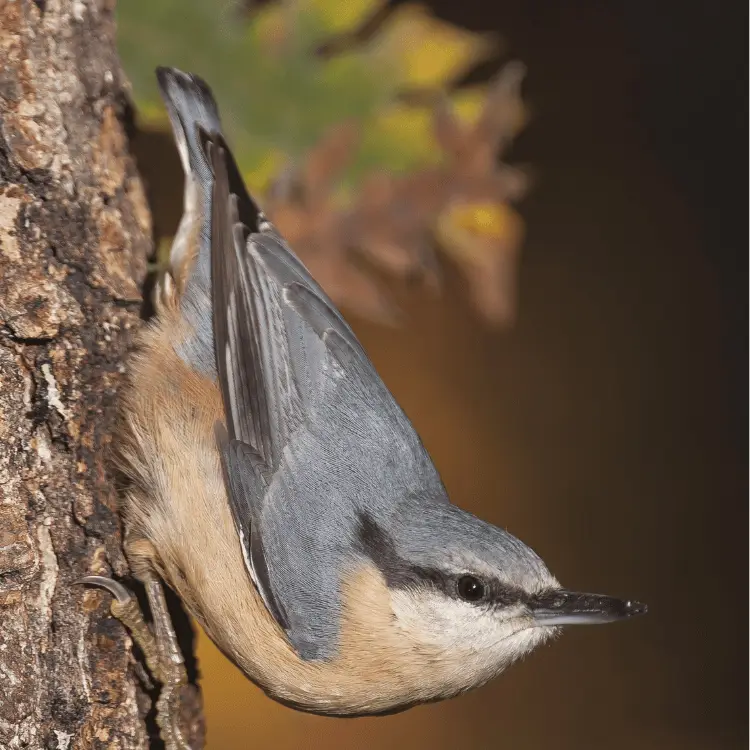
What does a nuthatch look like? Key features
The nuthatch has several key physical features that make it easy to recognise:
Plumage: The nuthatch’s upperparts are blue-grey, while its underparts are pale, usually white or yellowish. This combination of colours helps it blend into wooded areas.
Black eye-stripe: One of the nuthatch’s most striking features is the black stripe running from the beak towards the neck. This contrast gives the bird its distinctive look.
Short tail: Its tail feathers are grey-brown, and the short tail is very characteristic of this species.
Strong beak: Its short, sturdy beak allows the nuthatch to climb trees and prise food out of the bark.
Behaviour and diet
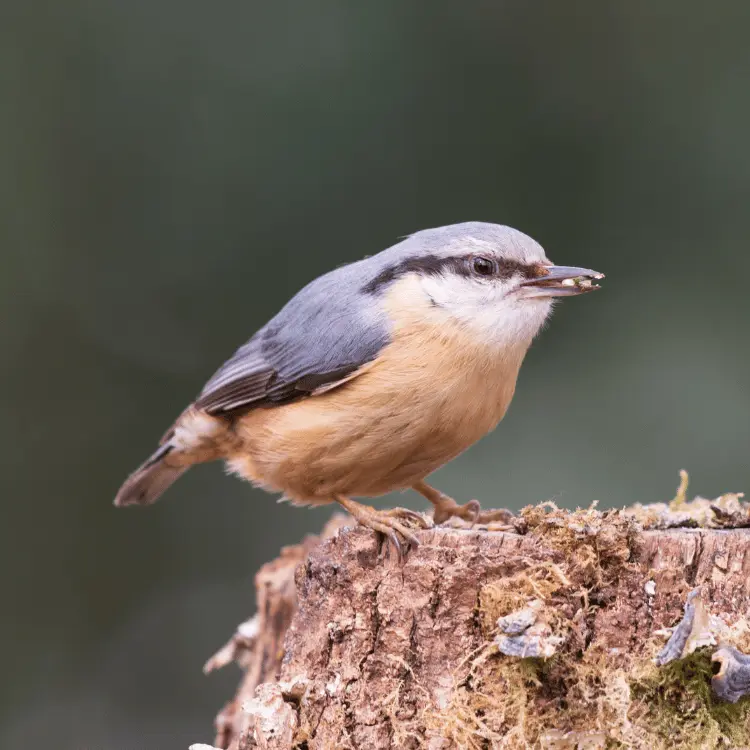
One of the nuthatch’s most distinctive traits is its ability to climb trees.
The nuthatch can not only climb upwards but can also move head-first down the trunk, which lets it search the bark in every direction. This skill helps it find food in hard-to-reach places.
The nuthatch feeds on insects, seeds and small bugs that it prises out of tree bark or other hiding places.
Insects and their larvae – the main source of food in spring and summer (spiders, caterpillars, beetles).
Seeds and nuts – especially in autumn and winter (beechnuts, hazelnuts, acorns, sunflower seeds).
Berries and fruit – occasionally, when available.
Food from bird feeders – it often visits feeders and eats seeds, unsalted nuts and suet.
The nuthatch is known for storing surplus food in cracks in tree bark for later.
Its beak helps it tap on the bark and find food.
This bird moves very quickly and energetically, often hopping or suddenly switching from one branch to another. That’s why it is called “siva nestrpljivka” (the restless grey one) in Croatian.
Nuthatch habitat
The nuthatch prefers wooded areas and places rich in trees. Its habitat includes:
Forests: The nuthatch is most often found in the forests of Europe and Asia, especially mixed forests where it can find trees with older bark, ideal for foraging and nesting.
Forest clearings and edges: As well as in dense forests, the nuthatch can also be found in clearings or at the edges of woods, where the trees are smaller but still provide enough food.
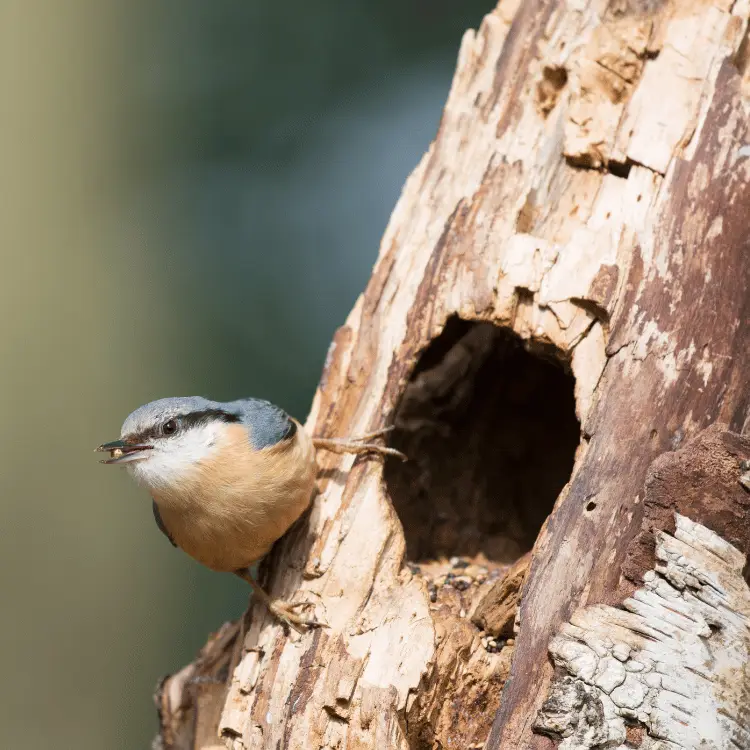
Nuthatch nesting
The Eurasian nuthatch (Sitta europaea) has a particular pattern of mating and nesting adapted to its life in wooded areas. These birds build their nests in trees, often using natural hollows or damaged bark, but also artificial cavities such as nest boxes.
Nuthatch mating
Breeding season: Nuthatches usually enter the breeding season in early spring, once they have come through the winter. The breeding season lasts from April to June, depending on the climate and food availability.
Courtship: During the breeding season, male nuthatches perform special displays and sound signals to attract females. These signals include high, sharp notes that mark their territory and attract potential mates.
Shared behaviour: After mating, nuthatch pairs stay together while nesting and raising their young. Many males help feed the female while she is laying eggs.
Nest building
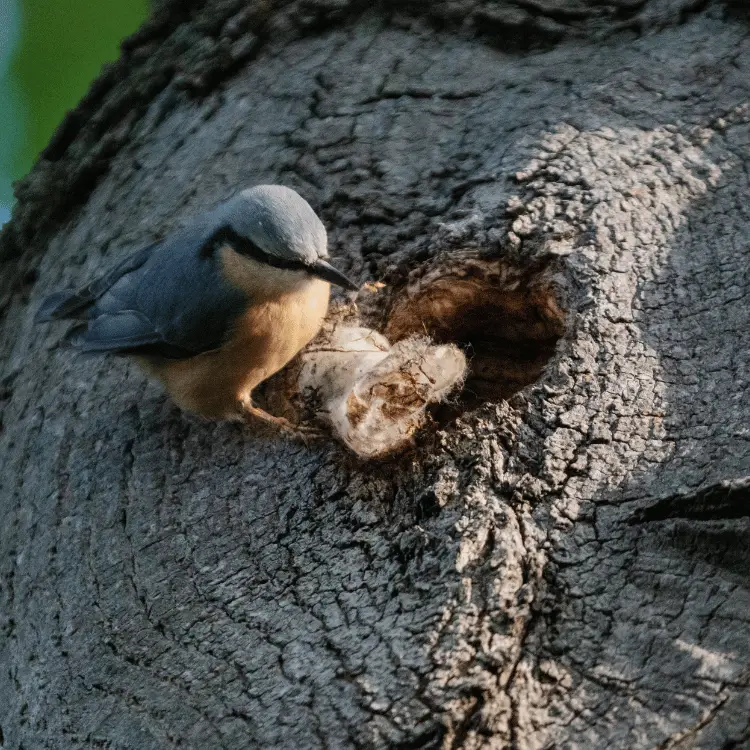
Choosing a site: For nesting, nuthatches choose hollow trees, damaged bark or natural cavities, which can be high up in trees or in shrubs. They also use artificial nest sites (nest boxes) if these are put up in a suitable setting.
Building the nest: The female nuthatch takes charge of nest building, using dry twigs, leaves, grass and bark. The nest is usually set deep inside the cavity so that the young can develop safely.
Nest material: Nuthatches also use hairs, fibres and bark, which help them shape the nest and keep it warm.
Egg laying and incubation
Egg laying: The female usually lays 4 to 7 eggs, which are typically whitish or creamy with a few brown speckles. The eggs are laid over several days and incubated for about 12–14 days.
Incubation and raising the young: During incubation the male helps feed the female, and once the eggs hatch both parents actively feed and protect the young. The chicks are completely dependent on their parents until they are strong enough to leave the nest, which usually happens after 21–24 days.
The role of the parents
Nuthatches are very caring parents that take turns feeding and protecting their young. Both the male and the female defend their nest from predators such as birds of prey and small mammals. This teamwork allows the young to grow up healthy and strong, ready for an independent life in wooded habitats.
When the young nuthatches leave the nest, the family stays nearby until the young are fully independent. Depending on conditions, nuthatch pairs may go on to make seasonal movements, and the family stays together until the next breeding season begins.
The nuthatch is an excellent example of a loyal, protective family in the bird world, and its behaviour during mating and nesting reflects its adaptability and important role in the ecosystem.
Migration and seasonal changes
Although the nuthatch is generally not a migratory bird, in certain parts of the world it moves south during the colder months. Seasonal changes can affect its distribution, so birds from northern areas will move to milder climates in winter. However, in temperate and warmer climates nuthatches stay all year round.
Conservation and the nuthatch’s role in the ecosystem
The nuthatch plays an important role in keeping the ecosystem in balance:
Pest control: As an insect-eating bird, the nuthatch helps control the numbers of harmful insects that can damage trees and other plants.
Preserving biodiversity: The nuthatch also contributes to biodiversity, as its presence in forests helps maintain the balance between different species and plant communities.
Reasons for migration
Food shortage: In winter, when branches are covered in snow or food supplies run low, nuthatches may move to places where food is easier to find.
Extreme weather: In colder climates, where winters are harsh and food becomes unavailable, nuthatches may move to milder conditions.
Climate change: Global warming can affect the nuthatch’s movement patterns by changing which areas are suitable for it.
Conservation and the nuthatch’s role in the ecosystem
The nuthatch plays an important role in keeping the ecosystem in balance:
Pest control: As an insect-eating bird, the nuthatch helps control the numbers of harmful insects that can damage trees and other plants.
Preserving biodiversity: The nuthatch also contributes to biodiversity, as its presence in forests helps maintain the balance between different species and plant communities. Although the nuthatch is not a pollinator as such, as a seed-eating bird it can accidentally help spread plant seeds. In this way the bird can help plant communities spread, especially in wooded areas where plants depend on animals to disperse their seeds.
Conclusion:
The Eurasian nuthatch (Sitta europaea) is a fascinating bird that shows remarkable adaptability to life in the forest. Its climbing skills, distinctive appearance and important role in the ecosystem make it one of the most interesting birds around. Despite its small size, the nuthatch is key to maintaining the balance of the natural habitats where it lives. Thanks to its adaptability and special traits, the nuthatch is a bird well worth watching and studying.