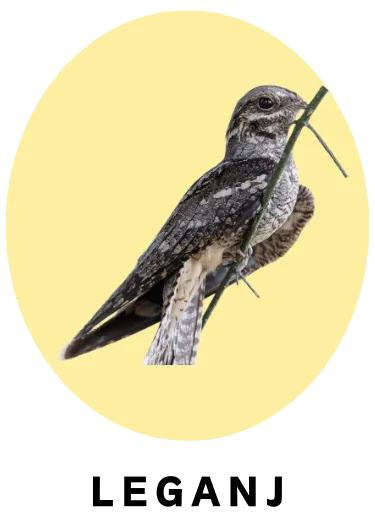
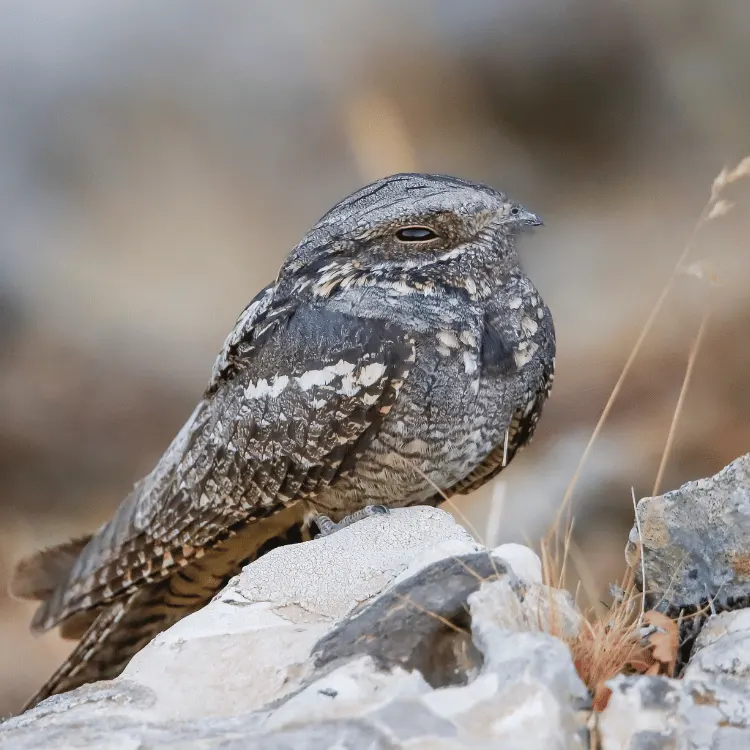
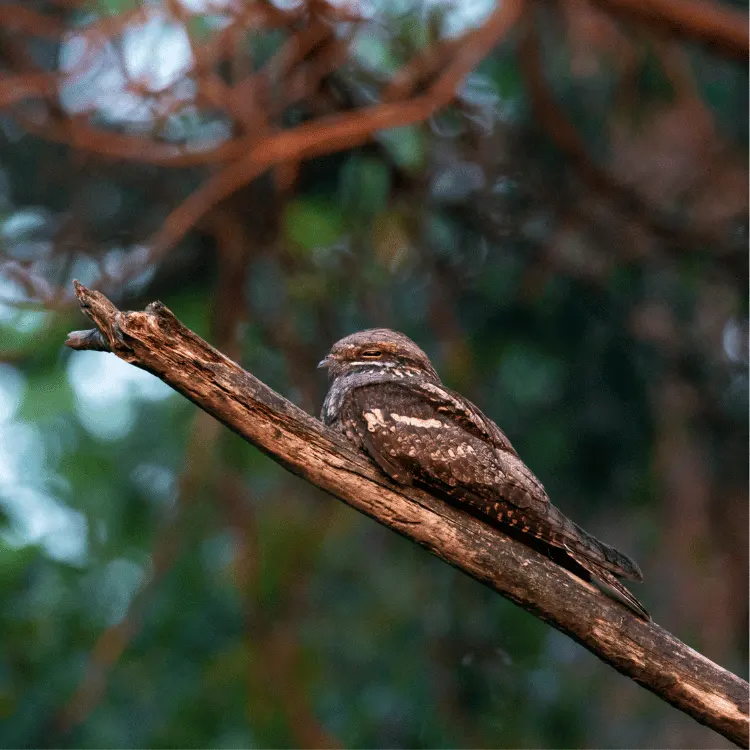
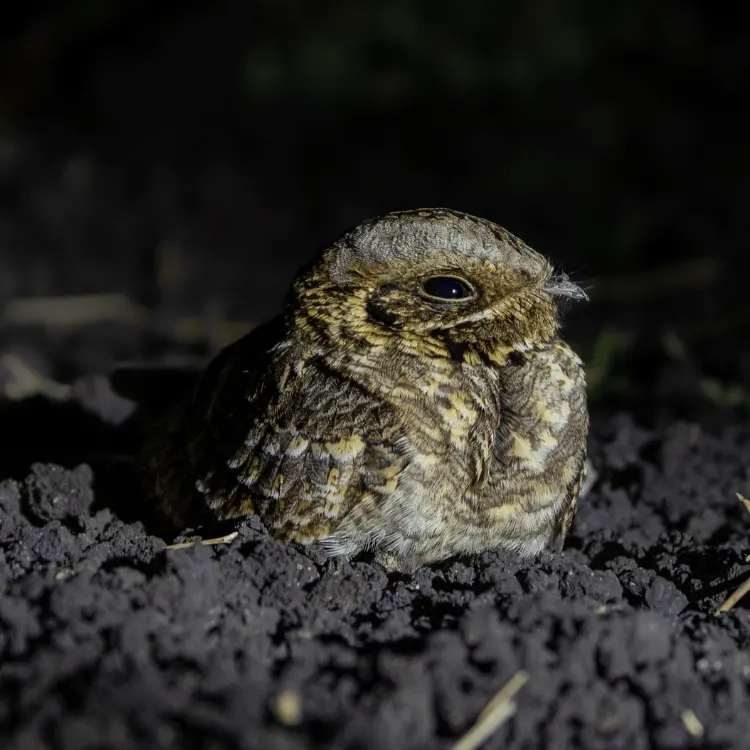
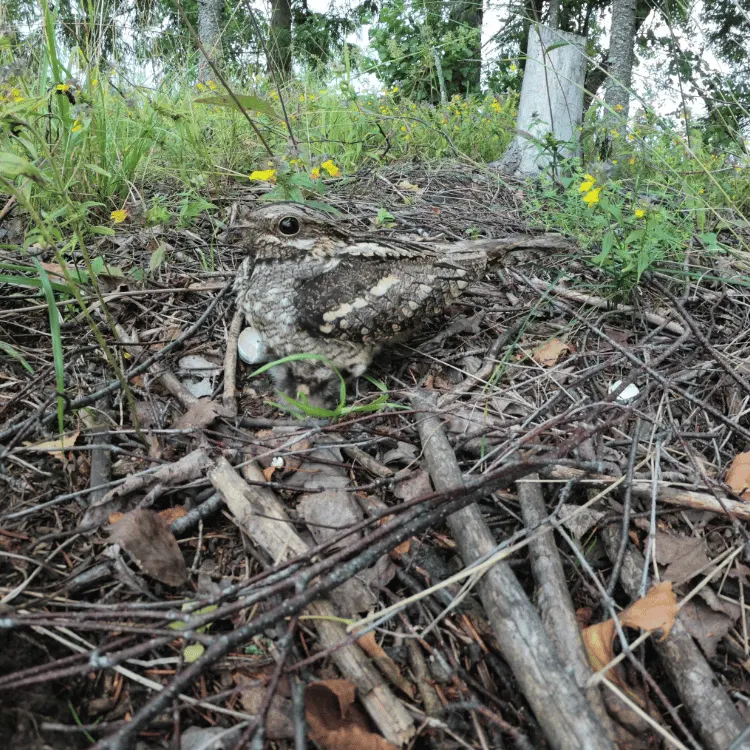
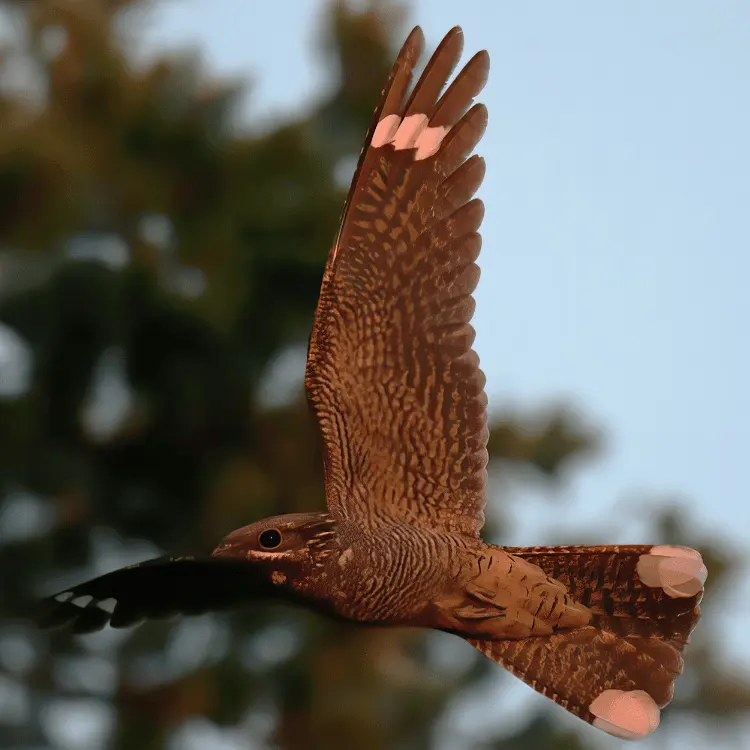
The European nightjar (Caprimulgus europaeus) is a medium-sized bird from the nightjar family (Caprimulgidae), known for its incredible camouflage and nocturnal habits. Its body is slender, with long wings and tail, and its plumage is brownish-grey, mottled with dark and light shades, which allows it to blend perfectly into its surroundings.
Its large eyes are adapted to night-time life, while its small bill, surrounded by sensitive bristles, allows it to catch insects in flight. At rest it often sits on the ground or lengthwise along branches, where it is almost impossible to spot.
Habitat and distribution
The European nightjar lives in open, dry areas such as open woodland, heathland, clearings and woodland edges, but also on sandy ground and near grassy habitats. It can be found throughout Europe, Asia and North Africa, and in winter it migrates to sub-Saharan Africa, where it spends the colder months.
Way of life and diet
As a nocturnal bird, the nightjar feeds mainly on insects, especially moths, beetles and other flying insects that it catches in the air. Its flight is silent and unpredictable, and thanks to its huge gaping mouth it easily catches prey during its night flights.
During the day the nightjar rests and relies on its exceptional camouflage, sitting motionless on the ground or on tree branches, which effectively hides it from predators.
Mating and nesting
The breeding season lasts from May to August, and the nightjar does not build a proper nest. The female lays two eggs directly on the ground, often among dry leaves or small stones, where the eggs are almost invisible.
Camouflage: The eggs are pale with dark blotches, which helps them blend into their surroundings and go unnoticed by predators.
Number of eggs: It usually lays two eggs, rarely more.
Incubation: Incubation lasts about 17 to 21 days and is mostly done by the female, while the male helps guard the territory and protect the nest.
The parents are very protective and may move the chicks if they sense danger.
On hatching, the chicks are semi-precocial, which means they are relatively poorly developed but can move about and react quickly to danger.
Protecting the young: If they sense a threat, the parents lure predators away by feigning injury or by using distraction calls to divert attention from the young.
Feeding: They are fed insects, which the parents bring in their bills, usually at dusk and during the night.
Development: Young nightjars grow quickly and are able to fly after just 16 to 18 days, but they stay with their parents for some time until they are fully independent.
Sounds and communication
The nightjar is known for its distinctive sounds, including a long, engine-like churring as well as various clicks and calls that can be heard at night. These sounds play an important role in marking territory and in communication between birds.
Migration and threats
The nightjar is a migratory bird that moves to warmer regions in autumn and returns to its breeding grounds in spring. During migration it travels thousands of kilometres, which makes it vulnerable to habitat loss and climate change.
The main threats include the decline in insects due to pesticide use, deforestation and urban development, which reduces its natural habitats.
Conclusion
The European nightjar (Caprimulgus europaeus) is a fascinating nocturnal bird known for its exceptional camouflage and silent flight. Its ability to adapt to different habitats and its seasonal migration make it an important part of the ecosystem. Although it is not easy to spot, its characteristic night-time song reveals its presence. Protecting its habitats is key to preserving this mysterious species.