The nightingale – a symbol of beauty, music and spring
The common nightingale (Luscinia megarhynchos) is a small but exceptionally melodious bird famous for its beautiful song. This bird, a symbol of the arrival of spring and the beauty of nature, is often associated with music, romance and inspiration. In many cultures the nightingale is regarded as a musical genius, and its song is often described as the most beautiful symphony nature has to offer.
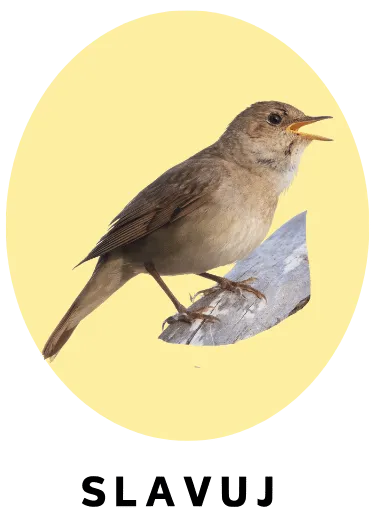
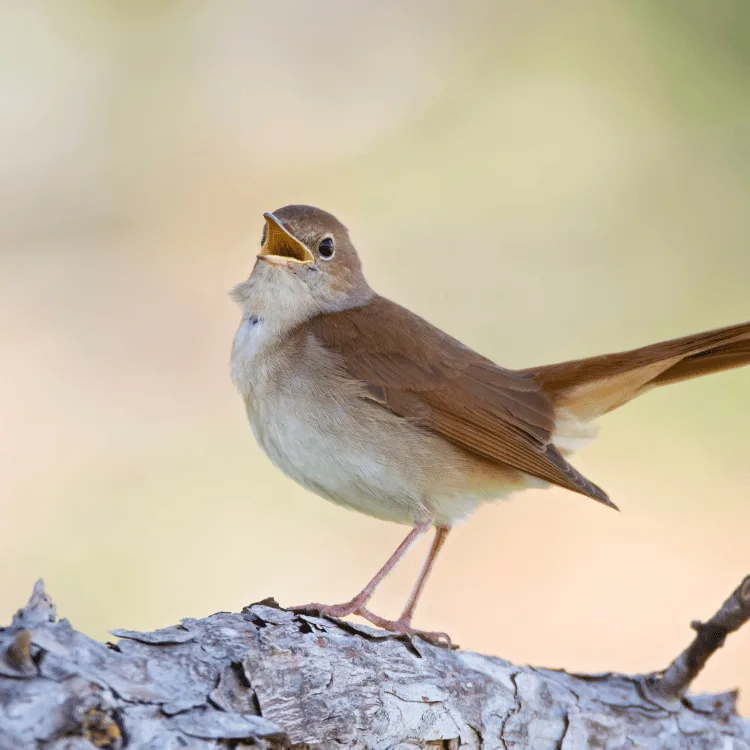
Common nightingale (Luscinia megarhynchos)
What does the nightingale look like?
The nightingale is a small bird, usually about 19 cm long, with a wingspan of 30–35 cm. Although it is not particularly colourful, its delicate appearance and distinctive voice make it a special bird.
Characteristic physical features
Plumage: the upperparts are brownish, while the underparts are paler, sandy in colour.
Beak: a medium-length, sharp beak helps it catch insects and other small food.
Eyes: dark eyes with a faint eye-ring, which is typical of birds that spend a lot of time in dense vegetation.
Tail: a medium-length tail that is often raised and helps nightingales communicate.
The nightingale is known for its long migrations; it often spends the winter in North Africa and comes to Europe in spring and summer.
Nightingale habitat and distribution
The nightingale prefers dense woodland, watercourses and riverbanks, but it can also be found in gardens and on farmland. The nightingale lives across most of Europe and can also be found in Asia and Africa. It usually stays in areas with dense shrubs and low vegetation, where it can easily hide.
Although it is most closely associated with European woodland, the nightingale migrates to North Africa and the Middle East to overwinter, where it mainly settles in dry areas.
What does the nightingale eat?
The nightingale is an insectivorous bird, which means it feeds mainly on:
Insects such as grasshoppers, flies, mosquitoes and beetles
Spiders and caterpillars
Invertebrates such as snails
Unlike some other birds, the nightingale will also eat berries and seeds when insects are scarcer.
The nightingale’s song
Song is what defines nightingales most of all, and they are known for singing by day and by night. The nightingale’s song is described as a refined and melodious symphony – highly complex and made up of a series of different notes and melodic variations.
Characteristics of the nightingale’s song
Melody: the nightingale’s song often consists of rapid changes of notes – high-pitched sounds full of emotion.
Singing at night: they often sing through the night, which makes them unique among many bird species.
Territorial song: singing is also a way of marking territory and attracting a partner.
Nightingales are often said to sing from the soul, and their melody has inspired many musicians and poets throughout history.
Nightingale breeding
The nightingale breeds in the spring months, when the male starts singing to attract a female. The nightingale’s nest is usually in dense shrubs or low trees, where the eggs are protected from predators.
Nesting habits
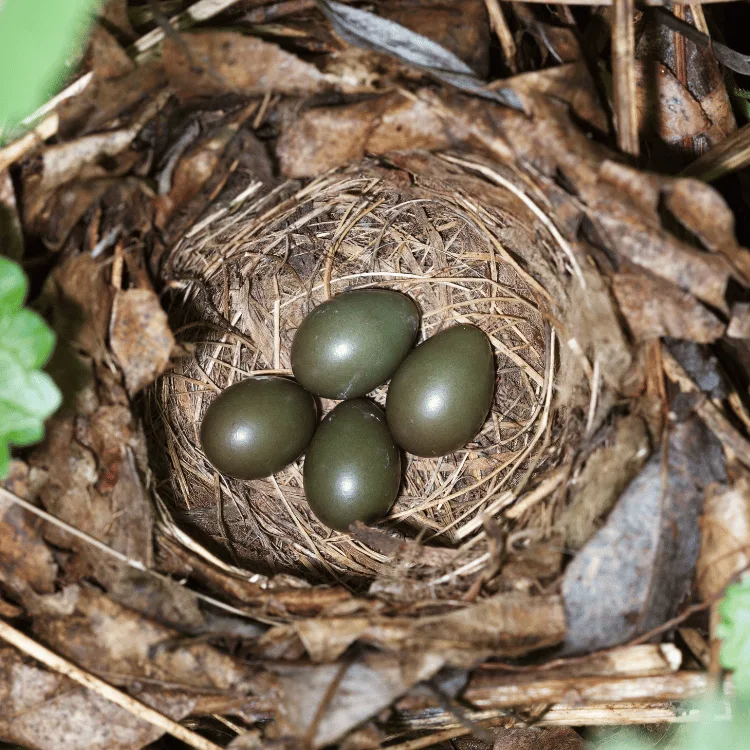
Nest: nests are usually well hidden and made from twigs, leaves and blades of grass.
Eggs: the female lays 3–6 eggs, which she incubates for about 12–14 days.
Caring for the young: both parents look after the young and feed them insects and other small creatures. The young stay in the nest until they are strong enough to fly, usually at 12 to 14 days old. By then they are developed enough to fly and look for food. Although they rely on their parents for food and protection after leaving the nest, they soon become independent and learn to catch insects.
Interesting facts about the nightingale
A symbol of spring: the nightingale is often a symbol of spring beauty and new life, and its song fills every spring day.
An inspiration to artists: the nightingale’s song has often been used in art and literature as a symbol of beauty and freedom.
Rhythmic song: the nightingale’s song is considered one of the most complex among birds, as it includes a variety of sounds, melodic variations and scales.
Many legends: in many cultures the nightingale has been linked with myths and legends, often symbolising love, passion and romance.
Research on the nightingale
Song and evolution: research has shown that the nightingale’s song serves not only to attract a partner but also to defend territory and compete with other males.
Environmental influences on song: some studies look at how pollution and urbanisation affect the melody and intensity of the nightingale’s song.
Complexity of the melody: the nightingale’s melody is one of the most complex among birds, and scientists are studying how the young learn to sing and develop their own melodic abilities.
Conclusion
The nightingale is not only a bird famous for its beautiful song but also a symbol of beauty, romance and spring. Its melody goes far beyond simple birdsong and wins the hearts of nature and art lovers all over the world. The nightingale’s song inspires and lifts the spirit, and its behaviour and biology continue to fascinate researchers and nature lovers alike.