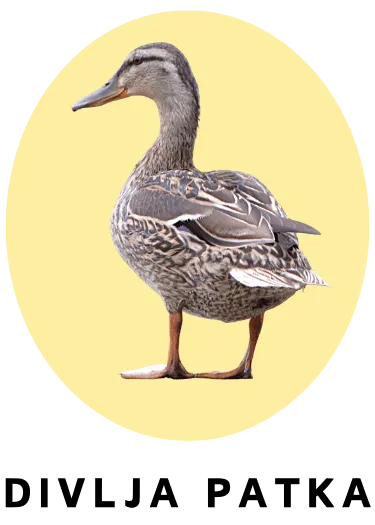
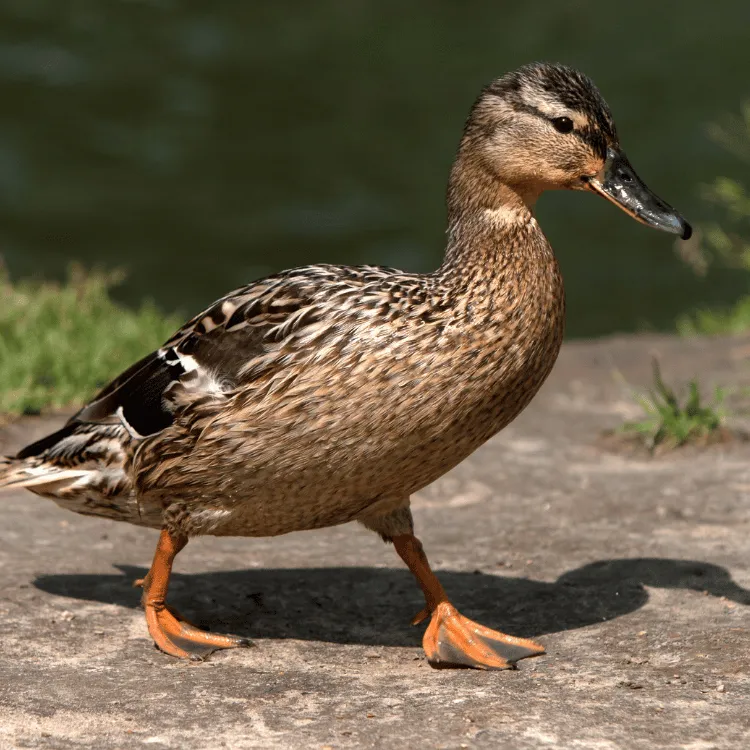
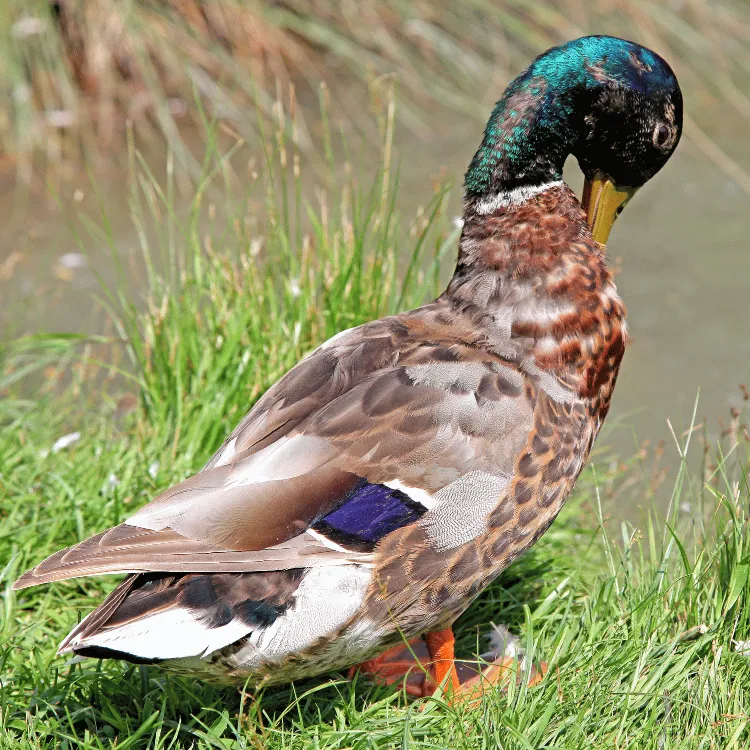
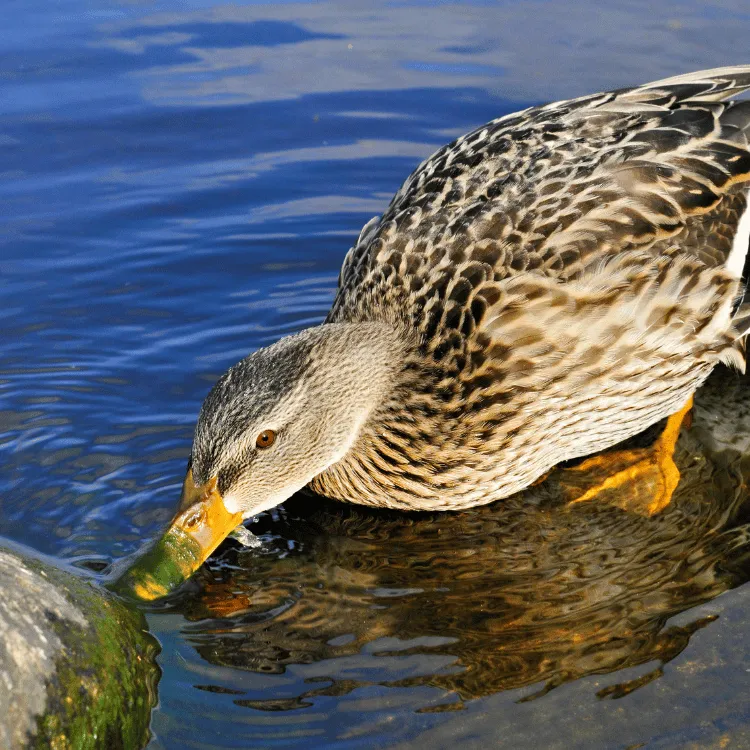
The mallard (Anas platyrhynchos) is one of the best-known and most widespread duck species, living in a wide range of aquatic habitats around the world, including lakes, rivers, marshes and sea coasts. With its recognisable appearance and behaviour, the mallard is often of great interest to bird and nature lovers. This bird also plays a significant ecological role in maintaining the balance of aquatic ecosystems and is often a symbol of freedom and migration.
Mallard (Anas platyrhynchos)
Wild duck species and their distribution in Croatia
Besides the mallard (Anas platyrhynchos), which is the ancestor of domestic ducks, the following can also be seen in Croatia:
Eurasian teal (Anas crecca) – the smallest European duck, common in winter.
Eurasian wigeon (Anas penelope) – arrives in winter from more northerly regions.
Ferruginous duck (Aythya nyroca) – a rare species, protected in Croatia.
Common shelduck (Tadorna tadorna) – a larger duck, often seen in coastal marshes.
Red-crested pochard (Netta rufina) – recognisable by the male’s reddish head.
Great crested grebe (Podiceps cristatus) – seen on lakes and rivers.
Mallard habits and behaviour
The mallard is an extremely adaptable bird that can live in many different types of aquatic habitat, from shallow lakes and marshes to deeper rivers and the seashore. During the day, ducks usually swim around looking for food, while at night they retreat to sheltered spots such as reed beds or dense bushes to rest. Their diet consists of plants, aquatic insects, fish and small invertebrates, and occasionally they may even eat small reptiles. Ducks are known for foraging while swimming, feeding by filtering water and searching for prey on or below the surface. These birds are sociable, most often seen in small groups, but they can also migrate in large flocks, especially in the winter months. Mallards usually migrate to southern areas for the winter and return north in spring. Migration is generally linked to climate conditions and the need for food. Interestingly, mallard migrations can involve long journeys, sometimes of more than 2,000 kilometres, depending on their habitats. In Dalmatia, mallards (Anas platyrhynchos) are present all year round, and their numbers increase in the winter months as migrants arrive from more northerly parts of Europe. They are most often seen in marshes, rivers, lakes, lagoons and coastal areas with calmer water.
Nesting and family life
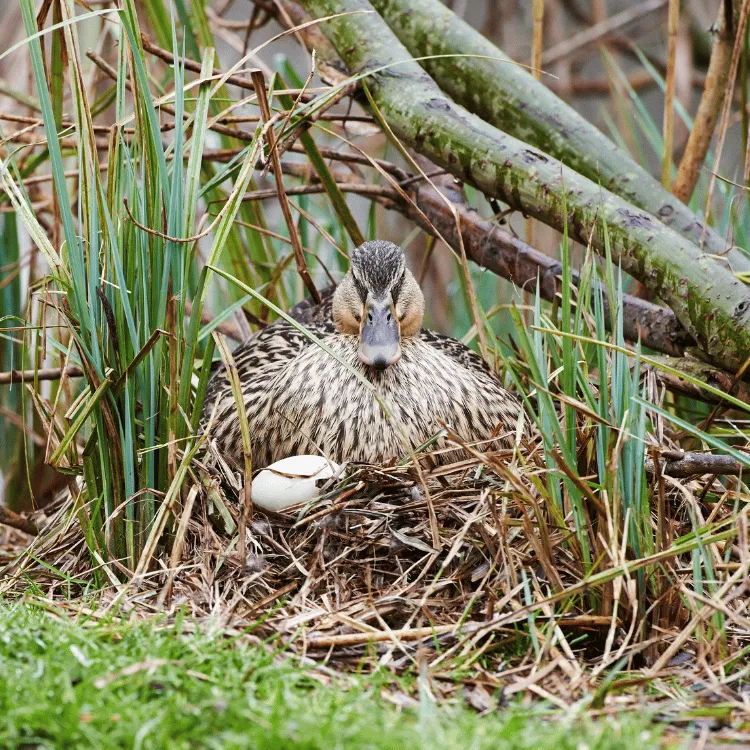
Mallards usually nest in spring, when pairs form and look for a safe place to build a nest. Nests are usually placed in grass, among bushes or in hollows along the bank. The female lays 6 to 12 eggs, which she incubates alone, while the male stays nearby to protect her from predators. Incubation lasts about 28 days, after which the ducklings hatch. Ducklings can swim and feed straight away, and both parents look after them, leading them to safe waters. The ducklings grow quickly and gradually become able to fly.
Lifespan
The lifespan of a mallard in the wild is usually 5 to 10 years, although many birds do not reach adulthood because of predators, disease, accidents or the hazards of migration. In protected conditions, such as nature parks or protected wetlands, mallards can live longer, up to 15 years or more. Mallards face threats from predators such as foxes, raccoons and wildcats, and from people, including hunting and habitat pollution. Although they are naturally hardy, human activities such as the destruction of wetlands and water pollution threaten their habitats.
Facts and research
Mallards are particularly interesting because of their behaviour during migration. Using GPS devices, scientists have tracked mallard migrations and discovered that they can travel at incredible speeds, covering long distances with few stops. Research has also shown that mallards have excellent navigational abilities, using natural cues such as the stars, the Earth’s magnetic field and the sun’s rays to orient themselves during migration. One interesting thing about mallards is that they are known for adapting to different conditions, whether migration, changes in habitat or food availability. Scientists have also studied how mallards communicate within the flock, using different sounds and signals to coordinate their movements and protect themselves from predators.
The ecological role of the mallard
The mallard plays an important ecological role in maintaining the balance of aquatic ecosystems. As water filterers, they help clear aquatic habitats of excess algae and small organisms, thereby helping to keep waters healthy. Mallards are also an important factor in controlling the numbers of smaller aquatic organisms, including insects and small fish. Their presence is also an indicator of the health of aquatic ecosystems, as they are very sensitive to changes in the environment, such as pollution or climate change.
Conclusion
The mallard is an extremely adaptable and resilient bird that plays an important role in aquatic ecosystems. Their ability to migrate, their interesting way of life and their role in maintaining ecological balance make them not only a fascinating part of biodiversity but also important indicators of the health of aquatic areas. Although they face threats arising from human activities, mallards remain a symbol of natural balance, freedom and survival.