The Eurasian magpie – an intelligent and curious bird
The Eurasian magpie (Pica pica) is one of the most intelligent birds in the world, known for its curiosity, playfulness and exceptional cognitive abilities. This striking member of the crow family (Corvidae) is found throughout Europe and Asia and is known for its ability to learn and to recognise its own reflection in a mirror. As well as being extremely adaptable, magpies are social birds that often live in small groups and communicate using complex vocal signals. Their links with myths and folk beliefs make them even more intriguing members of the bird world.
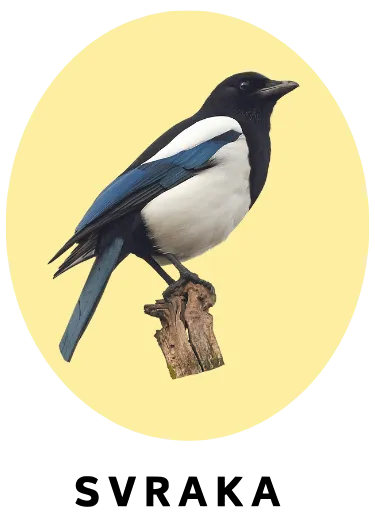
Eurasian magpie (Pica pica)
Appearance and characteristics
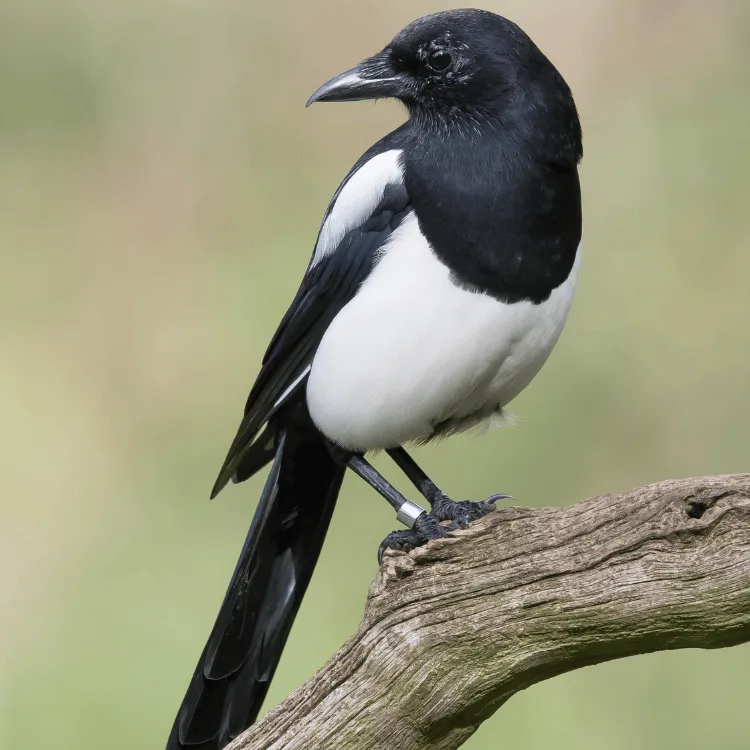
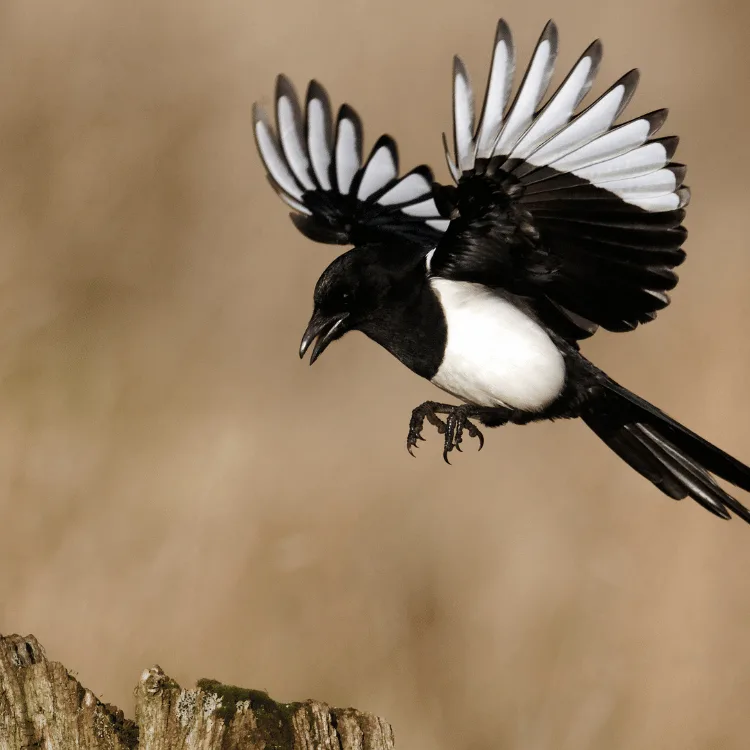
The magpie is a medium-sized bird, measuring 40–50 cm in length, with a wingspan of 55–65 cm. Its most striking feature is its glossy black-and-white plumage, which can take on a bluish or greenish metallic sheen in the sun. Key physical characteristics: Head, breast and back: glossy black Wings and tail: black with a metallic sheen Belly and underwing: white Eyes: dark, with an intelligent expression
Beak: strong and slightly curved, ideal for grabbing food and exploring its surroundings
Their long tail plays an important role in keeping their balance when walking and flying, making them extremely agile.
Habitat and distribution
Magpies are extremely adaptable birds that manage to survive in a wide range of conditions. They live in: Forests and woodland edges Parks and gardens Farmland Urban and suburban areas They are found throughout Europe, Asia and North Africa, and have also been introduced to North America. Their adaptability allows them to survive even in towns and cities, where they often search through rubbish for food.
What do magpies eat?
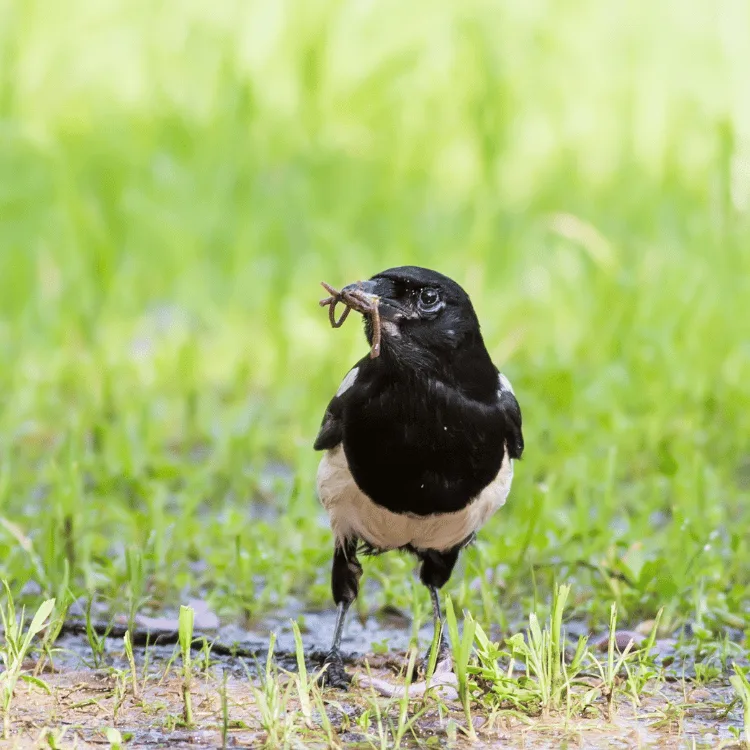
Magpies are omnivores, which means they eat a wide variety of foods, including: Insects and small invertebrates Seeds, berries and nuts Small prey such as rodents and birds’ eggs Food scraps found near human settlements Their curiosity and problem-solving skills allow them to find food even in difficult conditions. They have been observed storing food at times, hiding it for later.
Intelligence and social behaviour
Magpies are among the cleverest birds in the world, and scientists often compare their cognitive abilities to those of primates. They can solve complex tasks, use tools and recognise their own reflection in a mirror, which is a rare trait in the animal kingdom.
Their communication is also highly developed – they use various sounds and body movements to communicate within the flock and to warn of danger.
In social groups magpies show hierarchical behaviour, and they are also known to grieve for dead members of their species, which further confirms their emotional complexity.
Breeding and life cycle
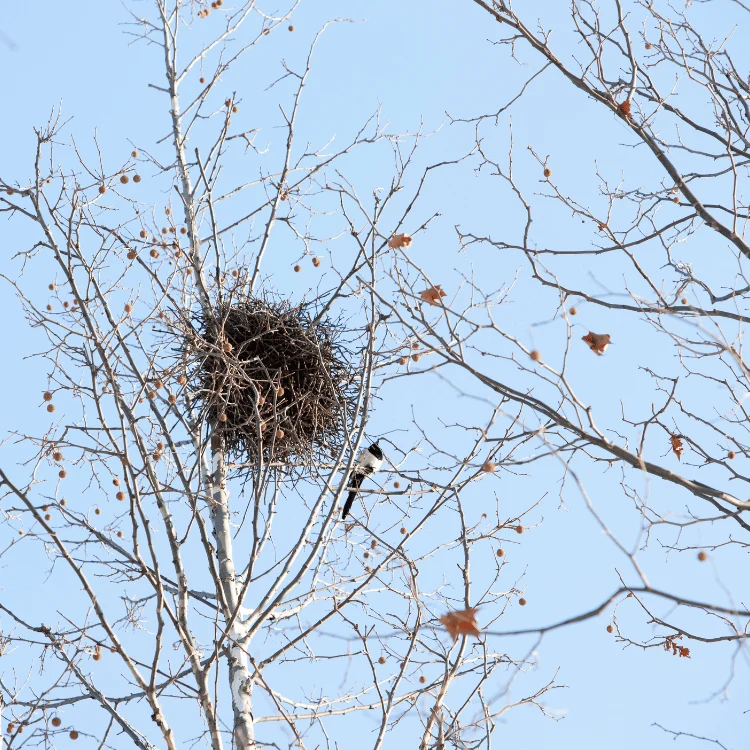
The breeding season begins in spring, when magpie pairs build large nests of twigs together, often high up in trees.
Nesting and raising the young
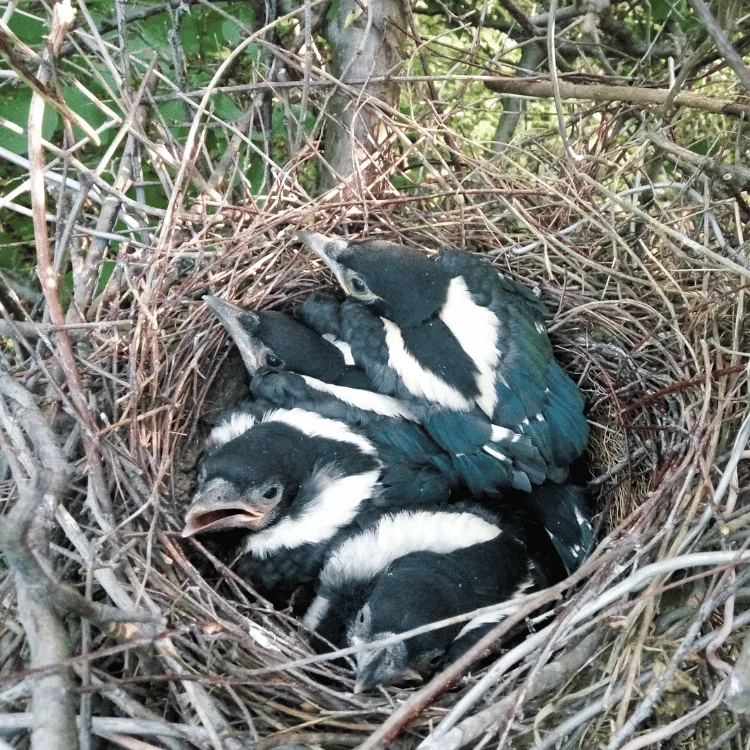
The female lays 5–7 eggs Incubation lasts about 16–21 days, during which the female sits on the eggs while the male brings food The young stay in the nest for 3–4 weeks, and the parents keep feeding them for several weeks after they leave the nest Magpies are monogamous birds and often stay with the same partner for many years.
Interesting facts about magpies
They recognise themselves in a mirror – magpies are among the few birds capable of self-recognition, which places them among the most intelligent animals in the world. They like collecting shiny objects – although myths say that magpies steal jewellery, research shows they are more curious than kleptomaniac. They grieve for their dead – magpies have been seen gathering around a dead bird and briefly “mourning”. Sound mimics – although they are not in the same league as parrots, magpies can learn to imitate human speech and other sounds from their surroundings.
They remember human faces – magpies can recognise individuals who have helped or harmed them and remember them for many years.
Research on magpies
Scientists have carried out numerous studies to understand the exceptional cognitive abilities of magpies. Tool use – research shows that magpies can use twigs or wire to reach food, much like some species of crow. Remembering faces – studies have shown that magpies remember people who threatened them and can recognise them years later. Social learning – magpies can learn from one another, which helps them adapt to new situations and dangers.
Conclusion
The magpie is a fascinating, intelligent and adaptable bird whose behaviour attracts the attention of scientists and nature lovers around the world. Whether we see them in forests, parks or towns, magpies are proof that birds are far more complex creatures than they seem at first glance. Their curiosity, problem-solving skills and social bonds make them unique in the bird world, and the myths and legends surrounding them give them an extra air of mystery and intrigue.