The common kingfisher – a master of survival on the water
The common kingfisher (Alcedo atthis) is a small but remarkably powerful representative of the birds that live near watercourses. It is known for its outstanding hunting skills and its beautiful blue and orange plumage, which make it one of the most beautiful birds in Europe. Kingfishers are closely tied to water – rivers, lakes and marshes – and their behaviour and hunting skills often amaze observers.
Common kingfisher (Alcedo atthis)
Appearance and characteristics of the kingfisher
The kingfisher is a small bird, but its striking, colourful plumage makes it very easy to recognise. Although it is smaller than many other birds, its appearance and behaviour give an impression of power and precision.
Physical characteristics of the kingfisher
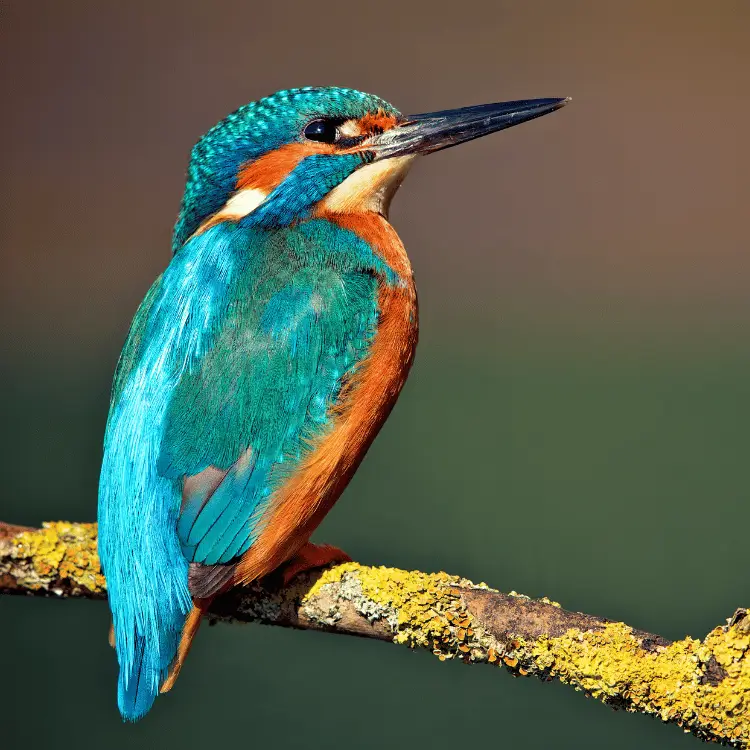
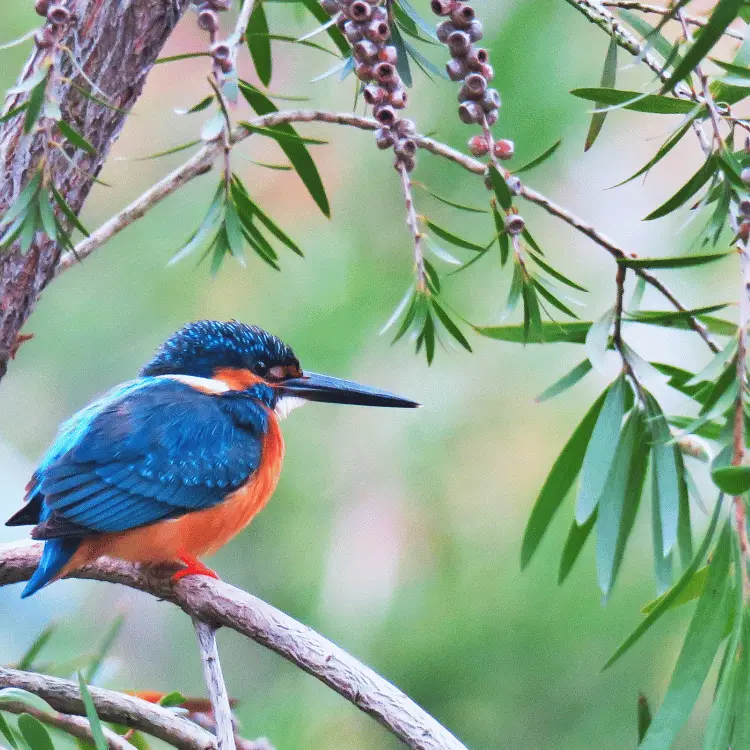
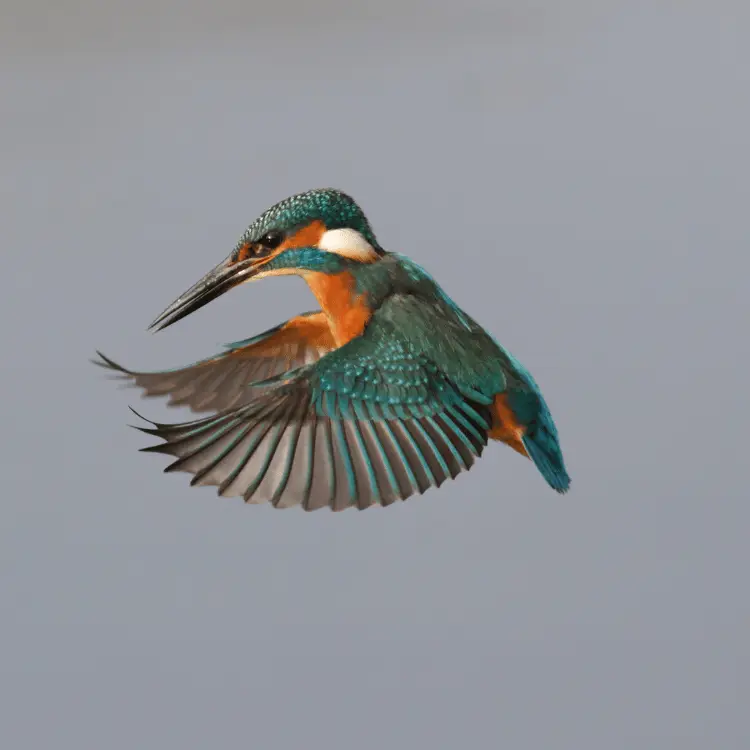
Plumage colour: the kingfisher is known for its bright blue back and orange belly. It also has a characteristic whitish patch and a sharp black line running along its beak.
Beak: it has a long, strong, sharp beak that it uses to catch prey in the water.
Eyes: large black eyes that give it great precision when hunting.
The legs are red or orange
Tail: the short, sturdy tail helps to stabilise it in flight and when it enters the water.
The kingfisher lives near water, such as rivers, streams, lakes and marshes. Its advantage in survival and hunting lies in its ability to find food in the water easily and to catch prey with great precision.
Habitat and distribution of the kingfisher
The kingfisher prefers areas with clean, clear water and plenty of fish. Its habitats include a range of aquatic ecosystems, from small rivers to larger lakes and marshes. It is found across Europe, as well as in the Middle East and North Africa.
Because of its particular way of life, the kingfisher is most often found in clean, unspoilt natural areas with enough food and natural hiding places.
What do kingfishers eat?
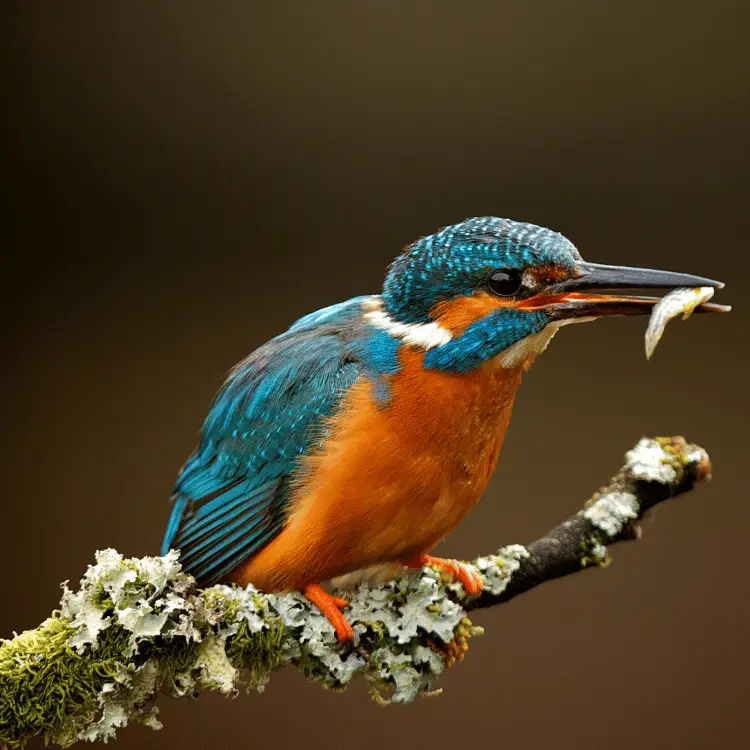
The kingfisher is an insect- and fish-eating bird whose diet is based on fish and on smaller aquatic organisms. It catches most of its food by diving into the water.
The kingfisher’s prey
Fishing: the kingfisher is a master at catching small fish, including
Common bleak (Alburnus alburnus) – a small fish of the carp family, common in rivers and lakes.
Eurasian minnow (Phoxinus phoxinus) – a tiny fish of clear streams and rivers.
Young chub (Squalius cephalus) – while they are small, they are easy prey for the kingfisher.
Young European perch (Perca fluviatilis) – often found in shallow water.
Young rudd (Scardinius erythrophthalmus) – found in lakes and slow-flowing rivers.
The kingfisher chooses fish that fit in its beak, usually 2–6 cm long, and catches them with sudden dives. Sometimes it also feeds on tadpoles, aquatic insects or small crustaceans.
Hunting techniques: the kingfisher often hunts by sitting on a branch or stone by the water, watching for prey and then plunging into the water in a fast dive to catch it.
Kingfisher behaviour
The kingfisher likes calm, quiet places where it can hunt without too much disturbance. Interestingly, it is very territorial and can often be seen hunting in the same area or returning to the same fishing spots.
Flight and behaviour
Flight: the kingfisher flies very fast and precisely, using its short legs and tail for stability.
Diving into the water: although it is an excellent flier, it can often be seen plunging into the water from a height when hunting.
Territoriality: the kingfisher is known for fiercely defending its territory, and males often fight for dominance and the right to the best fishing spots.
Kingfisher nesting
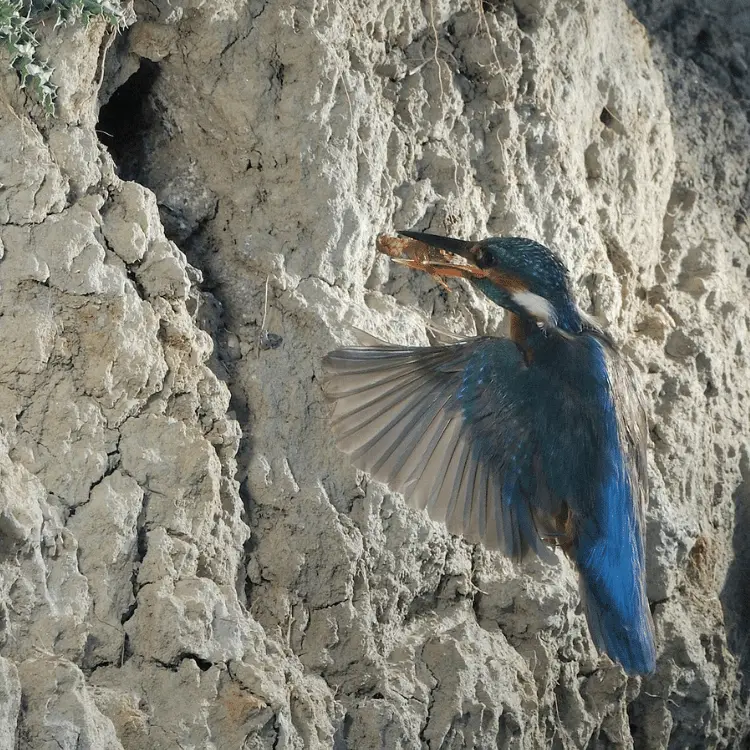
The kingfisher nests in an unusual way: it usually lives in long, narrow tunnels that it digs into the earth or a riverbank.
Nesting habits
Nest: nests are usually located on the bank of a river or lake, where the male digs tunnels into the earth.
Eggs: the female usually lays between 5 and 7 eggs, which she incubates for about 3 weeks.
Caring for the young: both parents care for the chicks and feed them a variety of prey from the water
Interesting facts about the kingfisher
Remarkable swimmer: although it is a master of flight, the kingfisher is also a remarkable swimmer. In the water it uses its sharp beak to catch fish and its agility to move quickly.
Quick reactions: kingfishers are known for their quick reactions and high precision when hunting. They can react to the slightest movement of a fish and catch it in an instant.
A symbol in some cultures: in some cultures the kingfisher is regarded as a symbol of good luck and prosperity, and because of its beauty it often appears in art and literature.
Research on the kingfisher
Scientists are studying how water pollution and habitat loss affect kingfisher behaviour. Research is also being carried out to better understand how these birds hunt so successfully and how their migration patterns are changing because of climate change.
Conclusion
The kingfisher is a small but powerful bird that enchants us with its hunting skills and beautiful plumage. Its way of life, its bond with water and its hunting skills make it a fascinating bird to watch and study. The kingfisher is a symbol of nature’s richness and beauty, and its presence is a sign of healthy, clean aquatic ecosystems.